


Page 5 - O. Microbiology
P. 5
Production of recombinant human insulin from transformed Escherichia coli
                                               Bomin Jang, Eunju Im, Yeh-Jin Ahn*
                           Department of Biotechnology, Sangmyung University, Jongno-gu, Seoul 03016, Korea
                                                   E-mail: yjahn@smu.ac.kr


                         BACKGROUND                                                       AIM

     In the industrial processes, Escherichia coli has widely been used for the expression of  Insulin is one of the most industrially valuable recombinant
     diverse proteins. Microorganisms are largely cultured in the bioreactor. In this process, E.  proteins. In this study, we produced recombinant human insulin
     coli can be hindered by plenty of adverse factors such as high & low temperature, and  from genetically engineered Escherichia coli (E. coli BL21, DE3) that
                                                                      heterologously expressed carrot (Daucus carota L.) heat shock
     antifoaming agent. In the process of E. coli undergo heat stress conditions and it has  protein 70 (Hsp70). The proinsulin, B chain, and A chain portions of
     adverse effects on microorganisms, such as cell death and decreasing productivity of  insulin  were  separately  cloned  into  the  pVFT2S-6xhis-GST
          1
     proteins . For these reasons, developing E. coli to have a tolerance under the stress
                                                                      expression  vector  and  expressed  by  isopropyl  β -D-1-
     conditions is essential.                                         thiogalactopyranoside treatment. Ni-affinity chromatography was
     Under the diverse type of stress conditions, heat shock proteins are induced in all organisms  used to purify 6xHis-GST tagged insulin. As a result, expression of
                                                                  2
     including mammals, plants, and bacteria. Especially, sHsps are diverse and variable in plants .  the insulin B chain was improved approximately 19-fold higher in
     These ubiquitous proteins function as molecular chaperones that assist denatured proteins  the transgenic cell lines than that of control cell lines. Our result
     to recover their morphology or functions, and some of them induce extremely denatured  suggests a possible use of plant Hsps to increase recombinant
                  3
     proteins to degrade . Hsp70 is a highly conserved 70kDa enzyme that can refold misfolded  protein production in transgenic E. coli. By using transgenic E. coli
                              4
     proteins using ATP hydrolysis energy , and can improve the solubility of proteins . Therefore,  expressing plant heat shock protein, the production of recombinant
                                                           5
                                                                      proteins including insulin, can be improved.
     Hsp is expected to improve production of recombinant proteins.
                                                     METHODS
     •  The lipoprotein (Lpp, GenBank accession no. NC_000913.2) promoter, DcHsp70 and Flippase recognition target (FRT) Cassette template were amplified by PCR.
       Due to template terminal complementarity, these products can overlap and be extended. The DNA construct was flanked by the insertion site sequences (yddE
       pseudogene) to facilitate the DNA insertion by RedE/T mediated homologous recombination.
     •  Human insulin (GenBank accession no. NM_000207.2), A and B chain sequences were independently inserted into the pVFT2S expression vector, which contains
       Histidine and Glutathione S-transferase (GST) dual tags. The recombinant polypeptides were induced by IPTG treatment (0.1 mM final concentration for 20 h at
       16 °C).
     •  Transformed cell lines were cultured in LB medium and continuously cultured until the O.D 600 reached 0.6. The cells were then treated with isopropyl β-D-1-
       thiogalactopyranoside 0(IPTG, 0.1mM at 16 °C for 20 h) to induce the recombinant proinsulin.
     •  Purified proteins were subjected to 17% SDS PAGE and immunoblot analysis using anti-insulin B chain monoclonal antibody (Santa Cruz Biotechnology) as
       described above. Chemiluminescent signals were captured and quantified by using a ChemiDoc MP Imaging System (Bio-Rad).
                                        RESULTS AND DISCUSSION


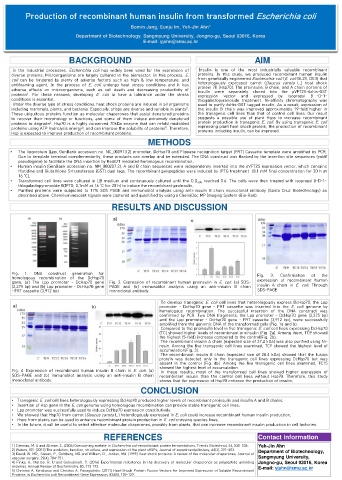
     Fig.  1.  DNA  construct  generation  for                                             Fig.  3.  Confirmation  of  the
     homologous recombination of the DcHsp70
     gene. (a) The Lpp promoter – DcHsp70 gene  Fig. 2. Expression of recombinant human proinsulin in E. coli. (a) SDS-  expression of recombinant human
     (2,275 bp) and (b) Lpp promoter – DcHsp70 gene  PAGE and (b) immunoblot analysis using an anti-insulin B chain  insulin A chain in E. coli. Through
     – FRT cassette (3,912 bp)         monoclonal antibody.                                SDS-PAGE
                                                         To develop transgenic E. coli cell lines that heterologously express DcHsp70, the Lpp
                                                         promoter – DcHsp70 gene – FRT cassette was inserted into the E. coli genome by
                                                         homologous recombination. The successful insertion of the DNA construct was
                                                         confirmed by PCR. Two DNA fragments, the Lpp promoter - DcHsp70 gene (2,275 bp)
                                                         and the Lpp promoter – DcHsp70 gene – FRT cassette (3,912 bp), were successfully
                                                         amplified from the genomic DNA of the transformed cells (Fig. 1a and b).
                                                         Compared to the proinsulin level in five transgenic E. coli cell lines expressing DcHsp70
                                                         (TC) showed higher levels of recombinant proinsulin (Fig. 2a). Among them, TC9 showed
                                                         the highest (5-fold) increase compared to the control(Fig. 2b).
                                                         The recombinant insulin A chain (expected size of 27.4 kDa) was also purified using Ni-
                                                         resin. Among the five transgenic cell lines examined, TC9 showed the highest level of
                                                         accumulation(Fig. 3).
                                                         The recombinant insulin B chain (expected size of 28.4 kDa) showed that the fusion
                                                         protein was detected only in the transgenic cell lines expressing DcHsp70 but was
                                                         absent in the control (Fig. 4b). Among the five transgenic cell lines examined, TC15
                                                         showed the highest level of accumulation.
     Fig. 4. Expression of recombinant human insulin B chain in E. coli. (a)  In these results, most of the transformed cell lines showed higher expression of
     SDS-PAGE and (b) immunoblot analysis using an anti-insulin B chain  recombinant insulin than the control cell lines without Hsp70. Therefore, this study
     monoclonal antibody.                                shows that the expression of Hsp70 enhance the production of insulin.
                                                  CONCLUSION
     •  Transgenic E. coli cell lines heterologously expressing DcHsp70 produced higher levels of recombinant proinsulin and insulin A and B chains.
     •  Insertion of Hsp gene in the E. coli genome using homologous recombination can provide stable transgenic cell lines.
     •  Lpp promoter was successfully used to induce DcHsp70 expression constitutively.
     •  We showed that Hsp70 from carrot (Daucus carota L.) heterologously expressed in E. coli could increase recombinant human insulin production.
     •  Hsps from plants can be used to enhance recombinant protein production in E. coli crossing species lines.
     •  In the future, it will be useful to select effective molecular chaperones, possibly from plants, that can increase recombinant insulin production in cell factories.
                                     REFERENCES                                            Contact information
     1) Eiteman, M. A and Altman, E. (2006) Overcoming acetate in Escherichia coli recombinant protein fermentations, Trends Biotechnol, 24, 530– 536.  Yeh-Jin Ahn
     2) Waters, ER. (2013) The evolution, function, structure, and expression of the plant sHSPs, Journal of experimental botany, 64(2), 391-403.  Department of Biotechnology,
     3) David, W. MD., Steven, P., Goldberg, MD and William, D., Jordan, Md. (1999) Heat shock proteins: A review of the molecular chaperones, Journal of
     vascular surgery, 29(4), 784-751.                                                     Sangmyung University,
     4) Finka, A., Mattoo, R. U and Goloubinoff, P. (2016) Experimental milestones in the discovery of molecular chaperones as polypeptide unfolding Jongno-gu, Seoul 03016, Korea
     enzymes. Annual Review of Biochemistry, 85, 715–742.                                  E-mail: yjahn@smu.ac.kr
     5) Christos A. Kyratsous and Christos A. Panagiotidis. (2011) Heat-Shock Protein Fusion Vectors for Improved Expression of Soluble Recombinant
     Proteins in Escherichia coli, Recombinant Gene Expression, 824(5), 109-129.

