


Page 1 - O. Microbiology
P. 1
Antibacterial Activity of 2-Furanone derivatives against foot odor causing bacteria
                       Staphylococcus aureus and Staphylococcus epidermidis

               Chae-Rin Kim 1,# , Hee-Na Jeong 1,# , Yong-Jae Kwon 1 , Jae-Hoon Lee 1 , Ji-Min Jang 1 , Yo-Han Ko 1 , Oh-Rim Kwon 1 , Hae-Ryeong Lim 1,** and Deug-Chan Lee 1,*
                          Department of  medical biotechnology, College of Biomedical Science, Kangwon National University,
                                 Gangwondaehakgil, Chuncheon-si, Gangwon-do, 200-701, Republic of Korea
                                     *Email : dclee@kangwon.ac.kr, **Email : dimgofud@naver.com
                              BACKGROUND                                                  AIM
   With the recent surge in personal hygiene and health, interest in feet is also growing. Especially students and workers are active in shoes for most of the day. Therefore, cleanliness  Suppressing  the  Staphylococcus  epidermidis  and
   of the feet is more important than anything else for the health of the feet. Previous research has shown that Staphylococcus epidermidis, Staphylococcus aureus were cultured, after  Staphylococcus aureus will help remove foot odor and help
   sampling and incubating samples from the soles of the feet of the stinking man. Suppressing the Staphylococcus epidermidis and Staphylococcus aureus will help remove foot odor  keep feet clean. When treated with two strains of bacteria
   and help keep feet clean. When treated with two strains of bacteria using 2-Furanone derivatives, the experiment was planned to see how much antibacterial activity they had. The  using 2-Furanone derivatives, the experiment was planned
   purpose of this experiment is to find chemicals (2-Furanone derivatives) that suppress and remove S. aureus, S. epidermidis that live in the human body especially in the foot. Based  to see how much antibacterial activity they had. The
   on the results of the experiment, it is to analyze the parent compound and side chain of the two bacteria depending on the level of antibacterial activity and find out what techniques  purpose of this experiment is to find chemicals (2-Furanone
   they can act as antibiotics. 2-Furanone derivatives showed antibiotic effects on S.aureus and S.epidermidis, all of which were gram positive bacteria. Antibacterial activity did not
   appear in E. coli, a typical example of gram negative. Previous studies have shown that parent compound 2-Furanone produces antibacterial activity in both gram-positive bacteria  derivatives) that suppress and remove S. aureus, S.
   and gram-negative bacteria, which were not the case with 2-Furanone derivatives. While the parent compound may have an effect on antibacterial activity, the side chain that is  epidermidis that live in the human body especially in the
   combined with the parent compound can also be thought to be important to the antibiotic effect. In fact, in S.aureus and S.epidermidis, 3-(4-Fluorophenyl)-5-hydroxy-4,5-diphenyl-  foot. Based on the results of the experiment, it is to analyze
   2(5H)-furanone and 3-(3-chlorophenyl)-5-hydroxy-4, 5-diphenyl-2, 5-dihydrofuran-2-on showed clear zones of more than 1cm in size, and in 3-(4-Chlorophenyl)-5-hydroxy-4,5-  the parent compound and side chain of the two bacteria
   diphenyl-2(5H)-furanone they were less than 0.7cm to 1cm. 5-hydroxy-3,4,5-tris(4-methylphenyl)-2,5-dihydrofuran-2-one was formed in S.epidermidis with a clear zone of less than  depending on the level of antibacterial activity and find out
   0.7 cm and in S.aureus, a clear zone was formed less than 0.7 cm to 1 cm. And we did MTT assay to see whether 2-Furanone derivatives were harmful or not when treated at the cell  what techniques they can act as antibiotics.
   level. So we researched to see if 2-Furanon derivatives could be used as useful materials.
                                               METHODS
   (1) LB Broth & LB Agar plate  : Made using Tryptone, NaCl, Yeast Extract, Agar and 3’ distilled water. Sterilization was carried out with autoclave before using it.
   (2) DMSO control test : ‘2-Furanone derivatives’ were used in DMSO and an experiment was conducted to check how DMSO itself affected. DMSO was divided into 100, 50, 25, 12.5, and 6.25% and processed in paper disc.
   (3) Paper disc diffusion test : An experiment was carried out to confirm how antibacterial activity appeared in the 1% LB Agar plate inoculated with bacteria(Staphylococcus epidermidis, Staphylococcus aureus) by making a sample with a concentration of
   20mM and treating a sample of 15µl with a 6mm paper disc.
   (4) Analyze ‘2-Furanone derivatives’ : To analyze how the side chains held by the ‘2-Furanone derivatives’ work for bacteria, we experimented to find out some differences not only in conventional Gram positives (Staphylococcus aureus, Staphylococcus
   epidermidis), but also in Gram negative. Gram-negative bacteria were identified as E.coli.
   (5) Cell culture : B16F10 cells were cultured in DMEM(Dulbecco's Modified Eagle Medium) supplemented with 10% heat-inactivated FBS(Fetal Bovine Serum) and 1% penicillin and streptomycin(Hyclone, Pittsburgh, PA, USA). Cells were grown in CO₂
   Incubator conditioned with 5% CO₂ at 37℃
   (6) MTT assay (Cell viability assay) : MTT assay was conducted to find out how eukaryotic cells B16F10 were affected when treated with 2-Furanone derivatives. B16F10 was seeded into 24 well plate. After incubating for 24 hours, the 2-Furanone
   derivatives was treated and an additional 24 hours were cultivated. Next, an MTT reagent with a concentration of 5 mg/ml was treated and reacted for 3 hours. At the end of the reaction, the membrane was melted using DMSO and the absorbance was
   measured at 550 nm. The reproducibility of the results has been verified through three repeated experiments.
                                                RESULTS
   Previous studies have shown that the parent compound, called ‘2-Furanone’, is weak in both gram-  Figure 1  Figure 3  Figure 4
   positive bacteria and gram-negative bacteria, but that antibacterial activity exists. Derivatives,
   synthesized by combining side chains in parent compound, showed antibacterial activity in Gram
   positive bacteria (S.epidermidis, S.aureus) but no antibacterial activity in Gram negative bacteria (E.coli).
   Gram-negative bacteria, unlike gram-positive bacteria, exhibit no antibacterial activity due to their low
   sensitivity to antibiotics because of the presence of external membranes outside the cell walls, and can
   be inferred that they may have had a different effect than the existing antimicrobial action.
   We can confirm that the ‘2-Furanone derivatives’ that we used as a sample combine the halogen
   elements of chlorine (Cl) and fluorine (F) with the Benzene rings. This is highly reactive and can have a
   variety of oxidants, thus affecting transpeptidase, an enzyme that synthesizes cell walls, thereby
   impeding the synthesis of intact cell walls. So germs cause problems with osmosis and die. In addition,
   another side chain, methyl group is structurally similar to D-alanine in the composition of the cell wall,   Figure 5  Figure 6
   which changes the composition of the cell wall and obstructs the cell wall from being composed
   properly. Thus, it can produce an antibiotic activity. Additional alcohol group can also penetrate the cell
   membrane and promote the coagulation of proteins, causing problems with proteins such as essential
   enzymes to kill bacteria.
   In addition, these 2-Furanone derivatives were almost non-toxic when tested for cell toxicity in B16F10,
   a melanoma cell in the mouse. The cytotoxicity test was confirmed through MTT assay. However, when
   the final concentration was 100uM, 5-hydroxy-3,4,5-tris(4-methylphenyl)-2,5-dihydrofuran-2-one
   showed some toxicity. Nevertheless, it is expected to be a useful antibiotic because concentration was
   not shown at other concentrations and there was no toxicity in other derivatives.
   Figure 2                                 Figure 7


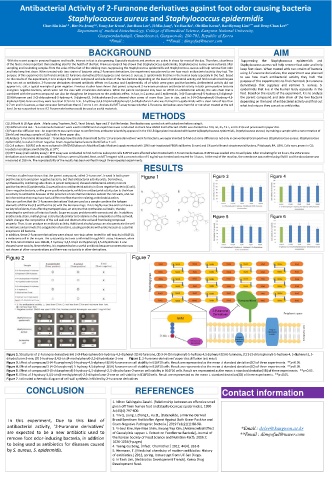
   Figure 1. Structures of 2-Furanone derivatives (A) 3-(4-Fluorophenyl)-5-hydroxy-4,5-diphenyl-2(5H)-furanone, (B) 3-(4-Chlorophenyl)-5-hydroxy-4,5 diphenyl-2(5H)-furanone, (C) 3-(3-chlorophenyl)-5-hydroxy-4, 5-diphenyl-2, 5-
   dihydrofuran-2-one, (D) 5-hydroxy-3,4,5-tris(4-methylphenyl)-2,5-dihydrofuran-2-one        Figure 2. 2-Furanone derivatives’ paper disc diffusion test result
   Figure 3. Effect of compound 3-(4-Fluorophenyl)-5-hydroxy-4,5-diphenyl-2(5H)-furanone on cell viability in B16F10 cells. Result are represented as the mean ± standard deviation(SD) of three experiments.  **p<0.05.
   Figure 4. Effect of compound 3-(4-Chlorophenyl)-5-hydroxy-4,5 diphenyl-2(5H)-furanone on cell viability in B16F10 cells. Result are represented as the mean ± standard deviation(SD) of three experiments.  **p<0.05.
   Figure 5. Effect of compound 3-(3-chlorophenyl)-5-hydroxy-4, 5-diphenyl-2, 5-dihydrofuran-2-one on cell viability in B16F10 cells. Result are represented as the mean ± standard deviation(SD) of three experiments.  **p<0.05.
   Figure 6. Effect of 5-hydroxy-3,4,5-tris(4-methylphenyl)-2,5-dihydrofuran-2-one on cell viability in B16F10 cells. Result are represented as the mean ± standard deviation(SD) of three experiments.  **p<0.05.
   Figure 7. Estimated schematic diagram of cell wall synthesis inhibited by 2-Furanone derivatives
          CONCLUSION                         REFERENCES                  Contact information
                                      1. Nihon Saikingaku Zasshi. [Relationship between an offensive smell
                                      given off from human foot and Staphylococcus epidermidis], 1990
                                      Jul;45(4):797-800.
                                      2. Yin Q, Liang J, Zhang L, Hu ZL, [Butenolide, a Marine-Derived
    In this experiment, Due to this kind of  Broad-Spectrum Antibiofilm Agent Against Both Gram-Positive and
   antibacterial activity, ‘2-Furanone derivatives’  Gram-Negative Pathogenic Bacteria.] 2019 Feb;21(1):88-98.  *Email : dclee@kangwon.ac.kr
                                      3. Yi-Seul Kim, Hye-Mee Shim, Kwang-Yup Kim, [Antimicrobial Effect
   are expected to be a new antibiotic used to  of Caesalpinia sappan L. Extract on Foodborne Bacteria], Journal of   **Email : dimgofud@naver.com
   remove foot odor-inducing bacteria, in addition  the Korean Society of Food Science and Nutrition 45(7), 2016.7,
   to being used as antibiotics for diseases caused  1026-1034(9 pages)
                                      4. Young-Gu Song, [Infect. Chemother.] 2012, 44(4), 263-8
   by S. aureus, S. epidermidis.      5. Hermann, T. [Medicinal chemistry of modern antibiotics: History
                                      of antibiotics.] 2012, spring, lecture ppt from UC San Diego.
                                      6. In Taek Lim, [Antibiotics Development Trends], Korea Drug
                                      Development Fund.

