


Page 53 - M. Immunology
P. 53
Immunostimulating activity of a natural plant anthraquinone glycoside, QNG, in murine RAW264.7 macrophages
                                    Hee Jin Kim , Hyeon Jeong Kim , Jisun Lee , Gi Eun Park ,
                                                         a
                                                                         a
                                                                a
                                            a
                                                      b
                                                                  a,
                                          Jae Kyung Sohng , and Yong Il Park *
                  a  Department of Biotechnology, The Catholic University of Korea, Bucheon, Gyeonggi-do 14662, Republic of Korea
     b  Department of Pharmaceutical Engineering, Institute of Biomolecule Reconstruction, Sun Moon University, Asansi, Chungnam 31460, Republic of Korea
                              *  E-mail:yongil382@catholic.ac.kr. Tel:82-2-2164-4512, Fax:82-2-2164-4846
                   BACKGROUND                                                  AIM
   Immunostimulation is an important strategy for enhancing the body’s defense  This study aimed to assess the potential immunostimulating effects of
   systems, especially in the elderly and cancer patients. QNG is a glycoside  QNG using RAW 264.7 macrophage. The effects of QNG on pro-
   derivative of anthraquinones, present mainly in the roots of a medicinal  inflammatory cytokine and chemokine production, iNOS expression, NO
   plant Rubia tinctorum. Although QNG has been reported to exhibit various  production and cyclin D1 expression, through upregulation of MAPK
   bioactivities such as anti-bacterial, anti-cancer and anti-diarrhoeal activities, its  signaling were determined.
   immunostimulating effect has not been reported.
                                                METHODS
   The effect of QNG on secretion of pro-inflammatory cytokine (TNF-α) and chemokine (MIP-1α and RANTES) was assessed by Enzyme-Linked
   Immunosorbent Assay (ELISA). The ability of QNG to stimulate NO production was monitored by measuring the intracellular NO concentration using a
   confocal miscroscope with a fluorescent NO indicator. The mRNA expression levels of inducible nitric oxide synthase (iNOS) and Interleukin-6 (IL-6) were
   measured by RT-PCR. Protein levels of MAPK (ERK and p38) and Cyclin D1 were measured by western blot in RAW 264.7 cells.
                                                RESULTS


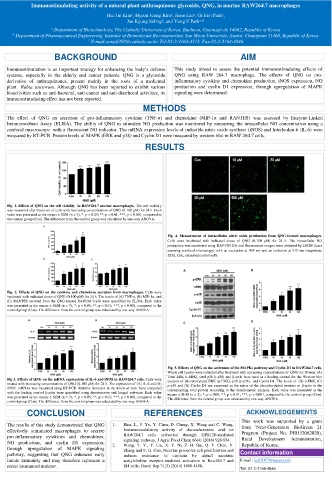
   Fig. 1. Effects of QNG on the cell viability in RAW264.7 murine macrophages. The cell viability
   was measured after treatment of cells with increasing concentrations of QNG (0-100 μM) for 24 h. Each
   value was presented as the means ± SEM (n = 3), *, p < 0.05; **, p < 0.01; ***, p < 0.001, compared to
   the control group (Con). The difference from the control group was calculated by one-way ANOVA.

                                                        Fig. 4. Measurement of intracellular nitric oxide production from QNG-treated macrophages.
                                                        Cells were incubated with indicated doses of QNG (0-100 μM) for 24 h. The intracellular NO
                                                        production was monitored using DAF-FM DA and fluorescence images were obtained by LSCM (laser
                                                        scanning confocal microscopy) with an excitation at 495 nm and an emission at 515 nm (magnitude
                                                        20X). Con, untreated control cells.


   Fig. 2. Effects of QNG on the cytokine and chemokine secretion from macrophages. Cells were
   incubated with indicated doses of QNG (0-100 μM) for 24 h. The levels of (A) TNF-α, (B) MIP-1α, and
   (C) RANTES secreted from the QNG-treated RAW264.7cells were quantified by ELISA. Each value
   was presented as the means ± SEM (n = 3), *, p < 0.05; **, p < 0.01; ***, p < 0.001, compared to the
   control group (Con). The difference from the control group was calculated by one-way ANOVA.


                                                        Fig. 5. Effects of QNG on the activation of the MAPKs pathway and Cyclin D1 in RAW264.7 cells.
                                                        Whole cell lysates were collected after treatment with increasing concentrations of QNG for 30 min. (A)
                                                        Total ERK (t-ERK), total p38 (t-p38) and β-actin were used as a loading control for the Western blot
   Fig 3. Effects of QNG on the mRNA expressions of IL-6 and iNOS in RAW264.7 cells. Cells were  analysis of phosphorylated ERK (p-ERK), p38 (p-p38), and Cyclin D1. The levels of (B) p-ERK, (C)
   treated with increasing concentrations of QNG (0-100 μM) for 24 h. The expression of (A) IL-6 and (B)  p-p38 and (D) Cyclin D1 are expressed as the ratios of the phosphorylated proteins or β-actin to the
   iNOS mRNAs was measured using RT-PCR. Relative increases in the levels of each band compared  corresponding total protein according to the densitometric analysis. Each value was presented as the
   with the loading control β-actin were quantified using densitometry and ImageJ software. Each value  means ± SEM (n = 3), *, p < 0.05; **, p < 0.01; ***, p < 0.001, compared to the control group (Con).
   was presented as the means ± SEM (n = 3), *, p < 0.05; **, p < 0.01; ***, p < 0.001, compared to the  The difference from the control group was calculated by one-way ANOVA.
   control group (Con). The difference from the control group was calculated by one-way ANOVA.
          CONCLUSION                            REFERENCES                       ACKNOWLEDGEMENTS
                                                                                This work was supported by a grant
   The results of this study demonstrated that QNG  1.  Han, L., J. Yu, Y. Chen, D. Cheng, X. Wang and C. Wang,  from 'Next-Generation BioGreen 21
   effectively stimulated macrophages to secrete  Immunomodulatory activity of docosahexenoic acid on  Program (Project No. PJ0132062020),
   pro-inflammatory cytokines and chemokines,  RAW264.7  cells  activation  through  GPR120-mediated  Rural  Development  Administration,
   NO production, and cyclin D1 expression,  2.  signaling pathway, J Agric Food Chem 66(4) (2018) 926-934.  Republic of Korea.
                                         Wang, Y. Y., Y. Liu, X. Y. Ni, Z. H. Bai, Q. Y. Chen, Y.
   through  upregulation  of  MAPK  signaling  Zhang and F. G. Gao, Nicotine promotes cell proliferation and
   pathway, suggesting that QNG enhances early  induces  resistance  to  cisplatin  by  alpha7  nicotinic  Contact information
   innate immunity and may therefore represent a  acetylcholine receptor-mediated activation in Raw264.7 and  E-mail: kcb5077@naver.com
   novel immunostimulator.               El4 cells, Oncol Rep 31(3) (2014) 1480-1488.  Tel: 82-2-2164-4846

