


Page 33 - M. Immunology
P. 33
Inhibitory Activity of Blood Coagulation Induced by Pig Tissue Factor Comparison Pig
  Tissue Factor Pathway Inhibitor α Fusion Immunoglobulin with Human Counterpart


  Chang-Hee Lee, Taehoon Chun
  Department of Biotechnology, College of Life Sciences and Biotechnology,
  Korea University, Seoul, 02841, Republic of Korea


                   BACKGROUND                                                  AIM

   Organ transplantation is a method to change a recipient’s damaged organ with a  We developed pig tissue factor pathway inhibitor fusion immunoglobulin
   healthy one (Denner 2014). Pig to human xenotransplantation could be a good  (TFPI-Ig) and human TFPI-Ig. These two therapeutic approaches were tested
   solution for the shortage of donor’s organs suitable for transplantation (Denner  for their ability for inhibiting pig TF activity in human plasma. Results showed
   2014). Pig islet xenotransplantation has been considered to treat type I diabetes  that Pig TFPI-Ig has higher efficiency for reducing the activity of pig TF.
   patients (Shaprio et al. 2000). However, xenotransplantation has some huddles
   that are induced by both innate and adaptive immunity in humans. These reactions  METHODS
   are much faster and more severe than allograft rejection (Zhu et al. 2014). Among
   various types of pig islet graft rejection in humans, instant blood mediated  Production and purification of soluble pig and human TFPI-Ig
   inflammatory reaction (IBMIR) is considered as the most important one to  Fusion immunoglobulin proteins were purified from culture supernatants
   overcome because IBMIR contributes more than half of pig islet xenograft loss  using protein A column.
   within a few hours (Nilsson et al. 2011). IBMIR caused by pig to human
   xenotransplantation can occur if pig tissue factor (TF) expressed on pig islets is  Inhibition test of pig TF/human FVIIa activity
   exposed to human plasma protein such as factor VII (FVII) and FX that can initiate  Pig TF activity inhibition test was conducted using tissue factor chromogenic
   thrombin generation and coagulation cascade (Van Der Windt et al. 2007). The  activity kit according to the manufacturer’s instructions.
   coagulation reaction occurs further severe inflammation via complement activation
   and neutrophil infiltration to human blood (Zhu et al. 2014)  Thrombin generation assay
                                                          The amount of thrombin generation was measured using a Thrombinoscope
                                                          software.


                                                RESULTS

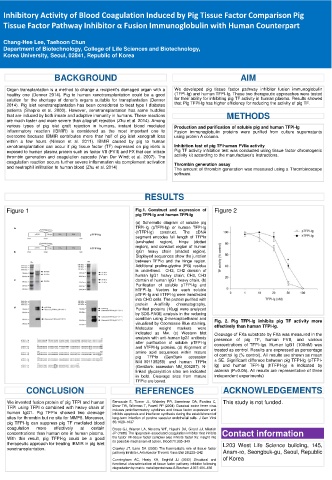
   Figure 1                                  Fig.1. Construct and expression of  Figure 2
                                             pig TFPI-Ig and human TFPI-Ig
                                             (a) Schematic diagram of soluble pig
      a                                      TFPI-Ig (pTFPI-Ig) or human TFPI-Ig
                                             (hTFPI-Ig)  construct.  The  cDNA
                                             segment encodes full length of TFPIα
                                             (unshaded  region),  hinge  (dotted
                                             region), and constant region of human
      b                                      IgG1 heavy chain (shaded region).
                                             Displayed sequences show the junction
                                             between TFPIα and the hinge region.
                                             Additional proline-glycine (PG) residue
                                             is underlined.  CH2, CH2 domain of
                                             human IgG1 heavy chain; CH3, CH3
      c                                      domain of human IgG1 heavy chain. (b)
                                             Purification of soluble pTFPI-Ig and
                                             hTFPI-Ig. Vectors for each soluble
                                             pTFPI-Ig and hTFPI-Ig were transfected
                                             into CHO cells. The protein purified with
                                             protein  A-affinity  chromatography.
      d                                      Purified proteins (10μg) were analyzed
                                             by SDS-PAGE analysis in the reducing
                                             condition using 2-mercaptoethanol and  Fig. 2. Pig TFPI-Ig inhibits pig TF activity more
                                             visualized by Coomassie Blue staining.  effectively than human TFPI-Ig.
                                             Molecular  weight  markers  were
                                             indicated as Mw. (c) Western blot  Cleavage of FXa substrate by FXa was measured in the
                                             analysis with anti-human IgG1 antibody  presence  of  pig  TF,  human  FVII,  and  various
                                             after purification of soluble pTFPI-Ig  concentrations of TFPI-Igs. Human IgG1 (100nM) was
                                             and hTFPI-Ig proteins. (d) Alignment of  treated as control. Results are expressed as percentage
                                             amino acid sequences within mature
                                             pig  TFPIα  (GenBank  accession  of control Ig (% control). All results are shown as mean
                                             NM_001135258) and human TFPIα  ± SE. Significant differece between pig TFPI-Ig (pTFPI-
                                             (GenBank accession NM_006287). N-  Ig) and human TFPI-Ig (hTFPI-Ig) is indicated by
                                             linked glycosylation sites are indicated  asterisk (P<0.05). All results are representative of three
                                             in bold. Cleavage sites from mature  independent experiments)
                                             TFPIα are boxed.
          CONCLUSION                         REFERENCES                   ACKNOWLEDGEMENTS
   We invented fusion protein of pig TFPI and human  Bensaude E, Turner JL, Wakeley PR, Sweetman DA, Pardieu C,  This study is not funded.
   TFPI using TFPI α combined with heavy chain of  Drew TW, Wileman T, Powell PP (2004) Classical swine fever virus
                                      induces proinflammatory cytokines and tissue factor expression and
   human IgG1. Pig TFPIα showed two cleavage  inhibits apoptosis and interferon synthesis during the establishment of
   sites for thrombin but no site for MMP8. Moreover,  long-term infection of porcine vascular endothelial cells. J Gen Virol
   pig TFPI-Ig can suppress pig TF mediated blood  85:1029–1037
   coagulation  more  effectively  at  certain  Broze GJ, Warren LA, Novotny WF, Higuchi DA, Girard JJ, Miletich
   concentrations than human one in human plasma.  JP (1988) The lipoprotein-associated coagulation inhibitor that inhibits  Contact information
   With this result, pig TFPI-Ig could be a good  the factor VII-tissue factor complex also inhibits factor Xa: insight into
                                      its possible mechanism of action. Blood 71:335–343
   therapeutic approach for treating IBMIR in pig islet                   L203 West Life Science building, 145,
   xenotransplantation.               Crawley JT, Lane DA (2008) The haemostatic role of tissue factor
                                      pathway inhibitor. Arterioscler Thromb Vasc Biol 28:233–242  Anam-ro, Seongbuk-gu, Seoul, Republic
                                      Cunningham AC, Hasty KA, Enghild JJ (2002) Structural and  of Korea
                                      functional characterization of tissue factor pathway inhibitor following
                                      degradation by matrix metalloproteinase-8.Biochem J 367:451–458

