


Page 159 - D. Cancer biology
P. 159
Comparison of Sensors to Interrogate Biomarkers
in Hepatocellular Carcinoma
1
Dongwoon Han , Si-Cho Kim , Young-Joon Kim and Jeongsil Ha 1
2
3
1 Department of Integrative Bioscience & Biotechnology, College of Life Sciences, Sejong University, Seoul, Korea.,
2 Department of Integrated Omics for Biomedical Science, Graduate School, Yonsei University, Seoul, Korea,
2 Department of Biochemistry, Graduate School, Yonsei University, Seoul, Korea,
ABSTRACT
Hepatocellular carcinoma is one of the most prevalent cancers in Asia but lacks efficient
therapeutic treatment except for liver transplantation. Tumor heterogeneity is one of the
obstacles to efficient diagnosis and treatment of cancer. In many cancers, tumor-associated
methylations is not only important for early cancer detection but also for therapeutics. As each
patient respond differently to the therapy, specific prognosis subtype distinctions would be
clinically informative. We identified several DNA methylation biomarkers that are associated with
prognosis in hepatocellular carcinoma patients.
To validate their clinical utility and reach clinical settings, we designed and tested various
sensing systems that can discriminate different status of DNA methylation in those biomarkers.
We tested MSP, molecular beacon probing, iDDS and HRM to find most effective sensing system.
Here we present current status of the development and hope our result can contribute to
precision medicine.
RESULTS
EPIC chip (850K) Molecular Beacon iDDS
EpiTyper
HCC tissue samples Identified DNA methylation biomarkers
* N: Normal Molecular Beacon iDDS
* MG1: Tumor patients w/good
prognosis
* MG2: Tumor patients w/ bad
prognosis
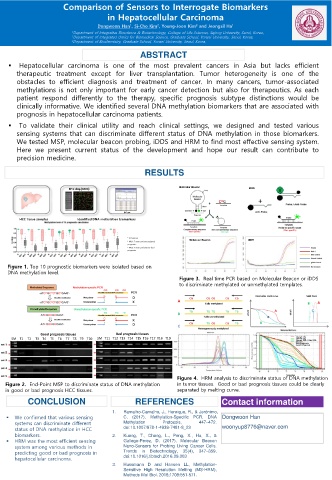
Figure 1. Top 10 prognostic biomarkers were isolated based on
DNA methylation level.
Figure 3. Real time PCR based on Molecular Beacon or iDDS
to discriminate methylated or unmethylated templates.
Good prognosis tissues Bad prognosis tissues
SM T1 T2 T3 T4 T5 T6 T7 T8 T9 T10 SM T11 T12 T13 T14 T15 T16 T17 T18 T19 Unmet CTL
Unmet CTL
Unmet 50% / Met 50%
Met CTL
Bad Prognosis
Good Prognosis
Figure 4. HRM analysis to discriminate status of DNA methylation
Figure 2. End-Point MSP to discriminate status of DNA methylation in tumor tissues. Good or bad prognosis tissues could be clearly
in good or bad prognosis HCC tissues. separated by melting curve.
CONCLUSION REFERENCES Contact information
1. Ramalho-Carvalho, J., Henrique, R., & Jerónimo,
We confirmed that various sensing C. (2017). Methylation-Specific PCR. DNA Dongwoon Han
systems can discriminate different Methylation Protocols, 447–472. woonyup8776@naver.com
status of DNA methylation in HCC doi:10.1007/978-1-4939-7481-8_23
biomarkers. 2. Kuang, T., Chang, L., Peng, X., Hu, X., &
HRM was the most efficient sensing Gallego-Perez, D. (2017). Molecular Beacon
system among various methods in Nano-Sensors for Probing Living Cancer Cells.
predicting good or bad prognosis in Trends in Biotechnology, 35(4), 347–359.
doi:10.1016/j.tibtech.2016.09.003
hepatocellular carcinoma.
3. Hussmann D and Hansen LL, Methylation-
Sensitive High Resolution Melting (MS-HRM),
Methods Mol Biol. 2018;1708:551-571.

