


Page 137 - D. Cancer biology
P. 137
Extracellular Microenvironment Change through B16F10 Melanoma Cancer Cell-

      derived Proteins Induces Properties of Cancer Stem-like Cells in NIH3T3 Cells
                                      Hyeongrok Choi and Jin Woong Chung
                       Department of Biological Science, Dong-A University, Busan 49315, Korea

                   BACKGROUND                                                  AIM
    Cancer stem cells (CSCs) can cause solid tumors and also have properties of self-  This study argues the tremendous importance of the extracellular
   renewal and differentiation. And CSC can have the ability to lead to drug resistance and  microenvironmental effect on the generation of CSCs. It provides a simple
   relapse in many tumors. However, there is a lack of understanding of the origins of the  experimental method for deriving CSCs that could be based on the
   CSC and research on specific targeted therapies. Therefore, it is necessary to establish a  development of targeted therapy techniques.
   cell line, such as a cancer stem, in order to develop various studies.
                                                METHODS
   Cell culture
   B16F10 and NIH3T3 cells were grown in DMEM supplemented with 10% FBS and penicillin/streptomycin at 37 °C in a humidified incubator. J1 mES cells were grown in DMEM supplemented with 20% FBS, penicillin/streptomycin, 1%
   non-essential amino acid, 1% L-glutamin, 0.1% β-mercaptoethanol, and leukemia inhibitory factor at 37 °C in a humidified incubator. `
   Induction of colony formation
   NIH3T3 cells were seeded in 24-well tissue culture plates at a density of 2 × 10 4 cells/well. In the following day, the cells were treated with designated concentrations of extracted proteins from B16F10 melanoma cells. After 48 h
   incubation, each well of the plates was observed using a microscope.
   Soft agar assay
   A bottom, cell-free layer of 1% novel agar and a cell culture medium containing 20% FBS was plated in 12-well tissue culture plates and allowed to solidify at room temperature on a clean bench. A top layer of 0.7% novel agar and a
   culture medium containing 20% FBS, including 1 × 10 3 colony cells, was plated over the solid bottom layer. The plates were incubated at 37 °C and 5% CO 2 for 10–14 days until colonies grew to about 100 μm in diameter.
   Alkaline phosphatase staining assay
   J1 mES cells were seeded in a 0.1% gelatin-coated 24-well tissue culture plate at a density of 1 × 10 3 cells/well and cultured for five days. The cells were then fixed in 4% paraformaldehyde for 2 min and washed five times with 1xTBST.
   The washed cells were stained by an alkaline phosphatase (AP) staining solution mixture for 30 min in the dark. Then, the cells were washed with 1xPBST and observed at 1xPBS.
   Chemotherapy resistance assay
   The cells were seeded in 96-well tissue culture plates at a density of 1 × 10 3 cells/well. On the following day, the cells were treated with designated concentrations of cisplatin and mitomycin C. After 24 h incubation, 0.5 mg/mL of MTT
   was added to each well containing 100 μl of medium, and the cells were incubated at 37 °C for 4 h. The medium was removed, and 100 μl of DMSO was added. After shaking for 5 min to mix thoroughly the formazan with DMSO,
   absorbance was measured on the spectrum microplate spectrophotometer at 550 nm.
   Drug efflux assay
   Colonies were seeded on ultra-low attachment plates at 1 × 10 3 cells/well and cultured at 37 °C in a humidified incubator (5% CO 2 ). After three days, the colonies were treated with 200 μM verapamil and incubated at 37 °C for 20 min.
   Then, Hoechst 33342 dye was added to a final concentration of 2 μg/ml in the presence or absence of verapamil. The colonies were incubated at 37 °C for 30 min in the dark and observed using a fluorescent microscope.
   Xenograft assay
   Male BALB/cAnNTac nude mice were obtained from Raon Bio. All mice used in the study were six to eight weeks of age. The mice were injected subcutaneously with 1 × 10 6 NIH3T3 cells and induced colonies in Hank’s balanced salt
   solution (100 μl). The mice were weighed, and the tumors were monitored two to three times per week in two diameters using calipers 10 days after injection. The tumor volumes were determined using A 2 × B × 0.5, where A is the
   shortest diameter and B is the longest diameter. All animal experiments were approved by the Institutional Animal Care and Use Committee of the Korea Research Institute of Bioscience and Biotechnology and were followed the
   guidelines of the Animal Care Committee of the Korea Research Institute of Bioscience and Biotechnology.
                                                RESULTS
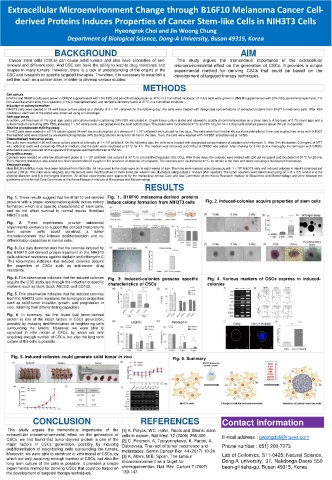
   Fig. 1. These results suggest that the B16F10 cell-derived  Fig. 1. B16F10 melanoma-derived proteins
   proteins with a proper concentration quickly induce colony  induce colony formation from NIH3T3 cells  Fig. 2. Induced-colonies acquire properties of stem cells
   formation, which is a specific characteristic of stem cells,
   and do not affect survival in normal mouse fibroblast
   NIH3T3 cells.
   Fig.  2.  These  experiments  provide  substantial
   experimental evidence to support the concept that proteins
   from  cancer  cells  could  construct  a  tumor
   microenvironment that induces dedifferentiation and re-
   differentiation capacities in normal cells.
   Fig. 3. Our data demonstrated that the colonies induced by
   the B16F10 cell-derived protein treatment in the NIH3T3
   cells obtained resistance against cisplatin and mitomycin C.
   This observation indicates that induced colonies acquire
   the properties of CSCs such as anti-cancer drug
   resistance.
   Fig. 4. This observation indicates that the induced colonies  Fig. 3. Induced-colonies possess specific  Fig. 4. Various markers of CSCs express in induced-
   acquire the CSC attributes through the induction of specific  characteristics of CSCs  colonies
   markers, such as Oct4, Sox2, ABCG2, and CD133.
   Fig. 5. This observation indicates that the induced colonies
   from the NIH3T3 cells maintains the tumorigenic properties
   such as solid tumor initiation, growth, and progression in
   vivo, retaining their differentiating capacities.
   Fig. 6. In summary, we first found that tumor-derived
   protein is one of the major factors in CSCs generation,
   possibly by inducing dedifferentiation of neighboring cells
   surrounding the tumors. Moreover, we were able to
   construct in vitro model of CSCs, by which not only
   acquiring enough number of CSCs, but also the long term
   culture of the cells is possible.
     Fig. 5. Induced-colonies could generate solid tumor in vivo  Fig. 6. Summary


            CONCLUSION                         REFERENCES                Contact information

    This study argues the tremendous importance of the [1] K. Polyak, WC. Hahn, Roots and Stems: stem
   extracellular microenvironmental effect on the generation of cells in cancer, Nat Med. 12 (2006) 296-300.  E-mail address : gwangdoli@naver.com
   CSCs. we first found that tumor-derived protein is one of the  [2] C. Peitzsch, A. Tyutyunnykova, K. Pantel, A.
   major factors in CSCs generation, possibly by inducing  Dubrovska, The root of tumor recurrence and   Phone number : 051) 200-7273
   dedifferentiation of neighboring cells surrounding the tumors.  metastases, Semin Cancer Biol. 44 (2017) 10-24.
   Moreover, we were able to construct in vitro model of CSCs, by  [3] A. Albini, M.B. Sporn, The tumour  Lab of Cellomics, S11-0425, Natural Science,
   which not only acquiring enough number of CSCs, but also the          Dong-A university, 37, Nakdonga-Daero 550
   long term culture of the cells is possible. It provides a simple  microenvironment as a target for
   experimental method for deriving CSCs that could be based on  chemoprevention, Nat. Rev. Cancer 7 (2007)   beon-gil saha-gu, Busan 49315, Korea
   the development of targeted therapy techniques.  139-147.

