


Page 93 - ebook
P. 93
The Function of Nuclear Protein 1 in adipogenesis


         Tatiana Patricia Mendes Duarte 1,2,3 , Tae-Hyun Kim 1,3, † ,Bo Kyung       b        c
         Yoon 1,2,3 , Yoseob Lee 1,2,3 , Nahee Hwang 1,2,3 , Kyu-Hye Chun 1,2,3 ,   a
                            1,3
         Jae-Won Kim 1,2,3 ,Mi-Young Kim , Jae-Woo Kim  1,2,3
      1 Biochemistry and Molecular Biology , Yonsei University College of Medicine , Seoul
      03722, Korea, Brain Korea 21 PLUS Project for Medical Science, Yonsei University ,   d
               2
      Seoul 03722, Korea, Chronic Intractable Disease for Systems Medicine Research
                   3
      Center, Yonsei University College of Medicine , Seoul 03722, Korea
      †  poster presentor
      Abstract
      Studying the biological networks controlling adipogenesis may facilitate
      greater understanding of the pathophysiology of obesity. This study shows
      that Nuclear protein 1 is present in the white adipose tissue and increases
      its expression levels during adipogenesis. Nuclear protein 1 has been   e       f
      extensively studied in cancer, however, its role in metabolism and
      adipogenesis still has to be greatly explored. In early stage of adipogenesis,
      when Nuclear protein 1 is knocked down in 3T3-L1 cells, adipogenesis is
      shown to be impaired with Chop increase at day 0, which might constitute
      a cause for the adipogenesis impairment due to C/EBPb activity inhibition.
      In addition, adipogenesis showed to become impaired and, cell death was
      also induced in treatment of Nuclear protein 1 inhibitor, ZZW-115. ZZW-
      115 treated cells showed to have mitochondria superoxide increased   g
      presence in relation to the control, and it was correlated with apoptosis,
      evidenced by pro-apoptotic BAX and PUMA increased expression in these
      cells. Similar results were verified when Nuclear protein 1 was knocked
      down at 2 days after induction of differentiation. Taken together, our
      study demonstrated that Nuclear protein 1 might have a role in protecting
      3T3-L1 cells from Chop expression in early adipogenesis and ROS excessive
      production in late adipogenesis.
      Result
        a                      b
                            Np1
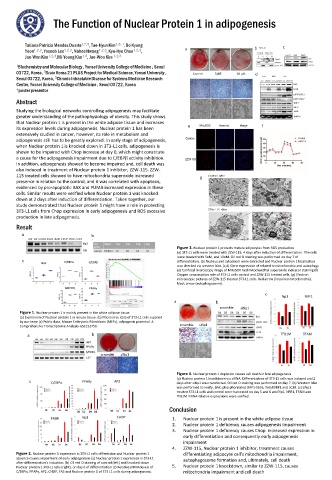
                                                           Figure 3. Nuclear protein 1 protects mature adipocytes from ROS production
                            18s
                                                           (a) 3T3-L1 cells were treated with ZZW-115, 4 days after induction of differentiation. The cells
                                                           were treated with 5uM, and 10uM. Oil red O staining was performed on day 7 of
        c             C/EBPa  C/EBPb                       differentiation. (b) Nucleus and cytoplasm were extracted and Nuclear protein 1 localization
              Np1
                                                           was checked via western blot. (c,d) Gene expression of related to mitochondria and autophagy
                                                           (e) Confocal microscopy image of MitoSOX Red mitochondrial superoxide indicator staining (f)
                                                           Oxygen consumption rate of 3T3-L1 cells control and ZZW-115 treated cells. (g) Electron
                                                           microscopic pictures of ZZW-115 treated 3T3-L1 cells. Red arrow (impaired mitochondria),
                                                           black arrow (autophagosome).
                      ADIPOQ  PPARg
                                                                                       c
                                                                                             Np1    NRF1
                                                          a            b
                                                                         scramble  siNp1
       Figure 1. Nuclear protein 1 is mainly present in the white adipose tissue
       (a) Expression of Nuclear protein 1 in mouse tissue. (b) Microarray data of 3T3-L1 cells supplied
       by our team (c) Public data, Mouse Embryonic Fibroblasts (MEFs), adipogenic potential: A
       Comprehensive Transcriptome Analysis-GSE152750.      scramble  siNp1
          a                    b                                                            TFB1M   TFAM
                             NP1
                             PPARg
                             C/EBPa
                                  scramble  siNp1
                             L32
                                                           Figure 4. Nuclear protein 1 depletion causes cell death in late adipogenesis
                                                           (a) Nuclear protein 1 knockdown via siRNA. Differentiation of 3T3-L1 cells was induced and 2
           c      C/EBPa    PPARg     AP2                  days after siNp1 was transfected. Oil red O staining was performed on day 7. (b) Western blot
                                                           was performed to verify, BAX, phosphorylated DRP1-S616, Total DRP1 and LC3B. (c) siNp1
                                                           treated 3T3-L1 cells and control were harvested on day 5 and 6 and Np1, NRF1, TFAM and
                                                           TFB1M mRNA relative expressions were verified.
                                                        Conclusion

                  FASN      Np1        CHOP              1.  Nuclear protein 1 is present in the white adipose tissue
                                                         2.  Nuclear protein 1 deficiency causes adipogenesis impairment
                                                         3.  Nuclear protein 1 deficiency causes Chop  increased expression in
                                                             early differentiation and consequently early adipogenesis
                                                             impairment
                                                         4.  ZZW-115, Nuclear protein 1 inhibitor, treatment causes
      Figure 2. Nuclear protein 1 expression in 3T3-L1 cells diffentiaion and Nuclear protein 1    differentiating adipocyte cell’s mitochondria impairment,
      absence causes impairment of early adipogenesis (a) Nuclear protein 1 expression in 3T3-L1   autophagosome formation and, ultimately, cell death
      after differentiation’s induction. (b) Oil red O staining of control (left) and knocked down
      Nuclear protein 1 3T3-L1 cells (right), on day 6 of differentiation (c) Relative mRNA levels of   5.  Nuclear protein 1 knockdown, similar to ZZW-115, causes
      C/EBPa, PPARg, AP2, CHOP, FAS and Nuclear protein 1 of 3T3-L1 cells during adipogenesis.  mitochondria impairment and cell death

