


Page 103 - ebook
P. 103
Development of allele-specific CRISPR gene therapy for
                   CReVIS-seq: a highly accurate and multiplexable
                   Epidermolysis Bullosa Simplex Dowling-Meara(EBS-DM)
                   CRISPR-based method for mapping lentivirus inte-
                   with single-base precision
                                           Yohan An1, Hyomin Lee2, Junho K Hur1,3,*
    Heon Seok Kim1,2,6,†, Gue-Ho Hwang1,2,†, Hyomin Lee3, Taegeun Bae4, Seong-Ho Park3, Yong Jun Kim3,5, Jae-Hoon Park5,
    1 Graduate School of Biomedical Science č Engineering, Hanyang University, Seoul, Korea, 2 Department of Medicine, Major in Medical Genetics, Graduate School,
    Sun Lee5,*, Sangsu Bae1,2,*, Junho K Hur3,5,*
    Hanyang University, Seoul, Korea, 3 Department of Genetics, College of Medicine, Hanyang University, Seoul, Korea
     Abstract
      Abstract
                                                                                             CRISPR-mediated Frameshft
    The Dowling-Meara variant of epidermolysis bullosa simplex
    (EBS-DM) is an inherited skin disorder typified by blisters that pri-
    marily affect the skin after mechanical trauma. While EBS-DM is a
    severe disease that is associated with significant morbidity in in-
    fancy and early childhood, effective treatment is currently unavail-
    able. The genetic cause of EBS-DM is dominant-negative muta-
    tions within either the KRT5 (12q13.13) or KRT14 (17q12.q21)
    genes, encoding keratin 5 and keratin 14, respectively. The keratin
    proteins are highly abundant in the cytoplasm of basal keratino-
    cytes in the epidermis, providing cytoskeletal scaffold within the
    epithelial cells for protection against mechanical and non-mechani-
    cal stresses. If mutations within either KRT5 or KRT5 genes occur,
    keratin 5 and keratin 14 filament network structures become frag-
    ile, which leads to epidermal cytolysis and blistering that are symp-
    toms of EBS-DM. However, there are currently no therapies ap-
    proved for the treatment of EBS-DM, besides symptomatic care. In   Figure 1. Scheme of mutant keratin gene targeting by allele-spe-
    this regard, gene therapy might be a potential option for corrective   cific CRISPR-Cas9
    therapy for these patients. To this end, in this study, we used   After transfection of reporter vector with sgRNA and Cas9 vector, hu-
    CRISPR/Cas9-gRNA to modify mutant KRT5 and KRT14 genes for   man cells express RFP, cas9, and sgRNA. Mutant allele-specific Cas-
    therapy. We developed allele-specific CRISPR-Cas9 methods to   9/sgRNA don’t cleave wild-type but mutant keratin gene in reporter
    target specific mutations associated with EBS-DM.         vector. If CRISPR-mediated NHEJ occurs in the keratin gene,
                                                              insertion and deletion (Indel) induce frameshift mutation, which
                                                              causes GFP gene expression. These cells are analyzed by FACS
     Introduction                                             according to RFP and GFP expression.
    Skin is the layer of usually soft, flexible outer tissue covering the
    body, consisting of epidermis, dermis, and hypodermis. The main   Results
    functions of the skin are protection, sensation, and heat regulation
    that can be abnormally affected by the skin disorder. Epidermolysis                Wild type
    bullosa (EB) is a group of rare skin disorders that causes the skin to
    tear and blister at the slightest touch. Epidermolysis bullosa simplex
    (EBS) is responsible for the majority of the subtypes of EB that are
    divided by the location of the blister. Also, EBS is divided into the
    age of onset and clinical features. Among the subtypes of EBS, the   Comp-PerCP-A
    Dowling-Meara variant of epidermolysis bullosa simplex (EBS-DM)
    is a severe disease that is associated with significant morbidity in
    infancy and early childhood. The genetic cause of EBS-DM is
    dominant-negative mutations within either the KRT5 (12q13.13) or
    KRT14 (17q12.q21) genes, encoding keratin 5 and keratin 14,                         Mutant
    respectively. Mutant keratin 5 and keratin 14 filament network
    structures are more fragile than normal structures, which leads to
    epidermal cytolysis and blistering that are symptoms of EBS-DM.  In
    this regard, gene therapy might be a potential option for corrective   Comp-PerCP-A
    therapy for these patients. To this end, in this study, we used
    CRISPR/Cas9-gRNA to modify mutant KRT5 and KRT14 genes for
    therapy and developed allele-specific CRISPR-Cas9 with
    single-base precision to target specific mutations associated with
    EBS-DM.
     Overview                                                                 Comp-GFP-A           Comp-GFP-A

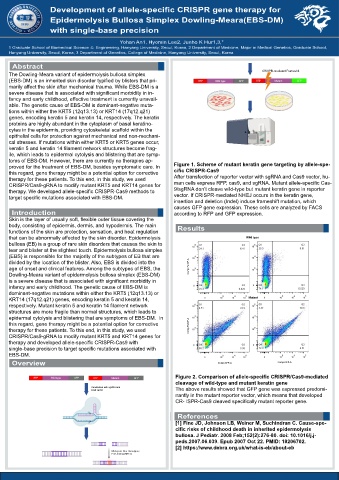
                                                               Figure 2. Comparison of allele-specific CRISPR/Cas9-mediated
                                                               cleavage of wild-type and mutant keratin gene
                                 Transfection with sgRNA and   The above results showed that GFP gene was expressed predomi-
                                 Cas9 vector
                                                               nantly in the mutant reporter vector, which means that developed
                                                               CR- ISPR-Cas9 cleaved specifically mutant reporter gene.

                                                               References
                                                                References
                                                               [1] Fine JD, Johnson LB, Weiner M, Suchindran C. Cause-spe-
                                                               cific risks of childhood death in inherited epidermolysis
                                                               bullosa. J Pediatr. 2008 Feb;152(2):276-80. doi: 10.1016/j.j-
                                                               peds.2007.06.039. Epub 2007 Oct 22. PMID: 18206702.
                                                               [2] https://www.debra.org.uk/what-is-eb/about-eb
                                        Mutagenic Non-Homolgous
                                        End Joining (NHEJ)

