


Page 3 - L. Genetics and genomics
P. 3
Cloning and functional characterization of insect odorant receptors
1,
Je Jun Oh 1,2 and Jun-Ho Lee *
1 Department of Biotechnology, Chonnam National University, Gwangju, Korea
2 Microzyme corporation, Damyang Samanli 234, Jeonmam, Korea
Summary of the Drosophila Chromosome Screen
ABSTRACT
The highly specialized olfactory receptor neurons (ORNs) on
the antennae of male moths can recognize blends of several
pheromone components. In present study, a total of six
candidate pheromone compounds are found and functionally
characterized in the electophyological study. In here, we report
on novel candidate pheromone compounds in the same species.
The olfactory receptor is analysed revealed that finding
compounds are specifically affect in on olfactory receptor. In
silico study revealed that odorant-gated ion channels comprised
of a highly conserved co-receptor and our chemicals are
binding at extra cellular site. Functional analyses on the
odorant-gated ion channels comprised of a highly conserved
co-receptor were then performed using the heterologous
expression system of Xenopus oocytes. pheromone components
did not respond to any tested pheromone components and
analogs. These results may contribute to clarifying how
pheromone detection works in odorant-gated ion channels
comprised of a highly conserved co-receptor.
Key words: pheromone receptor; pheromone; Xenopus oocytes
MATERIALS AND METHODS
Cloning of Drosophila odorant-gated ion channels
Recording and Data analysis
Two-microelectrode voltage-clamp recording (Oocyte Clamp Adopted from Cell. 2017 Aug 10;170(4):736-747.e9.
(OC-725C), Digidata 1200A)
RESULTS
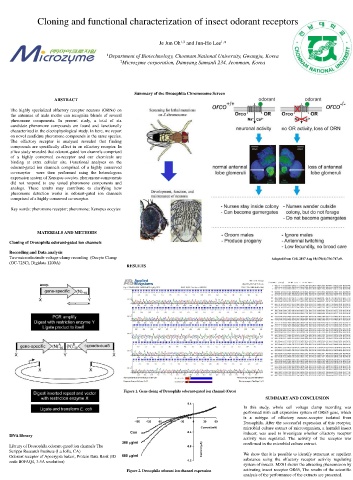
Figure 1. Gene cloing of Drosophila odorant-gated ion channel (Orco)
SUMMARY AND CONCLUSION
In this study, whole cell voltage clamp recording was
performed with cell expression system of OR65 gene, which
is a subtype of olfactory neuro-receptor isolated from
Drosophila. After the successful expression of this receptor,
microbial culture extract of microorganism, a harmful insect
inducer, was used to investigate whether olfactory receptor
DNA library
activity was regulated. The activity of the receptor was
confirmed in the microbial culture extract.
Library of Drosophila odorant-gated ion channels The
Scripps Research Institute (La Jolla, CA)
Odorant receptor of Apocrypta bakeri, Protein Data Bank (ID A We show that it is possible to identify attractant or repellent
code B0FAQ4, 3.5A resolution) substance using the olfactory receptor activity regulating
system of insects. MZ01 shows the attracting phenomenon by
Figure 2. Drosophila odorant ion channel expression activating insect receptor OR65, The results of the scientific
analysis of the performance of the extracts are presented.

