


Page 7 - L. Genetics and genomics
P. 7
Identification of CHPF2 as a novel candidate gene
                         for progressive nonsyndromic hearing loss.

                 Kyumin Kim¹, Byunghwa Noh¹, Heon Yung Gee², Jae Young Choi¹, Jinsei Jung¹*
                                                                                            ,
            ¹Department of Otorhinolaryngology, Yonsei University College of Medicine, Seoul 03722, Republic of Korea,
              ²Department of Pharmacology, Yonsei University College of Medicine, Seoul 03722, Republic of Korea

                      BACKGROUND                                                AIM

   Hearing loss is the most common sensory disorder in humans. Hearing loss caused by autosomal dominant diseases  *To investigate novel causes of progressive hearing loss with autosomal dominant
   accounts for 22-25% of hereditary hearing loss, and about 30 causative genes have been identified. However, the  inheritance.
   exact association and mechanism for this are not yet known. In addition, there are many related genes that have not
   been discovered yet, and research is underway to discover them. In this study, we uncovered CHPF2 as a newly  *To elucidate the molecular pathomechanism of hearing loss related with the mutation in
   discovered deafness gene through whole exome sequencing in a family where affected individuals showed  CHPF2
   progressive hearing loss with the onset from 20s to 40s. (YUHL cohort)
   Therefore, we studied how it affects Othith and hair cells when injected into zebrafish embryos through Mo injection
   targeting chpf2.
                                                  METHODS

    - Variant filtering process for the identification of causative mutations.    - MO injection
                                                                                 1. calculating the concentration based on the Mo
                                                                                 sequence information {chpf2 e2i2 (ata aat gtt tcc tca
                                                                                 cct gat gct t; 25bp DNA)}, prepare a mixture.
                                                                                 2. obtaining a fertilized egg from an adult zebrafish,
                                                                                 about 4~6nL microinjection is performed into the one-
                                                                                 celled fertilized egg. (Through a pre-test, the
                                                                                 appropriate concentration of MO was set to 4-6 ng.)
                                                                                 3. incubation for 5 days at 28 degrees, stain with Yo-
                                                                                 pro1 staining solution (2uM) and wash.
                                                                                 4. Anesthetize with MS-222 (Tricaine), fix in 3%
                                                                                 methyl cellulose, and observe hair cells in neuromast
                                                                                 under a fluorescence microscope or confocal.
                                                  RESULTS
                                                                    Control              MO injected
                            (B)
      (A)


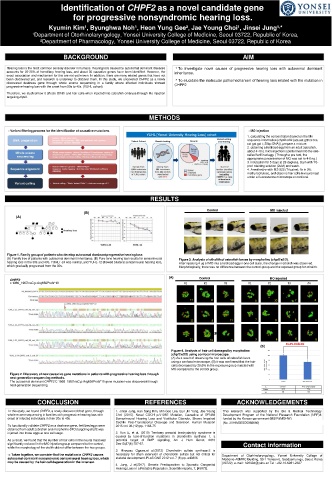
   Figure 1. Family group of patients who develop autosomal dominant progressive hearing loss
   (A) Family tree of patients with autosomal dominant inheritance. (B) Pure tone hearing test results for sensorineural   Figure 3. Analysis of otholith of zebrafish larvae by morpholino (chpf2 e2i2).
   hearing loss in the 30s and 40s. YUHL1-24 was normal, and YUHL-12 showed bilateral sensorineural hearing loss,   After injecting 4 ug of MO into a fertilized egg in one cell state, the change in otholith was observed.
   which gradually progressed from the 30s.                Morphologically, there was no difference between the control group and the exposed group for otholith.
                                                        (A)       Control
    CHPF2                                                                                MO injected
    c.1966_1967insC;p.Arg656Profs*10                         #1    #2     #3      #1    #2     #3    #4

                                                               11     9     10      8     10     7     8


                                                               11     8     11      7      8     8      4
                                                                       (B)
                                                               11    16     6       9      8     6      8
                                                                                              26.6% reduce
                                                                                      (B)
                                                         Figure 4. Analysis of hair cell damaged by morpholino
                                                         (chpf2 e2i2) using confocal microscope.
                                                         (A) As a result of observing the hair cells of zebrafish larva
                                                         using a confocal microscope, (B) it was confirmed that the hair
                                                         cells decreased by 26.6% in the exposure group injected with
                                                         MO compared to the control group.
    Figure 2. Discovery of new causative gene mutations in patients with progressive hearing loss through
    next-generation sequencing methods.
    The autosomal dominant CHPF2 C.1966_1967insC;p.Arg656Profs*10 gene mutation was discovered through
    next-generation sequencing.
             CONCLUSION                         REFERENCES                    ACKNOWLEDGEMENTS
    In this study, we found CHPF2, a newly discovered deaf gene, through   1. Jinsei Jung, Han Sang Kim, Min Goo Lee, Eun Jin Yang, Jae Young  This research was supported by the Bio & Medical Technology
    whole exome sequencing in families with progressive hearing loss with   Choi (2015). Novel COCH p.V123E Mutation, Causative of DFNA9  Development Program of the National Research Foundation (NRF)&
    onset of infected individuals in their 20s to 40s.  Sensorineural Hearing Loss and Vestibular Disorder, Shows Impaired  funded by the Korean government (MSIP&MOHW)
                                       Cochlin Post-Translational Cleavage and Secretion. Human Mutation  (No. 2019M3E5D5066690)
    To functionally validate CHPF2 as a deafness gene, fertilized eggs were   2015 vol. 36 (12) pp. 1168-75
    obtained from adult zebrafish and morpholino (MO) targeting chpf2 was
    injected into those eggs at one cell stage.  2. Yun Li, et al. (2010) Temtamy preaxial brachydactyly syndrome is
                                       caused by loss-of-function mutations in chondroitin synthase 1, a
    As a result, we found that the number of hair cells in the neural mast was   potential  target  of  BMP  signaling;  Am  J  Hum  Genet.  2010
    significantly reduced in the MO injection group compared to the control,   Dec10;87(6):757-67.  Contact information
    while the morphology of the otolith did not differ between the two groups.
                                       3. Hiroyasu Ogawa,et al.(2012) Chondroitin sulfate synthase-2 is
    -> Taken together, we consider that the mutation in CHPF2 causes   necessary for chain extension of chondroitin sulfate but not critical for  Department of Otorhinolaryngology, Yonsei University College of
    autosomal dominant nonsyndromic sensorineural hearing loss, which   skeletal development. PLoS ONE 2012 vol. 7 (8) pp. e43806  Medicine ABMRC Building, 50-1 Yonsei-ro, Seodaemun-gu, Seoul, Korea
    may be caused by the hair cell degeneration in the inner ear.        (03722) e-mail : h20394@yuhs.ac Tel : +82-10-6281-2327
                                       4. Jung, J et(2017). Genetic Predisposition to Sporadic Congenital
                                       Hearing Loss in a Pediatric Population. Scientific reports, 7, [45973].

