


Page 89 - D. Cancer biology
P. 89
[D-59]
                Downregulation of ACSM3 promotes tumorigenesis in breast cancer.
                                            Hong-Beum Kim
         Department of Premedical Course, Chosun University School of Medicine, 309 Pilmun-daero, Dong-gu,

                                     Gwang-ju 61452,Republic of Korea


   Abstract   Breast cancer is one of the most common cancer diagnosed worldwide. However, the detailed molecular mechanisms
              underlying antitumor activity in breast cancer remains largely unknown. Acyl-CoA medium-chain synthetase 3 (ACSM3) is an
              acyl-CoA synthetase which form an activating thioester linkage between the fatty acid and CoA. We investigated the biological
              function and clinical implications of ACSM3 in breast cancer. We revealed ACSM6-mediated gene expression profile in breast
              cancer cells using RNA-Sequencing. We found that ACSM3 expression was significantly decreased in tumors (75%) compared
              to normal. Migration & invasion assay and soft agar assays were carried out for functional analysis in vitro and a xenograft
              model was used to analyze the effects of ACSM3 on cancer growth in vivo. Overexpression of ACSM3 attenuated migration
              and invasion of breast cancer cells in vitro and upregulated the phosphorylation of AKT. Our study indicates that ACSM3
              suppresses cell growth, migration and invasion by directly upregulating WNT/AKT-pathway in breast cancer, acting as a tumor
              suppressor. Our study also suggests that ACSM3 may serve as a potential therapeutic target for patients in breast cancer.


   Result


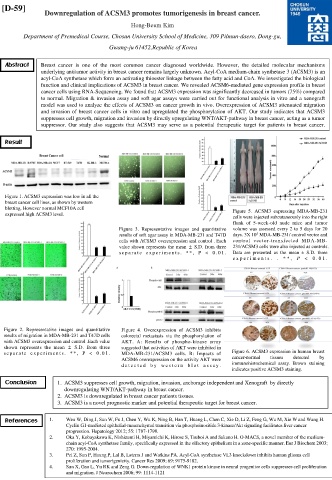
   Figure 1. ACSM3 expression was low in all the
   breast cancer cell lines, as shown by western
   blotting. However normal MCF10A cell                                      Figure 5. ACSM3 expressing MDA-MB-231
   expressed high ACSM3 level.
                                                                             cells were injected subcutaneously into the right
                                                                             flank of 5-week-old nude mice and tumor
                                        Figure 3. Representative images and quantitative  volume was assessed every 2 to 5 days for 20
                                                                                    5
                                        results of soft agar assay in MDA-MB-231 and T47D  days. 3X 10 MDA-MB-231/ control vector and
                                        cells with ACSM3 overexpression and control . Each  control vector-transfected MDA-MB-
                                        value shown represents the mean ± S.D. from three  231/ACSM3 cells were also injected as controls.
                                        s ep a r at e ex p er i m e n t s . ** , P < 0 . 01 .  Data are presented as the mean ± S.D. three
                                                                             ex p e r i m en t s .  .  **,  P <  0 . 01 .


  Figure 2. Representative images and quantitative  Figure 4. Overexpression of ACSM3 inhibits
  results of migration in MDA-MB-231 and T47D cells  colorectal metastasis via the phosphorylation of
  with ACSM3 overexpression and control .Each value  AKT. A: Results of phospho-kinase array
  shown represents the mean ± S.D. from three  suggested that activities of AKT were inhibited in
  s e p ar at e ex p er i m e n t s . * *, P < 0 . 01 .  MDA-MB-231/ACSM3 cells. B: Impacts of  Figure 6. ACSM3 expression in human breast
                                         ACSM6 overexpression on the activity AKT were  cancer-normal  tissues  detected  by
                                         d et ec t ed by w es t er n b lo t a ssa y .  immunohistochemical assay. Brown staining
                                                                            indicates positive ACSM3 staining.
   Conclusion       1.  ACSM3 suppresses cell growth, migration, invasion, anchorage independent and Xenograft  by directly
                      downregulating WNT/AKT-pathway in breast cancer.
                    2.  ACSM3 is downregulated in breast cancer patients tissues.
                    3.  ACSM3 is a novel prognostic marker and potential therapeutic target for breast cancer.


   References    1.    Wen W, Ding J, Sun W, Fu J, Chen Y, Wu K, Ning B, Han T, Huang L, Chen C, Xie D, Li Z, Feng G, Wu M, Xie W and Wang H.
                       Cyclin G1-mediated epithelial-mesenchymal transition via phosphoinositide 3-kinase/Akt signaling facilitates liver cancer
                       progression. Hepatology 2012; 55: 1787-1798.
                 2.    Oka Y, Kobayakawa K, Nishizumi H, Miyamichi K, Hirose S, Tsuboi A and Sakano H. O-MACS, a novel member of the medium-
                       chain acyl-CoA synthetase family, specifically expressed in the olfactory epithelium in a zone-specific manner. Eur J Biochem 2003;
                       270: 1995-2004.
                 3.    Pei Z, Sun P, Huang P, Lal B, Laterra J and Watkins PA. Acyl-CoA synthetase VL3 knockdown inhibits human glioma cell
                       proliferation and tumorigenicity. Cancer Res 2009; 69: 9175-9182.
                 4.    Sun X, Gao L, Yu RK and Zeng G. Down-regulation of WNK1 protein kinase in neural progenitor cells suppresses cell proliferation
                       and migration. J Neurochem 2006; 99: 1114-1121

