


Page 165 - D. Cancer biology
P. 165
[D-107]            GPR143 regulates the biogenesis of exosomes

                                  promotes cancer metastasis
                                                                              1
                 Yu Jin Lee , Kyeng Jin Shin , Hyun-Jun Jang , Jin-Sun Ryu , Jeong Kon Seo , Yang Hoon Huh ,
                                                                                            3
                                      1
                                                                2
                                                    1
                         1
                      Sun-Young Kong , Taejoon Kwon , and Pann-Ghill Suh and Young Chan Chae ,
                                                                                      1*
                                                                  1*
                                    2
                                                 1
                                                                                2
           1  School of Life Sciences, Ulsan National Institute of Science and Technology, Ulsan 44919 Republic of Korea,  Division of Translational Science,
                                                                     3
           Research Institute and Hospital, National Cancer Center, Goyang 10408, Republic of Korea,  Electron Microscopy Research Center, Korea Basic
                                Science Institute, Cheongju-si, Chungcheongbuk-do 28119, Republic of Korea
                                            BACKGROUND
    Exosomes are 50-150nm small extracellular vesicles (sEV) that harbor proteins, lipids, RNAs, and DNA, and thereby act as
   important mediators of cell-cell communications in various physiological and pathological pathways (1, 2). Cancer-cell-derived
   sEV prepare a favorable microenvironment at future metastatic sites as well as the primary tumor. Clinical evidence showing the
   direct relationship between exosome levels and metastasis, recurrence, and overall survival of patients with various cancers (3, 4)
   suggests that understanding the mechanism underlying exosome biogenesis and secretion in cancer cells can provide new
   insights into the development of effective anti-tumor therapeutics.
    GPR143, also known to cause ocular albinism type 1 (OA1), is specifically expressed in the pigment cells of the eyes and skin
   and is structurally similar to canonical GPCRs (5). However, it dose not show any significant sequence similarity to GPCRs and
   thus represents a distinct group of proteins. In addition, GPR143 is localized on the membrane of intracellular organelles such as
   late endosomes, lysosomes, and melanosomes (6). GPR143 is involved in eye development, and loss-of-function mutations in
   the GPR143 gene cause OA1 (7). Mice lacking GPR143 and OA1 patients with GPR143 mutation exhibit melanosomal
   abnormalities, including reduced number, increased size, and abnormal distribution of melanosomes, indicating the GPR143 is
   involved in melanosome biogenesis (8). However, the potential roles for GPR143 in cancer progression and in regulating sEV
   secretion/biogenesis have yet to be elucidated.
    In the present study, we identified the unknown function of GPR143 in cancer progression. Our results reveal the molecular
   mechanism underlying exosome biogenesis, thus offering new opportunities for potential therapeutic strategies targeting
   metastasis.
                                                RESULTS
                                                   A          B          C
      A


                                                   D                      E


       B          C           D


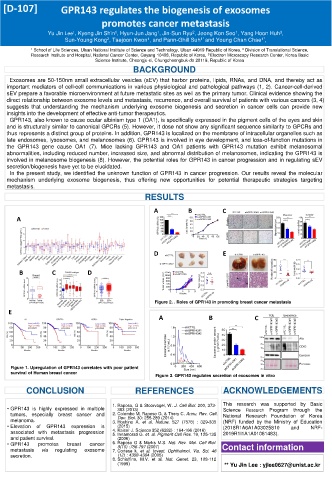
                                                   Figure 2. . Roles of GPR143 in promoting breast cancer metastasis
    E
                                                     A               B              C


    Figure 1. Upregulation of GPR143 correlates with poor patient
    survival of Human breast cancer
                                                    Figure 3. GPR143 regulates secretion of exosomes in vitro
          CONCLUSION                         REFERENCES                   ACKNOWLEDGEMENTS


                                      1. Raposo, G & Stoorvogel, W. J. Cell Biol. 200, 373-  This research was supported by Basic
   • GPR143 is highly expressed in multiple  383 (2013)                   Science  Research  Program  through  the
    tumors, especially breast cancer and  2. Colombo M, Raposo G, & Thery C. Annu. Rev. Cell.  National Research Foundation of Korea
                                       Dev. Biol. 30: 255-289 (2014)
    melanoma.                         3. Hoshino A, et al. Nature. 527 (7578) : 329-335  (NRF) funded by the Ministry of Education
   • Elevation  of  GPR143  expression  is  (2015)                        (2018R1A6A1A03025810  and   NRF-
    associated with metastasis progression  4. Kaiser J. Science 352 (6282) : 164-166 (2016)  2019R1I1A1A01061483).
                                      5. Innamorati G. et. al. Pigment Cell Res. 19, 125-135
    and patient survival.              (2006)
   • GPR143  promotes  breast  cancer  6. Raposo G & Marks M.S. Nat. Rev. Mol. Cell Biol.  Contact information
                                       8(10) :786-797 (2007)
    metastasis  via  regulating  exosome  7. Cortese k. et al. Invest. Ophthalmol. Vis. Sci. 46
    secretion.                         (12) : 4358-4364 (2005)
                                      8. Schiaffino, M.V. et al. Nat. Genet. 23, 108-112
                                       (1999)                             ** Yu Jin Lee : yjlee0627@unist.ac.kr

