


Page 105 - D. Cancer biology
P. 105
Hepatitis B virus X protein enhances the metastasis of
   hepatocellular carcinoma by interacting with SOCS1

     Inho Kang, Jung Sun Min, Heemin Lee, Ju Hyeon Lee and Jeong Keun Ahn*
     Department of Microbiology & Molecular Biology, College of Bioscience and Biotechnology,
     Chungnam National University, Daejeon 305-764, KOREA

    Abstract                                             Introduction
    High metastasis rate of hepatocellular carcinoma (HCC) is the reason of  Since high metastasis of HCC causes of poor prognosis of liver cancer and
    poor prognosis of liver cancer and hepatitis B virus (HBV) is the most  HBV is most common factor of HCC, we attempted to reveal the correlation
    important pathogen for HCC development. In this study, we attempted to  between HBV and metastasis. We found that HBx, interacts with Suppressor
    reveal the correlation between HBV and metastasis of HCC. We found that  of cytokine signaling 1 (SOCS1). SOCS1 modulates NF-κB through
    HBV X protein (HBx), one of the viral proteins of HBV, interacts with  ubiquitination and degradation of NF-κB’s subunit p65. NF-κB
    suppressor of cytokine signaling 1 (SOCS1). SOCS1 negatively regulates  modulates the transcription of EMT factors. EMT is a cellular process
    NF-κB by degradation of p65, one of the subunits of NF-κB. NF-κB regulates  inducing the metastasis of cancer cell. Therefore, it is possible that HBx may
    various epithelial-mesenchymal transition (EMT) transcription factors such  modulate p65 via SOCS1 to induce the metastasis of HCC. To verify this
    as Snail, Slug, and Twist. EMT is a cellular process which controls  possibility, we confirmed the physical interactions and reciprocal stability
    invasiveness and motility of cancer cells. Here, we report that HBx interacts  effect among these proteins. We also tested the effect of interaction
    with SOCS1, subsequently prevents the ubiquitination of p65, and activates  between HBx with SOCS1 on the expression of EMT factors and cell
    EMT transcription factors, suggesting new metastasis mechanism of HBV-  migration. Here, we report that HBx induces EMT process and increases cell
    associated HCC.                                      motility by regulating SOCS1.

    Result
                                                                     NF-kB activity  (293T)
        (A)  HBx siRNA     -  +  (B)  Flag-HBx              (A)   14              (B)  14  NF-kB activity  (Chang)
                        WB:α-   -                                 12                  12
                        HBx                    WB: α-p65          10
                        WB:α-                                                         10
                        WB:α-                  WB: α-Flag        RLU  8               8
                        p65
                        IĸBα                                      6                  RLU
                                                                                      6
                        WB:α-                  WB: α-β-           4                   4
                        IKK                    actin              2
                        WB:α-p-                               .   0                   2
                        WB:α-p-                                                       0
                        IKK
                        IĸBα                                  His-P65            -  +             +            +        His-P65            -  +           +            +
                                                              Myc-SOCS1      -
                                                                -
                                                                 +            +
                                                                 -
                                                                  +
                                                                -
                                                              Flag-HBx          -
                                                                                    Myc-SOCS1      -  -  +            +
                                                                                    Flag-HBx          -  -  -  +
                        WB:α-β-
                        actin                               (
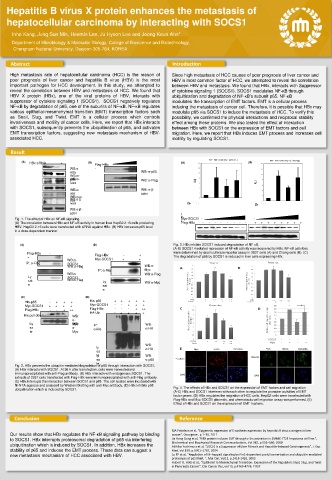
      Fig. 1. The effect of HBx on NF-κB signaling.         C ) Myc-SOCS1  -        -
      (A) The correlation between HBx and NF-κB activity in human liver HepG2.2.15 cells producing   Flag-HBx        -  -  -  -  -  -  -  -  +     +     +     +     +     +     +     +
      HBV. HepG2.2.15 cells were transfected with siRNA against HBx. (B) HBx increases p65 level
      in a dose-dependent manner.
        (A)                    (B)                       Fig. 3. HBx inhibits SOCS1 induced degradation of NF-ĸB.
                                                         (A-B) SOCS1 mediated repression of NF-ĸB activity was recovered by HBx. NF-ĸB activities
          Flag-HBx         -    Flag-HBx                -  +  were determined by dual luciferase reporter assay in 293T cells (A) and Chang cells (B). (C)
          +                                              The degradation of p65 by SOCS1 is reduced in liver cells expressing HBx.
                       WB:α-    Myc-SOCS1          +                +
         IP: α-Flag    SOCS1
                       WB:α-Flag                WB:α-
                                 IP: α-Flag     Myc
                       WB:α-                    WB:α-Flag
          Ly           SOCS1
          sat          WB:α-Flag  Ly            WB:α-Myc
          e                       sat
                                  e
        Reference            (D)
        (C)
         His-p65              -  +      +      +       His-p65              +     +      +      +      +
         Myc-SOCS1      +     +      +      +       Myc-SOCS1       -  -  +      +      +
         Flag-HBx            -  -  +     ++      Flag-HBx            -  -  -  +     ++
         His pull down   WB:   HA-Ub  -  +      +      +      +
                         α-
           Ly            WB:   IP:              WB:
                         Myc
           sa            α-    α-His            α-HA
           te            Myc
                                                WB:
                                ly              α-HA
                                sa
                                te ly           WB:
                                sa              α-p65
                                te
      Fig. 2. HBx prevents the ubiquitin-mediated degradation of p65 through interaction with SOCS1.
      (A) HBx interacts with SOCS1. At 36 h after transfection, cells were harvested and
      immunoprecipitated with anti-Flag antibody. (B) HBx interacts with endogenous SOCS1. The
      extracts of 293T cells transfected with Flag-HBx were immunoprecipitated with anti-Flag antibody.
      (C) HBx interrupts the interaction between SOCS1 and p65. The cell lysates were incubated with
      Ni-NTA-agarose and analyzed by Western blotting with anti-Myc antibody. (D) HBx inhibits p65
      ubiquitination which is induced by SOCS1.          Fig. 4. The effects of HBx and SOCS1 on the expression of EMT factors and cell migration.
                                                         (A-C) HBx and SOCS1 interferes with each other to regulate the promoter activities of EMT
                                                         factor genes. (D) HBx regulates the migration of HCC cells. HepG2 cells were transfected with
                                                         Flag-HBx and Myc-SOCS1 plasmids, and chemotactic cell migration assay was performed. (E)
                                                         Effect of HBx and SOCS1 on the expression of EMT markers.
      Conclusion                                           Reference
                                                         MA Feitelson et al, “Epigenetic repression of E-cadherin expression by hepatitis B virus x antigen in liver
    Our results show that HBx regulates the NF-κB signaling pathway by binding   cancer”, Oncogene , p.1–10, 2011
    to SOCS1. HBx interrupts proteosomal degradation of p65 via interfering   Jia Hong Dong et al, “HBX protein induces EMT through c-Src activation in SMMC-7721 hepatoma cell line.”,
    ubiquitination which is induced by SOCS1. In addition, HBx increases the   Biochemical and Biophysical Research Communications, Vol.382, p.555–560, 2009
                                                         Akihiko Yoshimura et al, “SOCS1 is a Suppressor of Liver Fibrosis and Hepatitis-induced Carcinogenesis”, J. Exp.
    stability of p65 and induces the EMT process. These data can suggest a   Med, Vol.199, p.1701–1707, 2004
    new metastasis mechanism of HCC associated with HBV.  Lu KP et al, “Regulation of NF-kappaB signaling by Pin1-dependent prolyl isomerization and ubiquitin-mediated
                                                         proteolysis of p65/RelA. “, Mol Cell, Vol12, p.1413-1426, 2003
                                                         Hubert G. Hotz et al., “Epithelial to Mesenchymal Transition: Expression of the Regulators Snail, Slug, and Twist
                                                         in Pancreatic Cancer”, Clin Cancer Res, vol 13, p.4769-4776, 2 007

