


Page 103 - D. Cancer biology
P. 103
Hepatitis B virus X protein promotes hepatocellular carcinogenesis and
                                metastasis through regulating VHL binding protein1
                                           Inho Kang, Ji Ae Kim, Sung-min Kang, Hanwoon Park and Jeong Keun Ahn*
                      Department of Microbiology & Molecular Biology, College of Bioscience and Biotechnology, Chungnam National University Daejeon 305-764, KOREA

      Abstract
     Chronic hepatitis B virus (HBV) infection is a leading cause of various liver diseases including hepatocellular carcinoma. Among HBV proteins, hepatitis X protein (HBx) plays critical roles in the development
     of hepatocellular carcinoma. However the precise mechanism of HBx involved in HCC formation is still unclear. In this study, we demonstrated that HBx binds to VHL binding protein 1 (VBP1), and
     subsequently interrupts the interaction between VBP1 and Von Hippel-Lindau protein (pVHL) which enhances HIF-1α degradation. We also revealed that HBx interrupts pVHL stabilization induced by VBP1,
     and consequently stabilizes HIF-1α. It has been reported that upregulated HIF-1α promotes the tumor formation and enhances the epithelial-mesenchymal transition. Taken together, this study suggest a
     new mechanism of HBx which has vital roles in liver carcinogenesis and metastasis

      Introducti
     Chronic HBV infection is tightly associated with HCC development. Among HBV proteins, HBx is the most important factor contributing to HCC, but the underlying mechanisms are unclear. Therefore, we
          on
     performed yeast two-hybrid screening assay to screen the putative cellular proteins that interact with HBx. We found that HBx interacts with VBP1. VBP1 is a chaperone protein that binds to pVHL, a tumor
     suppressor protein which regulates proteasomal degradation of HIF-1α.
     HIF-1α plays main roles in the cancer formation and metastasis by activating a wide repertoire of genes that are related with tumor development. Increased protein level of HIF is observed in HCC with poor
     prognosis.
     Here, we report that HBx interacts with VBP1, destabilizes pVHL, subsequently stabilizes HIF-1α, and thereby promotes tumor formation and metastasis. These results may suggest a new mechanism of HCC
     development associated with HIF-1 activation by HBV infection.
       Results

               (A)              (B)                                              Figure  4. Effects of  HBx and VBP1 on colony formation
                                                                                 HCT116 cells transfected with GST-HBx and Flag-VBP1 plasmids  were cultured  in DMEM with 10% FBS containing 0.4% soft agar at 37°C for 7 days.
                                  Flag-HBx  -  +  +  +  +
                Flag-X  -  +  -   His-VBP1  -  -  +  -  +
                His-VBP1  +  -  -  +  +  +
                                  HA-VHL  -  -  -  +  +
                             WB : Flag        Flag           Control  VBP1  HBx  VBP1+HBx
                                              His
                                              HA
                             WB : HIs
                                        IP : α-Flag  Flag
                      Lysate                  His                (A)                 (B)
                                              HA
                             WB : Flag                                 T w is t-lu c
                                         Lysate                   2 .5  **    M o ck  GFP-HBx  - -  - -  - +  + +  ++ +
                                                                                     Flag-VBP1
                             WB : His                             2 .0        M o ck  HA-VHL  -  +  +  +  +
                                     * MG132 treatment                        V H L
                                                                              V H L + V B P 1
                                                                  F o ld 1 .5  V H L + V B P 1 + H B x  WB : GFP
                     His Pull-down                                1 .0                          WB : Flag
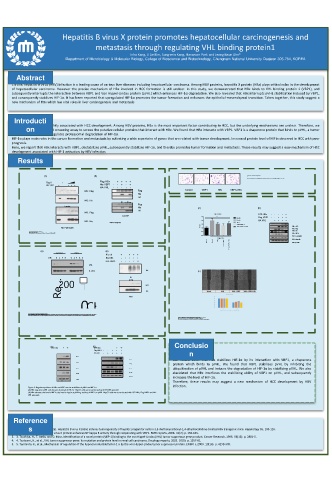
          Figure  1. Physical interaction  between  HBx and VBP1  0 .5                          WB : HA
          (A) HBx physically interacts  with VBP1.
          (B) HBx interacts with VBP1, but not directly with  pVHL. However,  HBx interacts with  pVHL through  VBP1.  WB : HIF1α
                                                                  0 .0                          WB : E-cadherin
                                                                    M o c k  M o c k  V H L H yp oxia V H L + V B P 1  V H L + V B P 1 + H B x  WB : vimentin
                                                                                                WB : β-actin
              (A)                  (B)
                   Control  VBP1
                                   His-ub  +  -  +  +  +
                 CHX          0    2    4    8           0    2   4    8    h  HA-VHL  -  +  +  +  +
                                   GST-VBP1  -  -  -  + ++
                              VHL
                              β-actin           His              (C)
                                           IP:
                    20  00                 α-HA  GST
                     Re…                   WCL  HA
                           0 CHX
          Figure  2. VBP1 enhances the  stability of pVHL by repressing its ubiquitination
          (A) pVHL is stabilized by VBP1. HepG2 cells were  transfected with His-VBP1 plasmid. At 24h after transfection,  cells were treated  with 100μg of  cycloheximide (CHX) for indicated periods.  pVHL is stabilized  in the  presence  of VBP1. Data were  quantified by image J program.
          (B) VBP1 inhibits the  ubiquitination  of pVHL. 293T cells were co-transfected  with His-Ub, HA-VHL, and GST-VBP1 plasmids.  At 36h after transfection,  cells were  treated with 10μM MG132, a proteasome  inhibitor,  for 4h and immunoprecipitation  assay was performed.
                                                           Figure  5. The  regulatory effect of  HBx on the expression  of EMT factors and cell migration
                                                           (A) Luciferase  assay shows that HBx elevates the  transcription of twist gene by regulating  pVHL through VBP1.
                                                           (B) HBx controls the  level of EMT markers  by regulating  pVHL stability  through its binding to VBP1.
                                                           (C) HBx increases cell motility, whereas VBP1 and  pVHL decrease  cell mobility.  Data were  quantified  using image  J program.
                                                          Conclusio
                 (A) GST-HBx  -  +  ++  (B) GFP-HBx  -  -  -  +  ++
                                Flag-VBP1  -  -  +  +  +
                                HA-VHL  -  +  +  +  +          n
                          WB : GST
                                           WB : GFP      Our results show that HBx stabilizes HIF-1α by its interaction with VBP1, a chaperone
                          WB : VBP1
                                           WB : Flag     protein which binds to pVHL. We found that VBP1 stabilizes pVHL by inhibiting the
                          WB : VHL         WB : HA       ubiquitination of pVHL and induces the degradation of HIF-1α by stabilizing pVHL. We also
                                           WB : HIF1α    elucidated that HBx interferes the stabilizing ability of VBP1 on pVHL, and subsequently
                          WB : HIF1α
                                                         increases the level of HIF-1α.
                                           WB : β-actin
                          WB : β-actin
                                                         Therefore, these results may suggest a new mechanism of HCC development by HBV
                                                         infection.
          Figure 3. Regulatory effects of HBx and VBP1 on the stabilities of pVHL and HIF-1α
          (A) HBx regulates pVHL and elevates the level of HIF-1α. HepG2 cells were transfected with GST-HBx plasmid.
          (B) HBx elevates the level of HIF-1α by interfering the stabilizing activity of VBP1 on pVHL. HepG2 cells were transfected with GFP-HBx, Flag-VBP1 and HA-
          VHL plasmids.
     Reference
          s
     1. 1. Wang, C., Yang, et al. (2012a). Hepatitis B virus X (HBx) induces tumorigenicity of hepatic progenitor cells in 3,5-diethoxycarbonyl-1,4-dihydrocollidine-treatedHBx transgenic mice. Hepatology 55, 108-120.
     2. 2. Kim, S.Y., et al., Hepatitis B virus X protein enhances NF kappa B activity through cooperating with VBP1. BMB reports, 2008. 41(2): p. 158-163.
     3. 3. Tsuchiya, H., T. Iseda, and O. Hino, Identification of a novel protein (VBP-1) binding to the von Hippel-Lindau(VHL) tumor suppressor gene product. Cancer Research, 1996. 56(13): p. 2881-5.
     4. 4. Tsutsumi, H., et al., VHL tumor suppressor gene: its mutation and protein level in renal cell carcinoma. Oncology reports, 2003. 10(5): p. 1357-61.
     5. 5. Tanimoto, K., et al., Mechanism of regulation of the hypoxia-inducible factor-1 α by the von Hippel-Lindautumor suppressor protein. EMBO J, 2000. 19(16): p. 4298-309.

