


Page 101 - D. Cancer biology
P. 101
Leucyl-tRNA synthetase regulates cell proliferation and invasion in
                                            human colorectal cancer cells

                                       Sang-Heum Han , Su Jeong Park , Jun Gi Cho , Joo-In Park 1,2
                                                                  1
                                                                            1
                                                    1,2
                     1 Department of Biochemistry, Dong-A University College of Medicine, Busan, South Korea; Peripheral
                                                                                                2
                                   Neuropathy Research Center, Dong-A University, Busan, South Korea
                        Abstract                                           Introduction
   Leucyl-tRNA synthetase (LARS) senses intracellular leucine and activates  Aminoacyl-tRNA synthetases (aaRSs) catalyze the attachment of
   mechanistic target of rapamycin complex 1 (mTORC1). Several studies  amino acids to their respective tRNAs and play an important role in
   suggest that LARS can be a potential target of anticancer agents. However,  the maintenance of cell survival. Among them, Leucyl-tRNA
   the detailed molecular mechanisms of LARS on the cell proliferation and  synthetase (LARS) catalyzes the covalent ligation of leucine to
   invasion in human colorectal cancer cells are clearly undefined. In this study,  tRNA Leu during polypeptide synthesis. It also acts as a leucine
   to clarify the molecular mechanisms of LARS actions in tumor progression,  sensor in the mechanistic target of rapamycin complex 1 (mTORC1)
   we established LARS-overexpressing stable SW480 cells and LARS-knocked  pathway. It was reported that LARS expression was elevated in lung
   down stable SW620 cells, and then performed cell proliferation, migration  cancer cell line and primary lung cancer tissues. LARS gene is
   and  transwell  invasion  assay.  LARS  overexpression  enhances  cell  amplified in 17% of renal cell carcinoma and mutated/amplified in 4%
   proliferation, migration, and invasion, and LARS knockdown reduces them.  of malignant peripheral nerve sheet tumor, small cell lung carcinoma,
   We examined the expression of several molecules related with cell  and melanoma. A previous study demonstrated that knockdown of
   proliferation and invasion by western blot analysis. Expression of cyclin D1,  LARS inhibits cell migration and colony forming ability in lung
   c-Myc, and vimentin was decreased by LARS knockdown. These results  cancer. In addition, it was reported that inhibition of LARS may
   indicate that cyclin D1, c-Myc, and vimentin might contribute to regulation of  reduce cancer cell proliferation via the p21 signaling pathway and
   cell proliferation and invasion by LARS. Further studies to investigate the  cause apoptosis.
   molecular network between c-Myc and LARS in human colorectal cancer  Recently, many investigators have focused on LARS as a potential
   cells are needed.                                        target of anticancer agents. However, the role of LARS in colorectal
                                                            cancer are not clearly defined. Thus, we aimed to investigate the
   This work was supported by the NRF funded by the Korean Government  effect and molecular mechanism of LARS on cell proliferation,
   (MSIP)(No. 2016R1A5A2007009).                            migration, and invasion in human colorectal cancer cells.
                                                RESULTS


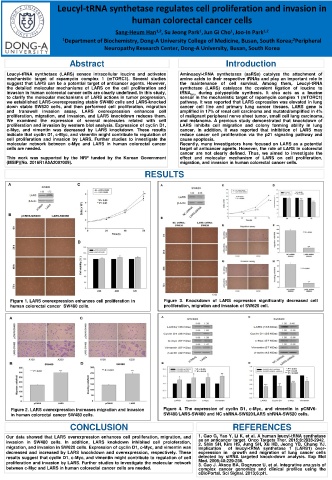
    Figure 1. LARS overexpression enhances cell proliferation in   Figure 3. Knockdown of LARS expression significantly decreased cell
    human colorectal cancer  SW480 cells.             proliferation, migration and invasion of SW620 cell.


     Figure 2. LARS overexpression increases migration and invasion  Figure 4. The expression of cyclin D1, c-Myc, and vimentin in pCMV6-
     in human colorectal cancer SW480 cells.          SW480/LARS-SW480 and NC shRNA-SW620/LARS shRNA-SW620 cells.
                        CONCLUSION                                           REFERENCES
   Our data showed that LARS overexpression enhances cell proliferation, migration, and  1. Gao G, Yao Y, Li K, et al. A human leucyl-tRNA synthetase
   invasion in SW480 cells. In addition, LARS knokdown inhibited cell proloferation,  as an anticancer target. Onco Targets Ther. 2015;8:2933-2942.
                                                                  2. Shin SH, Kim HS, Jung SH, Xu HD, Jeong YB, Chung YJ.
   migration, and invasion in SW620 cells. Expression of cyclin D1, c-Myc, and vimentin was  Implication  of leucyl-tRNA synthetase 1 (LARS1) over-
   decreased and increased by LARS knockdown and overexpression, respectively. These  expression in  growth and migration of lung cancer cells
   results suggest that cyclin D1, c-Myc, and vimentin might contribute to regulation of cell  detected by siRNA targeted knock-down analysis. Exp Mol
   proliferation and invasion by LARS. Further studies to investigate the molecular network  Med. 2008;40:229-236.
                                                                  3. Gao J. Aksoy BA, Dogrusoz U, et al. Integrative ana;ysis of
   between c-Myc and LARS in human colorectal cancer cells are needed.  complex cancer genomics and clinical profiles using the
                                                                  cBioPortal. Sci Signal. 2013;6:pl1.

