


Page 25 - A. Aging
P. 25
Senolytic drug improve the skin pigmentation

           1,2
                         1
                                          1
  Ji Hee Park , Jung Eun Yoon , Young-Kyoung Lee and Tae Jun Park 1,2,3
  1 Department of Biochemistry and Molecular Biology, Ajou University School of Medicine;
  2 Department of Biomedical Sciences, Ajou University Graduate School of Medicine;
  3 Institute on Aging, Ajou University Medical Center, Suwon, 16499, Korea
                   BACKGROUND                                                   AIM
   Cutaneous aging process is an important extrinsic factor which modifies the pigmentary  Even in the skin pigment fields, the fact that senescent fibroblasts induce
   system. Given that cellular senescence is a fundamental aging mechanism, we examined  pigmentation is considered an important phenomenon. Therefore, the technology to
   the role of senescent cells in aging pigmentation and found that senescent fibroblasts  remove senescent fibroblasts has been thought to be an important issue in the field
   accumulate at the sites of age-related pigmentation and alter melanocyte differentiation  of skin pigmentation. We expected that senolytic drug, especially ABT263, induce
   via stromal-epithelial interactions during aging. Senolytic drugs can induce apoptosis in  apoptosis in senescent cell and that regulate the skin pigmentation.
   senescent, but not in non-senescent cells. ABT263, one of the senolytic drug, it can induce
   apoptosis in senescent cells which accumulate in many tissues that aging.
                                                METHODS
   Materials
   ABT263, ABT737 were purchased from Selleckchem (Houston, TX) and the Dasatinib was bought from Cayman Chemical (Ann Arbro, MI). Quercetin, Ginkgo biloba extract and resveratrol were purchased from
   Sigma-Aldrich (St. Louis, MO).
   Cell culture
   Normal human fibroblasts were isolated from skin biopsies (AJIRB-BMR-SMP-17-438). Fibroblasts at passages 3-7 were maintained in Dulbecco’s modified Eagle’s medium (DMEM) (Gibco-BRL, Grand Island)
   supplemented with 10% FBS. Primary human melanocytes were purchased from Thermo Fisher (#C1025C, Waltham, MA). These cells were cultured in Medium254 (M253) supplemented with Human Melanocyte
   Growth Supplement (HMGS) (all from Thermo Fisher). For the experiments, melanocytes were used at passages from 2 to 5 and maintained in F12 medium supplemented with 10% fetal bovine, 12 μg/mL 3-
   isobutyl-1-methylxanthine, 40 nM 12-O-tetradecanoyl phorbol 13-acetate (TPA), 0.6 ng/mL basic fibroblast growth factor (bFGF), and 0.05 μg/mL cholera toxin (all from Sigma-Aldrich). Primary melanocytes were
   seeded at the bottom of 6-well plate and fibroblasts were seeded into inserted Transwell chambers(SPL Life Sciences Co., Korea) in each case. After 48h, the Transwell chambers were translocated into melanocytes
   seeded into 6-well plates and maintained for 5days.
   In vitro model of senescent fibroblasts
   Primary fibroblasts were prepared and maintained in DMEM (Gibco-BRL) supplemented with 10% FBS (Gibco-BRL). For senescence induction, fibroblasts were treated with 8-methoxy psoralen (8-MOP) at 25 ng/ml
   with fresh media for 16 h. The cells were then irradiated with 5 J/cm2 UVA (wavelength 320-400 nm, maximum peak 350 nm) using a LZC-1 photoreactor system (Luzchem Research Inc. Ontario) and maintained in
   DMEM for 7 days.
   Real-time PCR analysis
   Total RNA was extracted using an RNeasy Mini kit (Qiagen, Valencia, CA) and the first-strand cDNA was synthesized using the SuperScript TM III reverse transcriptase kit (Invitrogen, Waltham, MA). Quantitative real-
   time PCR was performed using SYBR Green SuperMix (Bio-Rad, Hercules, CA). The primer sequences used were as follows: human MITF; 5′-AGAACAGCAACGCGCAAAGAAC-3′, 5′-TGATGATCCGATTCACCAAATCTG-3′,
   human Tyrosinase; 5’-CACCACTTGGCCTCAATTC-3’, 5′-AAAGCCAAACTTGCAGTTTCCAC-3′, and human 18S; 5′-CGGCTACCACATCCAAGGAA-3′, 5′-GCTGGAATTACCGCGGCT-3′.
   Statistical analysis
   Data were presented as the mean ± standard deviation (SD) of more than three independent experiments. Statistical analyses were performed using the Mann-Whitney U test (SPSS 25.0; IBM Corp., Armonk, NY). A
   value of p < 0.05 was considered significant.
                                                RESULTS
   Figure 1.        DMSO      ABT263  2.5μM  ABT737 2.5 μM

                                                           2                    1.5
              Sham                                        1.5                    1
                                                         Sham Cell counting  (Fold induction vs. DMSO)  0.5 1  PUVA Cell counting (Fold induction vs. DMSO)  0.5  **  **


                                                           0
                                                            DMSO  ABT263 2.5μM  ABT737 2.5μM N=3  0 DMSO  ABT263 2.5μM  ABT737 2.5μM N=3
             PUVA                                           (Cont)                (Cont)          (**p<0.05 vs. Cont)
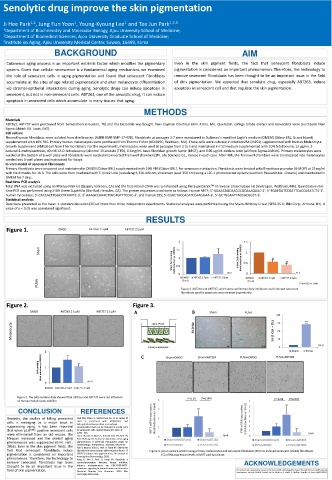
                                                            Figure 1. ABT263 and ABT737, which were well known Bcl2 inhibitors could induced senescent
                                                            fibroblasts specific apoptosis concentration dependently.
   Figure 2.                                Figure 3.
           DMSO      ABT263 2.5 μM  ABT737 2.5 μM  A            B    Sham        PUVA
                                                                                           120 90   **
     Melanocyte                                   Sham, PUVA    SA-β-Gal                  SA-β-Gal + (%)   60
                                                                                           30
                                                                                                         N=3
                                                 Primary melanocytes       8%         85%   0
                2                              C       Sham+DMSO  Sham+ABT263  PUVA+DMSO   PUVA+ABT263 Sham  PUVA
              (Fold induction vs. DMSO)
             Cell counting  1

                0             N=4
                DMSO  ABT263 2.5μM  ABT737 2.5μM
       Figure 2. The cells number data showed that ABT263 and ABT737 were not influence   P=0.01  P=0.004  P=0.03  P=0.007
       on human melanocytes viability               4                             7
       CONCLUSION          REFERENCES               3                             6 5
   Recently, the studies of killing senescent  Hall BM, Balan V, Gleiberman AS et al. Aging of  MITF mRNA expression  (Fold induction vs. Cont)  2  TYR mRNA expression  (Fold induction vs. Cont)  4
   cells is emerging as a major issue in  mice  is  associated  with  p16(Ink4a)-  and  3
                          beta-galactosidase-positive macrophage
   suppressing aging. It has been reported  accumulation that can be induced in young mice  1  2
   that when p16 INK4A positive senescent cells  by senescent cells. Aging (Albany NY) 2016; 8:  1
   were eliminated from an old mouse, the  1294– 315.  0                  N=4     0                  N=4
                          Yoon JE, Kim Y, Kwon S, Kim M, Kim YH, Kim JH,
   lifespan increased and the overall aging  Park TJ, Kang HY. Senescent fibroblasts drive aging  Sham+DMSO(Cont)  Sham+ABT263  Sham+DMSO(Cont)  Sham+ABT263
   phenomenon was suppressed (B.M. Hall.,  pigmentation: A potential therapeutic target for
   2016). Even in the skin pigment fields, the  senile lentigo. Theranostics. 2018;8(17):4620-32.  PUVA+DMSO  PUVA+ABT263  PUVA+DMSO  PUVA+ABT263
                          Kim Y, Kang B, Kim JC, Park TJ, Kang HY, Senescent
   fact that senescent fibroblasts induce  fibroblast-derived growth differentiation factor 15  Figure 3. (A) co-culture system using primary melanocytes and senescent fibroblasts (B) UVA-induced senescent (UVAiS) fibroblasts
   pigmentation is considered an important  (GDF15) induces skin pigmentation, The Journal of  (C) mRNA expression levels of MITF and tyrosinase
   phenomenon. Therefore, the technology to  Investigative Dermatology. 2020.
                          Kang B, Kim Y, Park TJ, Kang HY. Dasatinib, a
   remove senescent fibroblasts has been  second-generation  tyrosine  kinase  inhibitor,  ACKNOWLEDGEMENTS
   thought to be an important issue in the  induces  melanogenesis  via  ERK-CREB-MITF-
                          tyrosinase signaling in normal human melanocytes.
   field of skin pigmentation.  Biochem Biophys Res Commun. 2020 Mar          This research was supported by a grant of the Korea Health Technology R&D Project through the Korea Health industry
                          19;523(4):1034-1039.                                Development Institute (KHIDI), funded by the Ministry of Health & Welfare, Republic of Korea (HN14C0094).

