


Page 17 - ebook
P. 17
The effect of PPAR-γ through the regulation of PTEN expression
in human acute promyelocytic leukemia HL-60 cells
On-Yu Hong , Eun-Mi Noh , Hye-Yeon Jang ,
1
1
1
Jinny Park , and Jong-Suk Kim 1
2
1 Department of Biochemistry, Institute for Medical Sciences, Chonbuk National University Medical School, Jeonju 54907, Republic of Korea
2 Division of Hematology, Department of Internal medicine, Gil Medical Center, Gachon University College of Medicine, Incheon 21565, Republic of Korea
ABSTRACT
Cell differentiation in acute promyelocytic leukemia indicates differentiation syndrome, which is a side effect of chemotherapy during treatment. This study
contributes to establishing an experimental model using peroxisome proliferator-activated receptors gamma (PPAR-γ) ligands for the prevention of
differentiation syndrome. PPAR-γ play an important role in the differentiation of different cell lines. We demonstrate that PPAR-γ ligands induce neutrophil/
monocytic differentiation in human acute promyelocytic leukemia HL-60 cells. It has been shown that the novel synthetic triterpenoid 2-cyano-3,12-
dioxooleana-1,9-dien-28-oic acid (CDDO) induces differentiation in leukemia HL-60 cells. We evaluated for the surface antigen expression associated with
myeloid maturation, CD11b and CD14 by flow cytometric analysis and RT-PCR. CDDO induced a HL-60 differentiation through the regulation of PTEN
expression. PTEN also has various cellular function such as cell differentiation. PPAR-γ could synergistically up-regulate PTEN in human leukemia cells and
consequently stimulate the differentiation of these cells. We confirm that suppression of PTEN with the inhibitor (SF1760) caused reduction of differentiated
HL-60 cells. Our results suggest PPAR-γ an important role in controlling the differentiation of leukemia cells via the regulation of PTEN.
RESULTS
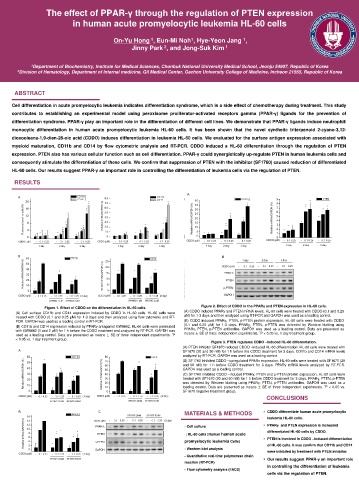
Figure 1. Effect of CDDO on the differentiation in HL-60 cells. Figure 2. Effect of CDDO in the PPARγ and PTEN expression in HL-60 cells.
(A) Cell surface CD11b and CD14 expression induced by CDDO in HL-60 cells. HL-60 cells were (A) CDDO induced PPARγ and PTEN mRNA levels. HL-60 cells were treated with CDDO (0.1 and 0.25
treated with CDDO (0.1 and 0.25 μM) for 1-3 days and then analyzed using flow cytometry and RT- μM) for 1-3 days and then analyzed using RT-PCR and GAPDH was used as a loading control.
PCR. GAPDH was used as a loading control in RT-PCR. (B) CDDO induced PPARγ, PTEN, p-PTEN protein expression. HL-60 cells were treated with CDDO
(B) CD11b and CD14 expression reduced by PPARγ antagonist GW9662. HL-60 cells were pretreated (0.1 and 0.25 μM) for 1-3 days. PPARγ, PTEN, p-PTEN was detected by Western blotting using
with GW9662 (1 and 2 μM) for 1 h before the CDDO treatment and analyzed by RT-PCR. GAPDH was PPARγ, PTEN, p-PTEN antibodies. GAPDH was used as a loading control. Data are presented as
*
used as a loading control. Data are presented as means ± SE of three independent experiments. P means ± SE of three independent experiments. P < 0.05 vs. 1 day treatment group..
*
< 0.05 vs. 1 day treatment group.
Figure 3. PTEN regulates CDDO –induced HL-60 differentiation.
(A) PTEN inhibitor SF1670 reduced CDDO –induced HL-60 differentiation. HL-60 cells were treated with
SF1670 (20 and 50 nM) for 1 h before the CDDO treatment for 3 days. CD11b and CD14 mRNA levels
analyzed by RT-PCR. GAPDH was used as a loading control.
(B) SF1760 inhibited CDDO –upregulated PPARγ expression. HL-60 cells were treated with SF1670 (20
and 50 nM) for 1 h before CDDO treatment for 3 days. PPARγ mRNA levels analyzed by RT-PCR.
GAPDH was used as a loading control.
(C) SF1760 inhibited CDDO –induced PPARγ, PTEN and p-PTEN protein expression. HL-60 cells were
treated with SF1670 (20 and 50 nM) for 1 h before CDDO treatment for 3 days. PPARγ, PTEN, p-PTEN
was detected by Western blotting using PPARγ, PTEN, p-PTEN antibodies. GAPDH was used as a
loading control. Data are presented as means ± SE of three independent experiments. P < 0.05 vs.
*
SF1670 negative treatment group.
CONCLUSIONS
MATERIALS & METHODS CDDO differentiate human acute promyelocytic
leukemia HL-60 cells.
- Cell culture PPARγ and PTEN expression is increased
differentiated HL-60 cells by CDDO.
: HL-60 cells (Human human acute
PTEN is involved in CDDO –induced differentiation
promyelocytic leukemia Cells)
of HL-60 cells. It was confirm that CD11b and CD14
- Western blot analysis
were inhibited by treatment with PTEN inhibitor.
- Quantitative real-time polymerase chain
Our results suggest PPAR-γ an important role
reaction (RT-PCR)
in controlling the differentiation of leukemia
- Flow cytometry analysis (FACS)
cells via the regulation of PTEN.

