


Page 15 - ebook
P. 15
Pontin arginine methylation by CARM1 is crucial for
epigenetic regulation of autophagy
MEL
Bok-Im Cho and Dongha Kim*
Medical Epigenetics Laboratory, Department of Anatomy, College of Medicine, The Catholic University of Korea, Seoul 06591, Republic of Korea
ABSTRACT
Autophagy is a catabolic process through which cytoplasmic components are degraded and recycled in response to various stresses including starvation. Recently, transcriptional and
epigenetic regulations of autophagy have emerged as essential mechanisms for maintaining homeostasis. Here, we identify that coactivator-associated arginine methyltransferase 1 (CARM1)
methylates Pontin chromatin-remodeling factor under glucose starvation, and methylated Pontin binds Forkhead Box O 3a (FOXO3a). Genome-wide analyses and biochemical studies reveal
that methylated Pontin functions as a platform for recruiting Tip60 histone acetyltransferase with increased H4 acetylation and subsequent activation of autophagy genes regulated by
FOXO3a. Surprisingly, CARM1-Pontin-FOXO3a signaling axis can work in the distal regions and activate autophagy genes through enhancer activation. Together, our findings provide a
signaling axis of CARM1-Pontin-FOXO3a and further expand the role of CARM1 in nuclear regulation of autophagy.
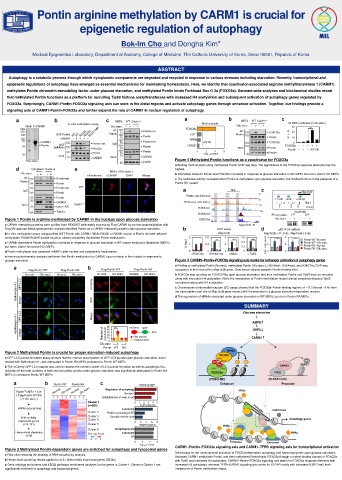
Figure 4 Methylated Pontin functions as a coactivator for FOXO3a
a Binding motif analysis using methylated Pontin ChIP-seq data. The significance of the FOXO3a response elements was the
highest.
b Interaction between Pontin and FOXO3a increased in response to glucose starvation in WT MEFs but not in Carm1 KO MEFs.
c The luciferase activity increased when Pontin is methylated upon glucose starvation, but it failed to do so in the presence of a
Pontin RK mutant.
Figure 1 Pontin is arginine methylated by CARM1 in the nucleus upon glucose starvation
a CARM1-interacting proteins were purified from HEK293T cells stably expressing Flag-CARM1 by co-immunoprecipitation with
Flag-M2 agarose. Mass spectrometric analysis identified Pontin as a CARM1-interacting protein under glucose starvation.
b In vitro methylation assay using purified GST-Pontin with CARM1. While R333K or R339K mutant of Pontin showed reduced
methylation, R333K/R339K double mutation almost completely diminished Pontin methylation.
c CARM1-dependent Pontin methylation increased in response to glucose starvation in WT mouse embryonic fibroblasts (MEFs)
but not in Carm1 knockout (KO) MEFs.
d Pontin methylation was assessed in MEFs after nuclear and cytoplasmic fractionation.
e Immunocytochemistry analysis confirmed that Pontin methylation by CARM1 occurs mainly in the nucleus in response to
glucose starvation. Figure 5 CARM1–Pontin–FOXO3a signaling axis works for enhancer activation of autophagy genes
a Profiles of methylated Pontin (Normal), methylated Pontin (Glc starv.), H3K4me1, H3K4me3, and H3K27Ac ChIP-seq
occupancy in the locus of the Map1lc3b gene. Gray boxes indicate possible Pontin binding sites.
b FOXO3a was recruited on FOXO3 REs upon glucose starvation, and then methylated Pontin and Tip60 were co-recruited
along with increased H4 acetylation. While the introduction of Pontin methylation mutant almost completely blocked Tip60
recruitment along with H4 acetylation.
c Chromosome conformation capture (3C) assay showed that the FOXO3a–Pontin binding regions of −11.3 kb and −5 kb from
the transcription start site of Map1lc3b gene interact with the promoter in a glucose starvation-dependent manner.
d The expression of eRNAs increased under glucose starvation in WT MEFs, but not in Pontin RA MEFs.
SUMMARY
Figure 2 Methylated Pontin is crucial for proper starvation-induced autophagy
a GFP-LC3 puncta formation assay showed that the marked accumulation of GFP-LC3 puncta upon glucose starvation, when
treated with Bafilomycin A1, was attenuated in Pontin RA MEFs compared to Pontin WT MEFs.
b The mCherry-GFP-LC3 reporter was used to assess the overall number of LC3 puncta formation as well as autophagic flux.
Induction of the total numbers of both red and yellow puncta under glucose starvation was significantly attenuated in Pontin RA
MEFs in contrast to Pontin WT MEFs.
CARM1–Pontin–FOXO3a signaling axis and CARM1–TFEB signaling axis for transcriptional activation
Figure 3 Methylated Pontin-dependent genes are enriched for autophagy and lysosomal genes
Schematics for the transcriptional activation of FOXO3a-dependent autophagy and lysosomal genes upon glucose starvation.
a Flow chart showing the strategy of RNA-sequencing analysis.
Activated CARM1 methylates Pontin, and then methylated Pontin binds FOXO3a through a methyl-binding domain of FOXO3a
b Hierarchical clustering results applied to 4131 differentially expressed genes (DEGs). with Tip60 and increased H4 acetylation. CARM1–Pontin–FOXO3a signaling axis works for FOXO3a response elements with
c Gene ontology enrichment and KEGG pathways enrichment analyses for the genes in Cluster 1. Genes in Cluster 1 are increased H4 acetylation, whereas TFEB–CARM1 signaling axis works for CLEAR motifs with increased H3R17me2 level
significantly enriched for autophagy and lysosomal genes. irrespective of Pontin methylation status.

