


Page 115 - ebook
P. 115
Mechanism Of Juglone-induced Apoptosis
In p53 Null Non-Small Cell Lung Cancer
UNIVERSITY OF ULSAN 1 Department of Biomedical Sciences, Asan Medical Center, University of Ulsan College of Medicine, Seoul 05505, Republic of Korea
2
1
3
1
Won Ho Kim , So-Jung Kim , Minseok Kwak , Jun-O Jin Peter Chang-Whan Lee
2
COLLEGE OF MEDICINE 2 Department of Medical Biotechnology, Yeungnam University, Gyeongsan 38541, Republic of Korea
Department of Chemistry, Pukyong National University, Busan 48513, Republic of Korea
3
Abstract
Lung cancer is one of the most common cancers, and non-small cell lung cancer (NSCLC) accounts for more than 80% of them. TP53 is the most common mutated gene associated with human cancer and p53-mutated
cancer cells frequently grow more aggressively than those with wild-type p53. A line of evidence has been shown that Juglone (5-hydroxy-1,4-naphthalenedione), an organic compound, exhibits cytotoxicity against some
cancer cells. However, its mechanism has not been investigated well. This study aimed to explore the mechanism of Juglone-induced apoptosis in lung cancer cells. Here, we found that Juglone significantly inhibited cell
viability in p53-null H1299 cells, whereas no effect was observed in A549 cells with wild-type p53. In addition, it was confirmed that DNA fragmentation occurs through Juglone. Migration ability was also significantly inhibited in
H1299 cells after Juglone treatment. We further observed that Juglone cytotoxicity in H1299 cells upregulation of cleaved-PARP, cleaved-Caspase-3, But A549 cells were not cytotoxicity. Our results illustrated that Juglone
caused apoptosis in lung cancer cells and this effect is independent of p53. Thus, our study suggested that Juglone might be considered as an effective strategy for TP53 mutation lung cancer therapy.
A A
B
B C
C
D
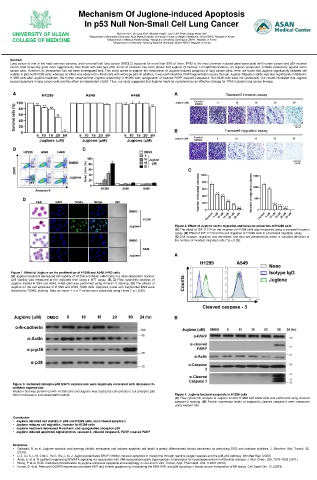
Figure 2. Effect of Juglone on the migration and invasion properties of H1299 cells
(A) The effect of IDF-11774 on the invasion of H1299 cells was measured using a transwell invasion
assay. (B) Effect of IDF-11774 on the cell migration of H1299 cells in a transwell migration assay.
(C) Cell invasion, migration was estimated, and data are presented as mean ± standard deviation of
the number of invaded, migrated cells (* p < 0.05).
A
Figure 1. Effect of Juglone on the proliferation of H1299 and A549, H460 cells
(A) Juglone treatment decreased cell viability of H1299 and A549, H460 cells in a dose-dependent manner.
Cell viability was measured at the indicated time using a MTT assay. (B, C) Flow cytometric analysis of
Juglone treated H1299 and A549, H460 cells was performed using Annexin V staining. (D) The effects of
Juglone on the cell apoptosis of H1299 and A549, H460 cells. Apoptotic nuclei with fragmented DNA were
detected by TUNEL staining. Data are mean ± s.d. P values were calculated using t-tests (* p < 0.05).
B
Figure 3. Increased phospho-p38 MAPK expressions were negatively correlated with decreased N-
cadherin expressions
Western blot was performed with H1299 cells and Juglone was treated by concentration, but phospho-p38
did not increase in a do-dependent manner. Figure 4. Juglone induced apoptosis in H1299 cells
(A) Flow cytometric analysis of Juglone treated H1299 and A549 cells was performed using cleaved
caspase-3 staining. (B) Protein expression levels of caspase3, cleaved caspase-3 were measured
using western blot
Conclusion
• Juglone inhibited cell viability in p53-null H1299 cells, and induced apoptosis.
• Juglone reduced cell migration, invasion in H1299 cells
• Juglone treatment decreased N-cadherin and upregulatied phosphor-p38
• Juglone induced apoptosis signal protein, caspase-3, cleaved caspase-3, PARP, cleaved PARP
Reference
• Gaikwad, S. et al. Juglone–ascorbic acid synergy inhibits metastasis and induces apoptotic cell death in poorly differentiated thyroid carcinoma by perturbing SOD and catalase activities. J. Biochem. Mol. Toxicol. 32,
(2018).
• Li Z, Liu X, Li M, Chai J, He S, Wu J, Xu J. Juglone potentiates BRAF inhibitor-induced apoptosis in melanoma through reactive oxygen species and the p38-p53 pathway. Mol Med Rep. (2020).
• Ando, K. et al. N-cadherin regulates p38 MAPK signaling via association with JNK-associated leucine zipper protein: Implications for neurodegeneration in Alzheimer disease. J. Biol. Chem. 286, 7619–7628 (2011).
• Wang, P. et al. ROS -mediated p53 activation by juglone enhances apoptosis and autophagy in vivo and in vitro. Toxicol. Appl. Pharmacol. 379, 114647 (2019).
• Kumar, D. et al. Reduced IQGAP2 expression promotes EMT and inhibits apoptosis by modulating the MEK-ERK and p38 signaling in breast cancer irrespective of ER status. Cell Death Dis. 12, (2021).

