


Page 23 - O. Microbiology
P. 23
Anti-viral Effects of HEXIM1 Derivative Chimeric Proteins on HIV-1 production
  Hae-In Kim and Ji-Chang You

  National Research Laboratory for Molecular Virology, Department of Pathology, School of Medicine, The Catholic
  University of Korea, Seoul.

                                            BACKGROUND
    Viral trans-activator Tat can bring P-TEFb to the HIV promoter to induce HIV expression (1, 2). P-TEFb is comprised of cyclin T1 (CycT1) and cyclin-dependent kinase 9 (CDK9) (3, 4), and it is
   required for transcription elongation for both HIV and host gene expression. 7SK small nuclear ribonucleoprotein complex (7SK snRNP) consisting of 7SK RNA and proteins HEXIM1, LARP7,
   and MePCE regulate P-TEFb activity (5, 6). One of the 7SK snRNP components, HEXIM1, binds to the 7SK snRNA through RNA binding arginine-rich motif (ARM, residues 150–162), and to P-
   TEFb through its CycT1 binding domain (TBD, residues 250–359) and its central inhibitory domain (ID, residues 200–211). The inhibitory domain which includes a PYNT motif (202Pro-203Tyr-
   204Asn-205Thr) inhibits the cyclin-dependent kinase activity of P-TEFb by masking CDK9’s substrate-binding site (7, 8). TBD domain synergistically inhibits CDK9 activity with ID (9). The central
   ARM region of the viral trans-activator Tat (residues 51–57) binds to 7SK RNA and escapes P-TEFb from inhibition by HEXIM1 (10). Tat's activation domain (AD) binds to CycT1, which can bind
   to the bulge region of TAR (11). The Tat-TAR recognition motif of CycT1 binds to the central loop of TAR, allowing P-TEFb to be recruited into the RNAPII early elongation complex arrested at
   the HIV transcription start site. CDK9 then stimulates transcriptional elongation to express viral genes from HIV promoters (12, 13). Recently, it has been shown that chimeric protein HEXIM1-Tat
   (HT) which includes critical functional domains of Tat and HEXIM1 inhibits P-TEFb and binds RNA by combining the P-TEFb binding N-terminal domain of Tat to the acidic and/or central basic
   domains of HEXIM1 (14). In this study, we combined HT with ACP which is a novel cell-penetrating peptide identified in our laboratory and verified whether anti-viral effects are enhanced. These
   chimeric proteins could be proposed as a new candidate for anti-HIV-1 therapy.
                                                METHODS
   We fused ACP with HT and verified each anti-viral effect. pNL43-eGFP co-transfected with pACP-HT, pHT-ACP or
   pHT into 293T cell. 24hrs after transfection, the cell lysate was used for Western blot (WB). The supernatant was
   collected and used for ELISA, infection of MT4 cell and detection of GFP-positive infected cells by FACS analysis.
                                                RESULTS

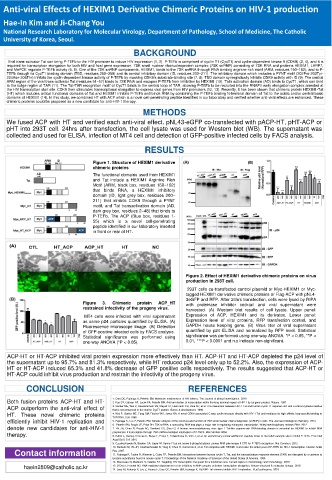
                               Figure 1. Structure of HEXIM1 derivative
                               chimeric proteins
                               The functional domains used from HEXIM1
                               and Tat include a HEXIM1 Arginine Rich
                               Motif (ARM, black box, residues 150–162)
                               that binds RNA, a HEXIM1 inhibitory
                               domain (ID, light grey box, residues 200–
                               211) that inhibits CDK9 through a PYNT
                               motif, and Tat transactivation domain (AD,
                               dark grey box, residues 2–48) that binds to
                               P-TEFb. The ACP (Blue box, residues 1-
                               55) which is a novel cell-penetrating
                               peptide identified in our laboratory inserted
                               in front or rear of HT.


                                                              Figure 2. Effect of HEXIM1 derivative chimeric proteins on virus
                                                              production in 293T cell.
                                                              293T cells co-transfected control plasmid or Myc-HEXIM1 or Myc-
                                                              tagged HEXIM1 derivative chimeric proteins or Flag-ACP with pNL4-
                                                              3eGFP and RFP. After 24hrs transfection, cells were lysed by RIPA
                            Figure  3.  Chimeric  protein  ACP_HT  with proteinase inhibitor cocktail and viral supernatant were
                            restrained infectivity of the progeny virus.  harvested. (A) Western blot results of cell lysate. Upper panel:
                            MT4 cells were infected with viral supernatant  Expression of ACP, HEXIM1 and its derivates. Lower panel:
                            as same p24 particles quantified by ELISA. (A)  Expression level of viral proteins, RFP transfection control, and
                            Fluorescence microscope image. (B) Detection  GAPDH house keeping gene. (B) Virus titer of viral supernatant
                            of GFP-positive infected cells by FACS analysis.  quantified by p24 ELISA and normalized by RFP level. Statistical
                            Statistical significance was performed using  significance was performed using one-way ANOVA. *P < 0.05, **P <
                            one-way ANOVA (*P < 0.05).        0.01, ***P < 0.0001 and n.s indicate non-significant.

   ACP-HT or HT-ACP inhibited viral protein expression more effectively than HT. ACP-HT and HT-ACP depleted the p24 level of
   the supernatant up to 95.7% and 81.3% respectively, while HT reduced p24 level only up to 52.2%. Also, the expression of ACP-
   HT or HT-ACP induced 65.3% and 41.8% decrease of GFP positive cells respectively. The results suggested that ACP-HT or
   HT-ACP could inhibit virus production and restrain the infectivity of the progeny virus.

          CONCLUSION                                          REFERENCES

   Both fusion proteins ACP-HT and HT-  1. Cary DC, Fujinaga K, Peterlin BM. Molecular mechanisms of HIV latency. The Journal of clinical investigation. 2016
                                      2. Kao SY, Calman AF, Luciw PA, Peterlin BM. Anti-termination of transcription within the long terminal repeat of HIV-1 by tat gene product. Nature. 1987
   ACP outperform the anti-viral effect of  3. Garber ME, Wei P, KewalRamani VN, Mayall TP, Herrmann CH, Rice AP, et al. The interaction between HIV-1 Tat and human cyclin T1 requires zinc and a critical cysteine residue
                                      that is not conserved in the murine CycT1 protein. Genes & development. 1998
   HT. These novel chimeric proteins  4. Wei P, Garber ME, Fang SM, Fischer WH, Jones KA. A novel CDK9-associated C-type cyclin interacts directly with HIV-1 Tat and mediates its high-affinity, loop-specific binding to
                                      TAR RNA. Cell. 1998
   efficiently inhibit HIV-1 replication and  5. Fujinaga K, Luo Z, Peterlin BM. Genetic analysis of the structure and function of 7SK small nuclear ribonucleoprotein (snRNP) in cells. The Journal of biological chemistry. 2014
   denote new candidates for anti-HIV-1  6. Peterlin BM, Brogie JE, Price DH. 7SK snRNA: a noncoding RNA that plays a major role in regulating eukaryotic transcription. Wiley interdisciplinary reviews RNA. 2012
                                      7. Yik JH, Chen R, Pezda AC, Samford CS, Zhou Q. A human immunodeficiency virus type 1 Tat-like arginine-rich RNA-binding domain is essential for HEXIM1 to inhibit RNA
   therapy.                           polymerase II transcription through 7SK snRNA-mediated inactivation of P-TEFb. Mol Cell Biol. 2004
                                      8. Kobbi L, Demey-Thomas E, Braye F, Proux F, Kolesnikova O, Vinh J, et al. An evolutionary conservedHexim1 peptide binds to the Cdk9 catalytic site to inhibit P-TEFb. Proc Natl
                                      Acad Sci U S A. 2016
                                      9. Czudnochowski N, Bosken CA, Geyer M. Serine-7 but not serine-5 phosphorylation primes RNA polymerase II CTD for P-TEFb recognition. Nat Commun. 2012
                                      10. Barboric M, Yik JH, Czudnochowski N, Yang Z, Chen R, Contreras X, et al. Tat competes with HEXIM1 to increase the active pool of P-TEFb for HIV-1 transcription. Nucleic Acids
      Contact information             Res. 2007
                                      11. Fujinaga K, Taube R, Wimmer J, Cujec TP, Peterlin BM. Interactions between human cyclin T, Tat, and the transactivation response element (TAR) are disrupted by a cysteine to
                                      tyrosine substitution found in mouse cyclin T. Proceedings of the National Academy of Sciences of the United States of America. 1999
                                      12. Mousseau G, Mediouni S, Valente ST. Targeting HIV transcription: the quest for a functional cure. Current topics in microbiology and immunology. 2015
         haein2809@catholic.ac.kr     13. D’Orso I, Frankel AD. RNA-mediated displacement of an inhibitory snRNP complex activates transcription elongation. Nature structural & molecular biology. 2010
                                      14. Leoz M, Kukanja P, Luo Z, Huang F, Cary DC, Peterlin BM, Fujinaga K. HEXIM1-Tat chimera inhibits HIV-1 replication. PLoS pathogens. 2018

