


Page 19 - O. Microbiology
P. 19
Construction and examination of a new type of Brec1
                    Recombinase derivatives for the Elimination of HIV Proviral
                                       DNA from the Host Genome


                         National Research Laboratory for Molecular Virology, Department of Pathology, School of Medicine,
                                           The Catholic University of Korea, Seoul.
                      Abstract                                            Introduction

    Even though combinatorial antiretroviral therapies (cART), which are used to treat  Broad-range recombinase 1 (Brec1) was evolved by directed molecular evolution and, as a
    HIV-1 infection, can effectively suppress and relieve symptoms of AIDS but does not  Cre-type recombinase. Brec1 can remove the provirus from HIV-1–infected cells by
    completely eliminate HIV-1 infection. In order to effectively cure HIV-1 infection, the  specifically recognizing and recombining a highly conserved target site (loxBTR) located within
    integrated proviral DNA must be removed from the virus infected host genome. We  the LTRs of the majority of HIV-1 isolates. Brec1-mediated recombination of loxBTR sites
    tried to develop a therapeutic protein drug using Broad-range recombinase 1 (Brec1)  from HIV-1 provirus could delete or invert genomic sequences in the infected cell.
    and a HIV nucleocapsid (NC). The Brec1 has previously been known to efficiently  The HIV nucleocapsid (NC) is a small, highly basic, zinc binding protein that interacts with the
    and safely remove integrated provirus from HIV-1 infected cells. However, it in its  viral RNA to facilitate numerous processes in the viral life cycle. When NC is contained within
    current form is difficult to being used as for a protein drug as it cannot get into cells  the precursor Gag polyprotein, the NC domain is involved in genomic RNA packaging, Gag-
    by itself. To overcome this problem, we fused the Brec1 with NC, which can be easily  Gag multimerization and possibly initiation of particle production during virus assembly.
    internalized into cells and capable of targeting integrated proviral DNA in HIV-1  Our previous work had established that NC can localize to the nucleus and we observed that
    infected cells. We observed that the overexpression of NC-Brec1 lead to the excision  NC can efficiently internalize into cells. In addition, NC has been known to interact with HIV-1
    of co-transfected proviral DNA in cell lines. Virus production was also found to be  proviral DNA. Therefore, we examined anti-viral effect against HIV-1 by fusing Brec1 with the
    significantly reduced by HIV-1 p24 ELISA and western blot assay. Therefore, this  HIV NC protein.
    novel approach using a combination of Brec1 and NC might have a great potential to
    develop a novel fundamental curative HIV-1 therapy.

                                                   Results


     A


     B
                                                                  B


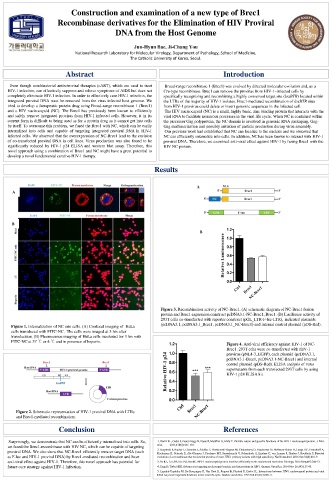
                                                     Figure 3. Recombination activity of NC-Brec1. (A) schematic diagram of NC-Brec1 fusion
                                                     protein and Brec1 expression construct pcDNA3.1-NC-Brec1, Brec1. (B) Luciferase activity of
                                                     293T cells co-transfected with reporter construct (pGL_LTR-F-luc-LTR), indicated plasmids
                                                     (pcDNA3.1, pcDNA3.1_Brec1, pcDNA3.1_NC-Brec1) and internal control plasmid (pDS-Red).
     Figure 1. Internalization of NC into cells. (A) Confocal imaging of  HeLa
     cells transduced with FITC-NC.  The cells were imaged at 3 hrs after
     transduction. (B) Fluorescence imaging of HeLa cells incubated for 3 hrs with
     FITC-NC at 37 ℃ or 4 ℃ and in presence of heparin.
                                                        1.2                Figure 4. Anti-viral efficiency against HIV-1 of NC-
                                                                           Brec1. 293T cells were co-transfected with HIV-1
                                                        1.0
                                                                           provirus (pNL4-3_EGFP), each plasmid (pcDNA3.1,
                                                       Relative HIV-1 p24  0.8  ***  ***  control plasmid (pDS-Red). ELISA analysis of virus
                                                                           pcDNA3.1-Brec1, pcDNA3.1-NC-Brec1) and internal
                                                                           supernatants from each transfected 293T cells by using
                                                        0.6
                                                                           HIV-1 p24 ELISA kit.
                                                        0.4
                                                        0.2
                                                        0.0
                                                           Ctrl  Brec1
      Figure 2. Schematic representation of HIV-1 proviral DNA with LTRs   NC-Brec1
      and Brec1-mediated recombination.
                    Conclusion                                            References

    Surprisingly, we demonstrate that NC can be efficiently internalized into cells. So,   1. Darlix JL, Godet J, Ivanyi-Nagy R, Fosse P, Mauffret O, Mely Y. Flexible nature and specific functions of the HIV-1 nucleocapsid protein. J. Mol.
   we fused the Brec1-recombinase with HIV NC, which can be capable of targeting   Biol.  2011;410(4):565–581.
   proviral DNA. We also show that NC-Brec1 efficiently remove target DNA (such   2. Karpinski J, Hauber I, Chemnitz J, Schäfer C, Paszkowski-Rogacz M, Chakraborty D, Beschorner N, Hofmann-Sieber H, Lange UC, Grundhoff A,
                                                    Hackmann K, Schrock E, Abi-Ghanem J, Pisabarro MT, Surendranath V, Schambach A, Lindner C, van Lunzen J, Hauber J, Buchholz F, Directed
   as F-luc and HIV-1 proviral DNA) by Brec1-mediated recombination and have   evolution of a recombinase that excises the provirus of most HIV-1 primary isolates with high specificity, Nat Biotechnol. 2016 Apr;34(4):401-9.
   anti-viral effect against HIV-1. Therefore, this novel approach has potential for   3. Yu KL, Lee SH, Lee ES, You JC. HIV-1 nucleocapsid protein localizes efficiently to the nucleus and nucleolus. Virology. 2016 May;492:204-12.
   future cure strategy against HIV-1 infection.    4. Garg D, Torbett BE. Advances in targeting nucleocapsid-nucleic acid interactions in HIV-1 therapy. Virus Res. 2014 Nov 26;193:135-43.
                                                    5. Lapadat-Tapolsky M, De Rocquigny H, Van Gent D, Roques B, Plasterk R, Darlix JL. Interactions between HIV-1 nucleocapsid protein and viral
                                                    DNA may have important functions in the viral life cycle. Nucleic Acids Res. 1993 Feb 25;21(4):831-9.

