


Page 21 - O. Microbiology
P. 21
Identification of a novel protein inhibitor acting on late-stage of HIV-1

  replication
  Kyung-Lee Yu, Ga-Na Kim, Hae-In Kim, Yu-Mi Jung and Ji-Chang You
  National Research Laboratory for Molecular Virology, Department of Pathology, School of Medicine, The Catholic University of Korea
                        BACKGROUND                                                   AIM

     Human immunodeficiency virus type 1 (HIV-1) infection induces innate immune responses
   mediated mainly by IFN-I. IFN-Is are well-known cytokines eliciting broad anti-viral effects by
   inducing the expression of anti-viral genes called interferon-stimulated genes (ISGs).  Investigation the effect of SCOTIN on HIV-1
    An anti-viral IFN-β inducible protein, SCOTIN, have recently reported to inhibit the Hepatitis C
   Virus (HCV) replication by mediating the autophagic degradation of the HCV NS5A protein that  replication.
   plays a key role in HCV RNA replication. Therefore we investigated the effect of SCOTIN on HIV-
   1 replication.
               METHODS                                              RESULTS

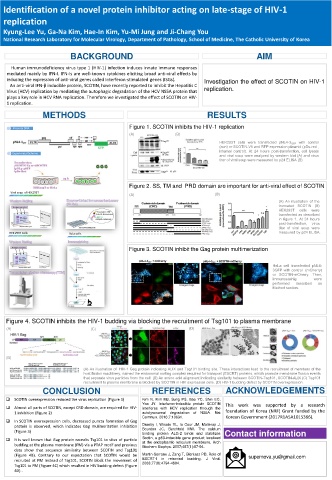
                                           Figure 1. SCOTIN inhibits the HIV-1 replication
     Proviral DNA
                                           (A)            (B)
                                                                        HEK293T cells were transfected pNL4-3 GFP with control
                                                                        (con) or SCOTIN-V5 and RFP expression plasmid (pDs-red ,
                                                                        internal control). At 24 hours post-transfection, cell lysate
     Experimetal Scheme
                                                                        and viral soup were analyzed by western blot (A) and virus
                                                                        titer of viral soup were measured by p24 ELISA (B)


                                           Figure 2. SS, TM and PRD domain are important for anti-viral effect of SCOTIN
    Viral soup  of HEK293T
                                           (A)                         (B)
    Western Blotting   Enzyme-Linked Immunosorbent assay                                    (A) An illustration of the
                       (ELISA)                                                              truncated SCOTIN (B)
                                                                                            HEK293T  cells  were
                                                                                            transfected as described
                                                                                            in figure 1. At 24 hours
                                                                                            post-transfection,  virus
                                                                                            titer of viral soup were
    HEK 293T Cells     HeLa cells                                                           measured by p24 ELISA.
    Western Blotting   Immnostaining
                                           Figure 3. SCOTIN inhibit the Gag protein multimerization

                                                                                          HeLa cell transfected pNL4-
                                                                                          3GFP with control (mCherry)
    Transmission electron microscopy (TEM)                                                or SCOTIN-mCherry. Then,
                                                                                          immunostainig  were
                                                                                          performed  described  as
                                                                                          Method section.


   Figure 4. SCOTIN inhibits the HIV-1 budding via blocking the recruitment of Tsg101 to plasma membrane
   (A)                         (C)                             (D)


   (B)
                            (A) An illustration of HIV-1 Gag protein indicating ALIX and Tsg101 binding site. These interactions lead to the recruitment of members of the
                            host fission machinery, named the endosomal sorting complex required for transport (ESCRT) proteins, which promote membrane fission events
                            that separate virus particles from the cell (B) An amino acid alignment indicating similarity between SCOTIN-Tsg101, SCOTIN-ALIX (C) Tsg101
                            recruitment to plasma membrane is blocked by SCOTIN in HIV expression cells. (D) HIV-1 budding defect by SCOTIN overexpression.
               CONCLUSION                         REFERENCES              ACKNOWLEDGEMENTS

   ❑  SCOTIN overexpression reduced the virus replication (Figure 1)  Kim N, Kim MJ, Sung PS, Bae YC, Shin EC,
                                               Yoo JY. Interferon-inducible protein SCOTIN  This work was supported by a research
   ❑  Almost all parts of SCOTIN, except CRD domain, are required for HIV-  interferes with HCV replication through the
      1 inhibition (Figure 2)                  autolysosomal  degradation  of  NS5A.  Nat  foundation of Korea (NRF) Grant funded by the
                                               Commun. 2016;7:10631.      Korean Govermment (2017R1A5A1015366).
   ❑  In SCOTIN overexpression cells, decreased puncta formation of Gag
      protein is observed, which indicates Gag mulimerization inhibition  Draeby I, Woods YL, la Cour JM, Mollerup J,
                                               Bourdon JC, Berchtold MW. The calcium
      (Figure 3)                               binding protein ALG-2 binds and stabilizes  Contact information
   ❑  It is well known that Gag protein recruits Tsg101 to sites of particle  Scotin, a p53-inducible gene product localized
                                               at the endoplasmic reticulum membrane. Arch
      budding at the plasma membrane (PM) via a PTAP motif and previous  Biochem Biophys. 2007;467(1):87-94.
      data show that sequence similarity between SCOTIN and Tsg101
      (Figure 4B). Contrary to our expectation that SCOTIN would be  Martin-Serrano J, Zang T, Bieniasz PD. Role of  supernova.yu@gmail.com
      recruited at PM instead of Tsg101, SCOTIN block the movement of  ESCRT-I  in  retroviral  budding.  J  Virol.
      Tsg101 to PM (Figure 4C) which resulted in HIV budding defect (Figure  2003;77(8):4794-4804.
      4D) .

