


Page 27 - O. Microbiology
P. 27
(O-22) Comparative microbiomes of tonsil and saliva in pediatric patients
                                      subjected to tonsillectomy
                                            1
                           1
                                   1
                                                      1
                                                                       2
                                                                               3,4
                                                                                          3,4
                                                               2
                  Da Hyeon Choi , Jiwon Park , Ju Kwang Choi , Kyeong Eun Lee , Won Hee Lee , Jinho Yang , Ju Yeon Lee , Yoon Jeong Park ,
                                               5
                                 Chan Oh , Ho-Ryun Won , Bon Seok Koo , Jae Won Chang 5,*  Yoon Shin Park  1,*
                                      5
                                                        5
                       1 Department of Microbiology, School of Biological Sciences, College of Natural Sciences, ChungbukNational University, Cheongju 28644, Republic of Korea
                                           2Institute of MD Healthcare Inc, Seoul, Republic of Korea
                    3Central Research Institute, Nano Intelligent Biomedical Engineering Corporation (NIBEC), School of Dentistry, Seoul National University, Seoul 03080, Republic of Korea
                      4Department of Dental Regenerative Bioengineering and Dental Research Institute, School of Dentistry, Seoul National University, Seoul 03080, Republic of Korea
                         5Department of Otolaryngology-Head and Neck Surgery, Chungnam National University College of Medicine, Daejeon 35015, Republic of Korea
                                                    pys@cbnu.ac.kr
                   BACKGROUND                                                   AIM
   Oral bacteria travel throughout the body and are significantly associated with human diseases.
   Given that tonsils are located between the oral cavity and larynx esophagus at the gateway of
   both alimentary and respiratory tracts, tonsillar tissue may also be affected by both oral and
   alimentary tract microbiota. Here, we focused on the distribution and correlations of microbiota in
   saliva and tonsillar tissues of young tonsillectomy patients based on evaluation of the V3-V5
   region of 16S rRNA genes to examine the hypothesis that the microbiome is associated with
   tonsillar hyperplasia in children. The top 10 ranked taxa in saliva group and tonsillar group
   based on average relative abundance were Haemophilus, Streptococcus, Fusobacterium,
   Veillonella,  Prevotella,  Alloprevotella,  Neisseria,  Prophyromonas,  Campylobacter,  and
   Treponema 2. Analysis of the microbiomes between tonsil and saliva revealed that many
   bacterial communities are shared and show similarities in terms of diversity and composition,
   suggesting close interactions between the two microbial groups.  Our results assume that the oral microbiome exerts significant effects on not only the tonsil
                                                         itself but also tonsil-derived immune or stem cells through regulating the microbial community.
                                                METHODS
   Sample collection: Among the 45 participants who underwent tonsillectomy at Chungnam National University Hospital (CNUH, Daejeon, Korea) between June 2018 and January 2019, 29 were
   enrolled for analysis (IRB No. 2018-06-021-002).
   Anthropometric measurements and serum biochemical indices of subjects: We collected anthropometric data from all subjects, including the height and weight of all patients, which were
   measured the day before surgery.
   DNA extraction and amplicon sequencing: DNA from saliva and tonsillar tissue was extracted using a DNeasy PowerSoil kit (Qiagen, Germany). DNA in each sample was quantified using
   QIAxpert (Qiagen). Specific V3-V4 hypervariable regions of the 16S rRNA gene were amplified using 16S_V3_F (5′-TCGTCGGCAGCGTCAGATGTGTATAAGAGACAGCCTACGG
   GNGGCWGCAG-3′) and 16S_V4_R (5′-GTCTCGTGGGCTCGGAGATGTGTATA AGAGACAGGACTACHVGGGTATCTAATCC-3′) primers. Libraries were prepared using PCR products and
   quantified with the aid of the QIAxpert kit (Qiagen). Each amplicon was quantified, pooled, and sequenced using MiSeq (Illumina, USA). All raw sequences derived from this experiment were
   submitted to the Short Read Archive of NCBI and can be found under BioProject accession number #PRJNA615768.
   Analysis of bacterial compositions of microbiomes: A total of 726,274 raw reads were generated from the saliva and tonsillar tissue of 29 participants, with an average of 12,745 reads
   (standard deviation 3,859). Paired-end reads matching the adapter sequences were trimmed using cutadapt (version 1.1.6). The resulting FASTQ files containing paired-end reads were merged
   with CASPER and quality-filtered with a Phred (Q) score of 2017. Any reads < 350 bp or > 550 bp after merging were additionally excluded.
                                                 RESULTS
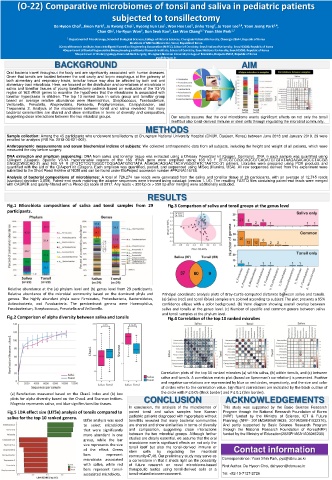
   Fig.1 Microbiota compositions of saliva and tonsil samples from 29  Fig.3 Comparison of saliva and tonsil groups at the genus level
   participants.


    Relative abundance at the (a) phylum level and (b) genus level from 29 participants.
    Relative abundance of the microbial community based on the dominant phyla and  Principal coordinate analysis plots of Bray-Curtis-computed distances between saliva and tonsils.
    genera. The highly abundant phyla were Firmicutes, Proteobacteria, Bacteroidetes,  (a) Saliva (red) and tonsil (blue) samples are colored according to subject. The plot presents a 95%
    Actinobacteria, and Fusobacteria. The predominant genera were Haemophilus,  confidence ellipse with a color background. (b) Venn diagram showing overall overlap between
    Fusobacterium, Streptococcus, Prevotella and Veillonella.  saliva and tonsils at the genus level. (c) Number of specific and common genera between saliva
                                                      and tonsil samples at the phylum level.
   Fig.2 Comparison of alpha diversity between saliva and tonsils  Fig.4 Correlation of the top 10 ranked microbes


                                                     Correlation plots of the top 10 ranked microbes (a) within saliva, (b) within tonsils, and (c) between
                                                     saliva and tonsils. A correlation matrix plot (based on Spearman’s correlation) is presented. Positive
                                                     and negative correlations are represented by blue or red circles, respectively, and the size and color
                                                     of circles refer to the correlation value. Significant correlations are indicated by the black outline of
    (a) Rarefaction measured based on the Chao1 index and (b) box  the circle with P ≤ 0.05 (thick border) and P ≤ 0.1 (thin border).
    plots for alpha diversity based on the Chao1 and Shannon indices.  CONCLUSION  ACKNOWLEDGEMENTS
    Magenta represents saliva, and blue signifies tonsillar tissues.
                                           In conclusion, the analysis of the microbiomes of  This study was supported by the Basic Science Research
   Fig.5 LDA effect size (LEfSe) analysis of tonsils compared to   paired tonsil and saliva samples from Korean  Program through the National Research Foundation of Korea
   saliva for the top 10 ranked genera.    pediatric patients diagnosed with hyperplasia without  (NRF) funded by the Ministry of Science, ICT & Future
                            LEfSe analysis was used  tonsillitis revealed that many bacterial communities  Planning (NRF- 2016M3A9B4919639, 2019M3A9H1032376).
                            to  select  microbiota  are shared and show similarities in terms of diversity  And partly supported by Basic Science Research Program
                            that were significantly  and  composition,  suggesting  close  interactions  through the National Research Foundation of Korea(NRF)
                            more abundant in one  between the two microbial groups. Although further  funded by the Ministry of Education(2020R1A6A1A06046235)
                            group, while the bar  studies are clearly essential, we assume that the oral
                                           microbiome exerts significant effects on not only the
                            size represents the size  tonsil itself but also the tonsil-derived immune or
                            of the effect. Green  stem  cells  by  regulating  the  microbial  Contact information
                            bars    represent  community47,48. Our preliminary study may serve as
                            microbiota associated  a cornerstone in that it sheds light on the possibility  Correspondence: Yoon Shin Park, pys@cbnu.ac.kr
                            with saliva, while red  of future research on novel microbiome-based  First Author: Da Hyeon Choi, dahyeon@cbnu.ac.kr
                            bars represent tonsil-  therapeutic tactics using tonsil-derived cells or a
                            associated microbiota.  tonsil-related microenvironment.  Tel: +82-10-7127-2726

