


Page 25 - M. Immunology
P. 25
Role of mitochondria in Mycobacterium tuberculosis infected macrophages

  Junghwan Lee , Ji-Ae Choi , Soo-Na Cho , Sang-Hun Son , Doan Tam Nguyen , Seong-Ahn Lee 1,2 and Chang-Hwa Song 1,2*
                      1,2
                                 1,2
             1,2
                                              1,2
                                                              1,2
                                                    2
                          1
  Department of Medical Science , and Department of Microbiology , College of Medicine, Chungnam National University, 266 Munhwa-ro,
  Jung-gu, Daejeon 35015, South Korea
                   BACKGROUND                                                  AIM
   Many intracellular bacteria use host organelles such as the mitochondria, Golgi,  Recent studies have shown that bacterial infection modulates mitochondrial
   and endoplasmic reticulum (ER). Mitochondria are highly dynamic organelles that  dynamics in various ways to interfere with apoptosis. Previously, we reported
   build the large interconnected intracellular networks responsible for cellular  that endoplasmic reticulum (ER) stress-mediated apoptosis is important
   metabolism, signaling, and death. Mitochondrial dynamics are controlled by their  defense mechanisms to anti-mycobacteria. However, relationship between
   fusion and fission. Mitochondrial fusion involves the outer mitochondrial membrane  ER and mitochondria has not been fully understood in Mtb-infected
   GTPases mitofusin 1/2 (MFN1/2), and inner membrane GTPase optic atrophy 1  macrophages. Therefore, we investigated whether Mtb-induced ER stress
   (OPA1). Mitochondrial fission requires mitochondrial fission 1 protein (FIS1) and  causes mitochondrial network fragmentation in murine macrophages.
   GTPase dynamin-related protein 1 (DRP1), but the molecular details of fusion and
   fission are unknown. Mitochondrial fission seems to be an early stage of apoptosis.
   Additionally, mitochondrial dynamics function as signals to induce the innate
   immune response during viral infection. However, the role of mitochondrial  METHODS
   dynamics during infection is unclear. In mammalian cells, the E3 ubiquitin ligase
   Parkin regulates mitochondrial dynamics by promoting proteasome-dependent  Bone  marrow-derived  macrophages  (BMDMs)  were  isolated  and
   degradation of MFN1/2. Parkin is involved in the innate immune response to  differentiated by growth for 4 days in 25 ng/ml macrophage colony-
   Mycobacterium tuberculosis (Mtb) and Mycobacterium leprae infection by  stimulating factor containing DMEM supplemented with 10 % FBS. The
   promoting  ubiquitin-mediated  autophagy  of  mycobacteria  and  inhibiting  degree of mitochondrial fragmentation was acquired using a confocal laser-
   mycobacterial replication in macrophages. ER stress is implicated in the response  scanning microscope. Production of ER stress molecules and mitochondrial
   to Mtb and regulates apoptosis in the presence of a variety of pathogens.  fusion/fission makers was analyzed by western blotting. Cell death was
   However,  the  relationship  between  ER  stress-mediated  apoptosis  and  assessed using an Annexin V/PI staining kit.
   mitochondrial dysfunction is unclear.
                                                RESULTS


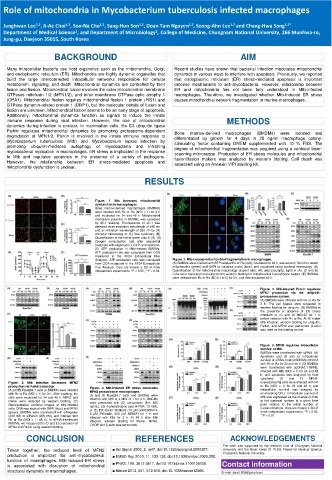
                                Figure.  1.  Mtb  increases  mitochondrial
                                dysfunction in macrophages.
                                Bone marrow-derived macrophages (BMDMs)
                                were infected with Rv or Ra (MOI = 1) for 3 h
                                and incubated for 24 and 48 h. Mitochondrial
                                membrane potential in BMDMs was assessed
                                by JC-1 staining. Fluorescence of JC-1 was
                                detected at an excitation wavelength of 488 nm
                                and an emission wavelength of 530 nm by (A)
                                confocal microscopy or (C) flow cytometry. (B)
                                Quantification of the red-to-green ratio in (A). (D)
                                Oxygen consumption rate after sequential
                                treatment with oligomycin, CCCP, and rotenone.
                                (E) ATP production in Mtb-infected BMDMs.
                                ATP production rate was calculated from OCR
                                measured in the XF24 Extracellular Flux
                                Analyzer. ATP production rate was calculated  Figure. 2. Mtb induces mitochondrial fragmentation in macrophages.
                                from OCR measured in the XF24 Extracellular  (A) BMDMs were infected with RFP-labeled Rv or Ra (red), incubated for 48 h, stained with Tom20 to detect
                                Flux Analyzer. Data are means ± SD of three  mitochondria (green) and DAPI to visualize nuclei (blue), and visualized using confocal microscopy. (B)
                                independent experiments. *P < 0.05, **P < 0.01.  Quantification of the mitochondrial morphology (aspect ratio; left, and circularity; right) in (A). (C and D)
                                                         Cells were harvested and subjected to western blotting for mitochondrial fusion/fission factors. (E) BMDMs
                                                         were infected with Rv or Ra (MOI=1 to 5) for 3 h, and then incubated 48 h.
                                                                                      Figure. 5. Mtb-induced Parkin regulates
                                                                                      MFN2  production  via  the  ubiquitin-
                                                                                      proteasome system.
                                                                                      (A) BMDMs were infected with Rv or Ra for
                                                                                      3 h. The cell lysates were subjected to
                                                                                      western blotting for ubiquitin. (B) BMDMs in
                                                                                      the presence or absence of ER stress
                                                                                      inhibitors or (C and D) MG132 for 1 h,
                                                                                      before infection with Rv or Ra. At 48 h after
                                                                                      Mtb infection, western blotting for ubiquitin,
                                                                                      Parkin, and MFN2 was performed. β-actin
                                                                                      was used as the loading control.
                                                                                      Figure. 6. MFN2 regulates intracellular
                                                                                      survival of Mtb.
                                                                                      BMDMs were transfected with siRNA. (A)
                                                                                      Apoptosis and (B and C) intracellular
                                                                                      survival of siRNA-treated BMDMs infected
                                                                                      with Rv or Ra for 24 and 48 h. (D) BMDMs
                                                                                      were transfected with pcDNA3.1-MFN2,
                                                                                      infected with Mtb (MOI = 1) for 24 and 48
                                                                                      h, and apoptosis was analyzed by flow
                                                                                      cytometry.  (E  and  F)  MFN2-
    Figure.  3. Mtb infection decreases MFN2                                          overexpressing cells were infected with Rv
    production via Parkin induction.  Figure. 4. Mtb-induced ER stress modulates      or Ra (MOI = 1) for 24 and 48 h, and
    (A and B) Raw264.7 cells or BMDMs were infected  MFN2 production in macrophages.  intracellular survival was assayed by
    with Rv or Ra (MOI = 1) for 3 h. After washing, the  (A and B) Raw264.7 cells and BMDMs were  enumerating CFU. Intracellular survival of
    cells were incubated for 24 and 48 h. MFN2 and  infected with Mtb at a MOI of 1 for 3 h. BMDMs  Mtb was expressed as the change (n-fold)
    Parkin were detected by western blotting. (C)  were pretreated with (C) tunicamycin (Tm, 500  in the bacterial number at a given time
    Representative confocal images of Mtb-infected  ng/mL), (D) 4-phenylbutyric acid (4-PBA, 10 mM),  point relative to the initial number of
    cells. DNA was stained with DAPI (blue) and MFN2  or (E) ER stress inhibitors (10 µM GSK2606414,  invasive bacteria. Data are means ± SD of
    (green). BMDMs were transfected with siNegative  5 µM IREstatin, 500 µM AEBSF) for 1 h and  three independent experiments. *P < 0.05,
    (200 nM) or siParkin (200 nM), and infected with  infected with Mtb for 3 h. At 48 h after Mtb  **P < 0.01.
    Rv or Ra (MOI = 1; 48 h). In siRNA-transfected  infection, western blotting for Parkin, MFN2,
    BMDMs, we measured the (D and E) expression of  CHOP, and β-actin was performed.
    MFN2 and Parkin using western blotting.
          CONCLUSION                         REFERENCES                     ACKNOWLEDGEMENTS
                                                                          The work was supported by the research fund of Chungnam National
   Taken together, the reduced level of MFN2  ■ Sci Signal 2009, 2, ra47, doi:10.1126/scisignal.2000287.  University and the Brain Korea 21 PLUS Project for Medical Science,
                                                                          Chungnam National University.
   production is important for anti-mycobacterial  ■ EMBO Rep 2010, 11, 133-138, doi:10.1038/embor.2009.258.
   function of macrophages. Mtb-induced ER stress  ■ PNAS, 108, 3612-3617, doi:10.1073/pnas.1100126108.
   is associated with disruption of mitochondrial                        Contact information
   structural dynamics in macrophages.  ■ Nature 2013, 501, 512-516, doi:10.1038/nature12566.  E-mail: asrai1509@gmail.com

