


Page 7 - K. Development and regeneration
P. 7
Hydroxychloroquine modifies features of preeclampsia (PE) phenotype
in N -nitro-L-arginine methyl ester (L-NAME) induced-PE rat model
ω
Minji Choi 1,2,3 , Jae Ryoung Hwang , Suk-Joo Choi , Soo-young Oh , Cheong-Rae Roh 3
3
3
2
1 Department of Health Sciences and Technology, SAIHST, Sungkyunkwan University, Seoul, Republic of Korea; Samsung biomedical research institute, Samsung
2
Medical Center, Seoul, Republic of Korea; Department of Obstetrics and Gynecology, Samsung Medical Center, Sungkyunkwan University School of Medicine, Seoul,
3
Republic of Korea
BACKGROUND AIM
Preeclampsia is observed in approximately 2~8 % of pregnant woman worldwide [1]. It is an important cause of maternal and neonatal In this study, we
morbidity and mortality [2, 3]. Preeclampsia is typically characterized by hypertension, proteinuria, glomerular endotheliosis and high level of investigated how HCQ
fms-like kinase-1 (sFlt-1) in serum [4]. Despite decades of research, the etiology of preeclampsia has not been fully elucidated. In addition, affects on features of
specific preventive treatments for preeclampsia have not been discovered. Hydroxychloroquine (HCQ) is used as a treatment for autoimmune preeclampsia
diseases such as systemic lupus erythematosus and rheumatoid arthritis. Recently, it has been known to have the effect of lowering blood phenotype using L-
pressure by mitigating endothelial dysfunction [5]. HCQ, traditionally known as an antimalarial drug, has been widely used to treat lupus NAME induced-
during pregnancy. Several clinical studies have suggested that the use of HCQ in pregnant women with lupus was associated with significant preeclampsia rat
decreased the risk of preeclampsia, below 80 %. However, the exact mechanism of HCQ of decreasing risk of preeclampsia is undetermined. models.
METHODS
Preeclampsia rat model (experimental protocol) - Sprague-Dawley (SD) rats (9 - 11 weeks) were used in
this study. Female and male rats were mated for overnight at a 1:1 ratio. Spermatozoa was checked after
mating and the day was determined as gestational day (GD) 0. Brief scheme of method is presented beside.
Pregnant SD rats were divided into four groups (n = 16 for each group); 1) control, 2) L-NAME group in which
L-NAME (300 mg/L) in drinking water was administrated from GD 7 to GD 18, 3) HCQ group in which daily
HCQ (10 mg/kg /day) was administrated per-oral from GD 7 to GD 18, and 4) L-NAME plus HCQ group.
Systolic Blood Pressure (SBP) - SBP was monitored on indicated GD by tail-cuff plethysmography.
Statistical analysis - All data were presented as the mean ± SEM. Data were subjected to statistical
analysis using Student’s t-tests, chi square test and Fisher’s exact test. Statistical difference was considered
significant when *, P < 0.05; **, P < 0.01; ***, P < 0.001; +, P < 0.05; ++, P < 0.01. All statistical analysis was
shown using GraphPad Prism 5 software (GraphPad Software, USA).
RESULTS
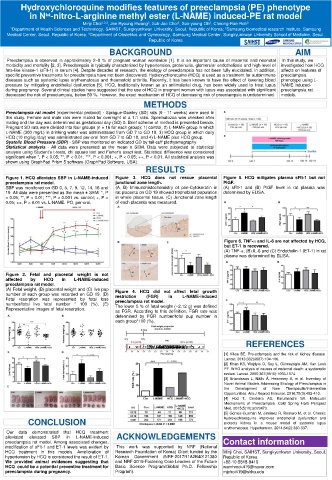
Figure 1. HCQ alleviates SBP in L-NAME-induced Figure 3. HCQ does not rescue placental Figure 5. HCQ mitigates plasma sFlt-1 but not
preeclampsia rat model. junctional zone length. PlGF.
SBP was monitored on GD 0, 5, 7, 9, 12, 14, 16 and (A, B) Immunohistochemistry of pan-Cytokeratin in (A) sFlt-1 and (B) PlGF level in rat plasma was
19. All data were presented as the mean ± SEM. *, P rat placenta on GD 19 showed trophoblast population determined by ELISA.
< 0.05; **, P < 0.01; ***, P < 0.001 vs. control; +, P < in whole placental tissue. (C) Junctional zone length
0.05; ++, P < 0.01 vs. L-NAME. PO, per-oral. of each placenta was measured.
Figure 6. TNF- and IL-6 are not affected by HCQ,
but ET-1 is recovered.
(A) TNF-, (B) IL-6 and (C) Endothelin-1 (ET-1) in rat
plasma was determined by ELISA.
Figure 2. Fetal and placental weight is not
affected by HCQ in L-NAME-induced
preeclampsia rat model.
(A) Fetal weight, (B) placental weight and (C) live pup Figure 4. HCQ did not affect fetal growth
number of each group was recorded on GD 19. (D) restriction (FGR) in L-NAME-induced
Fetal resorption was represented by fetal lose preeclampsia rat model.
number/total live fetal number * 100 (%). (E) The lower 5 % of fetal weight (~2.12 g) was defined
Representative images of fetal resorption.
as FGR. According to this definition, FGR rate was
determined by FGR number/total pup number in
each group*100 (%).
REFERENCES
[1] Vikse BE. Pre-eclampsia and the risk of kidney disease.
Lancet. 2013;382(9887):104-106.
[2] Khan KS, Wojdyla D, Say L, Gülmezoglu AM, Van Look
PF. WHO analysis of causes of maternal death: a systematic
review. Lancet. 2006;367(9516):1066-1074.
[3] Erlandsson L, Nääv Å, Hennessy A, et al. Inventory of
Novel Animal Models Addressing Etiology of Preeclampsia in
E
the Development of New Therapeutic/Intervention
Opportunities. Am J Reprod Immunol. 2016;75(3):402-410.
[4] Hod T, Cerdeira AS, Karumanchi SA. Molecular
Mechanisms of Preeclampsia. Cold Spring Harb Perspect
Med. 2015;5(10):a023473.
[5] Gómez-Guzmán M, Jiménez R, Romero M, et al. Chronic
CONCLUSION hydroxychloroquine improves endothelial dysfunction and
protects kidney in a mouse model of systemic lupus
erythematosus. Hypertension. 2014;64(2):330-337.
Our data demonstrated that HCQ treatment
alleviated elevated SBP in L-NAME-induced ACKNOWLEDGEMENTS
preeclampsia rat model. Among associated changes, Contact information
modification of sFlt-1 and ET-1 levels was evident by This work was supported by NRF (National
HCQ treatment in this models. Amelioration of Research Foundation of Korea) Grant funded by the Minji Choi, SAIHST, Sungkyunkwan University, Seoul,
hypertension by HCQ is considered the result of ET-1. Korean Government (NRF-2017R1A2B40121380 Republic of Korea
We provided animal evidences suggesting that and NRF-2019-Fostering Core Leaders of the Future +82-10-5818-9419
HCQ could be a potential preventive treatment for Basic Science Program/Global Ph.D. Fellowship wamhrock419@naver.com
preeclampsia during pregnancy. Program). mjchoi419@skku.edu

