


Page 51 - I. Chemical biology and drug discovery
P. 51
Development of modified spytag and spycatcher pair for application in affinity

                                                b
                                       a,b
                              a
  chromatography Jin Young Son , Sun Hee Park , Hyo Jin Kang , and Sang J. Chung a*, b*
  a College of Pharmacy, Sungkyunkwan University, Suwon, Korea
  b  AbTis Co. Ltd., Suwon, Korea
                   BACKGROUND                                                  AIM

   TheSpyTagandSpyCatchersystemisanefficienttoolforbioconjugationof  weaimtomodifythissystemtopreventtheformationoftheirreversible
   recombinant peptides. The SpyTag and SpyCatcher protein have relative  isopeptide bond. To this end, we designed a mutated Catcher protein
   high binding affinity (0.2 µM) and spontaneously form an isopeptide bond.  (K31R) which non-covalently binds to the Tag mostly relying on
   Our research revolves around the application of this system in protein  hydrophobic interactions. In an attempt to improve the binding affinity,
   purificationstrategiesemployingaffinitycolumnchromatography.  weconstructedthepeptidelibrariesoftheSpyTag.


                                                METHODS

   wedesignedamutatedCatcherprotein(K31R)whichnon-covalentlybindstotheTagmostlyrelyingonhydrophobicinteractions.Inan
   attempttoimprovethebindingaffinity,weconstructedthepeptidelibrariesoftheSpyTag.BasedontheX-raycrystalstructure,crucial
   aminoacidresiduesweresubstitutedforthemorehydrophobicaromaticaminoacids.Atthesametime,toascertainthewatersolubility,
   non crucial amino acid residues were replaced by aspartic acid. The peptide libraries were constructed using solid phase peptide
   synthesis.Next,thebindingoftheon-beadpeptidelibrarytothefluorescentlabeledCatcherproteinwasscreenedusingafluorescence
   microscope.

                                                RESULTS


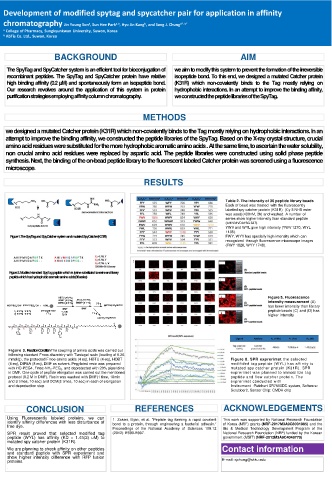
                                                                          Table 2. The intensity of 36 peptide library beads
                                                                          Each of bead was treated  with the fluorescently
                                                                          labeled spy catcher protein (K31R)  (Cy 3 NHS ester
                                                                          was used)(400nM, 2h) and washed. A number of
                                                                          series show higher intensity than standard peptide
                                                                          (AHIVMVDAYSG 387).
                                                                          YWV and WYL give high intensity (YWV 1270, WYL
                                                                          1135).
    Figure1.TheSpyTagandSpyCatchersystemandmutatedSpyCatcher(K31R)        FWY, WYY has specially high intensity which can
                                                                          recognized  through fluorescence microscope images
                                                                          (FWY 1826, WYY 1748).
                                            ㅋ

    Figure2..ModifiedstandardSpyTagpeptidewhichislysinesubstitutedtoserineandlibrary
    peptidewhichhashydrophobicaromaticaminoacids(36series)


                        .                                                               Figure 5. Fluorescence
                    HBTU ( 4 0 e q )    .
                        .
                    HOBT ( 4 0 e q )  A c 2 O ( 6 0 e q )  .                            intensity measurement (A)
                              .
                        .


            -
       -
   HO PEG 4 OH :   moc - PEG 8 OH  H2N  DIPEA ( 8 0 e q )  DMAP ( 0 1 e q )  0 2 g  N orma l se q uence  has lower intensity than library
    -
        F
        .            DMF    DMF

      1 ) 0 5 e q :   .   e q  T en t a g e l res i n  1 ) 13h  .                       peptide beads (C) and (D) has
                .

      2 ) 0 5 e q :   . 0 5   e q  1 7 g  2 ) 8h  1 5 g                                 higher intensity
        .

         0 5

                                 Lib rar y se q uence
                                      O
     O  H  O  H  O  H  O  H  O  H  O  H  O  H  O  H  O  H  O  H  O  O  O  O  O
    H 2 N CHC  N CHC  N CHC  N CHC  N CHC  N CHC  N CHC  N CHC  N CHC  N CHC  N C C  N  O  O  O  O  N
     R  CH 2  R  CH 2  R  CH 2  CH 2  CH 2  CH 2  CH 2  H 2  H  H
           C O  C O  C O  C O  OH
      N    OH  OH  OH  OH
       NH
                    OH
    Figure 3. Reaction  Condition  The coupling of amino acids was carried out
    following standard Fmoc-chemistry with Tentagel resin (loading of 0.26
    mmol/g), the protected Fmoc-amino acids (4 eq), HBTU (4 eq), HOBT       Figure 8. SPR exprerimet the selected
    (4 eq), DIPEA (8 eq), DMF as solvent. Pegylated resin was prepared      modifided tag peptide (WYL) has affinity to
    with HO-PEG4, Fmoc-NH 2 -PEG 8 . and deprotected with 20% piperidine    mutated spy catcher protein (K31R). SPR
    in DMF. One cycle of peptide elongation was carried out the mentioned   exprerimet was planned to immobilize tag
    protocol (0.2 M in DMF). Resin was washed with DMF(1 time, 10min        peptide and flow catcher protein. The
    and 3 times, 10 sec) and DCM(3 times, 10 sec) in each of elongation     exprerimet conducted with
    and deprotection step.                                                  Instrument :Reichert SR7500DC system, Software:
                                                                            Scrubber2, Sensor Chip: CMDH chip
          CONCLUSION                         REFERENCES                   ACKNOWLEDGEMENTS
   Using Fluorescently labeled proteins, we can  1. Zakeri, Bijan, et al. "Peptide tag forming a rapid covalent  This work was supported by National Research Foundation
   identify affinity differences with less disturbance of  bond to a protein, through engineering a bacterial adhesin."  of Korea (NRF) grants (NRF-2017M3A9C8031995) and the
   free dye.                          Proceedings of the National Academy of Sciences 109.12  Bio & Medical Technology Development Program of the
   SPR result proved that selected modified tag  (2012): E690-E697.       National Research Foundation (NRF) funded by the Korean
   peptide (WYL) has affinity (KD = 1.45(2) uM) to                        government (MSIT) (NRF-2012M3A9C4048775)
   mutated spy catcher protein (K31R).
   We are planning to check affinity on other peptides                   Contact information
   and standard peptide with SPR experiment and
   show higher intensity difference with RFP fusion
   proteins.                                                             E-mail: sjchung@skku.edu
   .

