


Page 47 - I. Chemical biology and drug discovery
P. 47
Identification of Biomarkers against Acute and Chronic Exposure of

  Phenol for Risk Assessment


  Soee Kim, Min Kim, Yunkyung Kim and Jung-Suk Sung*
  Department of Life Science, Dongguk University-Seoul, Goyang, Gyeonggi-do 410-820, South Korea
                   BACKGROUND                                                  AIM

   The number of industrial chemical accident occurrences is increasing   Widely used as polymeric materials in industrial factories and
   every year, and toxic chemicals are easily absorbed into human body   laboratories, phenol is metabolized in the lungs and liver when
   when such accidents occur. Most deleterious chemicals absorbed in   exposed to the body, causing coagulation neurosis and peripheral
   the body are rapidly metabolized to other intermediate metabolites,   nerve axial damage. In this study, phenol-specific biomarkers
   making  it  difficult  to  evaluate  the  exposure  level  of  chemicals.
   Therefore, It is necessary to find biomarkers that can be detectable   were identified through transcriptome analysis and confirmed in
   over time after exposure to certain toxic chemicals.   animal studies.

                                                METHODS

   The biomarker candidates of  phenol were selected through gene ontology analysis of phenol-treated cells.  BEAS-2b cells, normal cell line of
   human bronchial epithelial cell, were used for transcriptome analysis. We sorted out the genes with those expression level changed more
   than four times in phenol-treated cells  compared to untreated control cells. The selected candidate were confirmed in vivo animal study.
   The expression level of these genes in rat lung tissue was analyzed by real-time qPCR.
                                                RESULTS


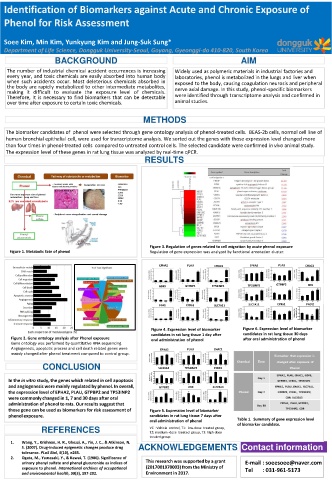
                                                  Figure 3. Regulation of genes related to cell migration by acute phenol exposure
    Figure 1. Metabolic fate of phenol            Regulation of gene expression was analyzed by functional annotation cluster.

                                                     EPHA2    PLAU     CHAC1      EPHA2     PLAU    CHAC1


                                                     GDF9    GTPBP2   TP53INP2    TP53INP2   GTPBP2   CD9


                                                                                                     PADI2
                                                     FGF1     CYR61    SLC7A11    SLC7A11   CYR61   2.0  PADI2   ***
                                                                                                 Relative mRNA  expression [Fold]  1.5 1.0 0.5  *  ***
                                                                                                  0.0
                                                                                                   VC  P1  P2  P3
                                                  Figure 4. Expression level of biomarker   Figure 6. Expression level of biomarker
                                                  candidates in rat lung tissue 1 day after   candidates in rat lung tissue 30 days
     Figure 2. Gene ontology analysis after Phenol exposure   oral administration of phenol    after oral administration of phenol
     Gene ontology was performed by quantitative RNA sequencing.
     Angiogenesis, apoptotic process and cell death related genes were   EPHA2   PLAU   CHAC1
     mainly changed after phenol treatment compared to control group.
               CONCLUSION                            SLC35A5   TP53INP2   CYR61
                                                   2.5 2.0  SLC35A5
                                                  Relative mRNA  expression [Fold]  1.5  ***
    In the in vitro study, the genes which related in cell apoptosis   1.0 0.5
                                                   0.0  VC  P1  P2  P3
    and angiogenesis were mainly regulated by phenol. In overall,   GTPBP2   CD9   SLC7A11
    the expression level of EPHA2, PLAU, GTPBP2 and TP53INP2
    were commonly changed in 1, 7 and 30 days after oral
    administration of phenol to rats. Our results suggest that
    those gene can be used as biomarkers for risk assessment of   Figure 5. Expression level of biomarker
    phenol exposure.                              candidates in rat lung tissue 7 days after
                                                  oral administration of phenol    Table 1.  Summary of gene expression level
                                                                              of biomarker candidate.
              REFERENCES                          VC : Vehicle  control, T1:  low-dose  treated group,
                                                  T2: medium -dose  treated  group, T3: high-dose
                                                  treated group
    1.  Wang, Y., Krishnan, H. R., Ghezzi, A., Yin, J. C., & Atkinson, N.
        S. (2007). Drug-induced epigenetic changes produce drug   ACKNOWLEDGEMENTS  Contact information
        tolerance. PLoS Biol, 5(10), e265.
    2.  Ogata, M., Yamasaki, Y., & Kawai, T. (1986). Significance of
        urinary phenyl sulfate and phenyl glucuronide as indices of   This research was supported by a grant   E-mail : soeesoee@naver.com
        exposure to phenol. International archives of occupational   (2017001970003) from the Ministry of   Tel       : 031-961-5173
        and environmental health, 58(3), 197-202.   Environment in 2017.

