


Page 57 - D. Cancer biology
P. 57
Cancer cells undergoing epigenetic transition show short-term resistance
and are transformed into cells with medium-term resistance by drug treatment
Shiv Poojan , Seung-Hyun Bae , Hyonchol Jang , Kyeong-Man Hong 2
1
1
1,2
1 Division of cancer biology, Research Institute National Cancer Center
2 Research Institute, National Cancer Center
Abstract Introduction
To elucidate the epigenetic mechanisms of drug resistance, epigenetically Although epigenetic mechanisms have been posited as important factors in
reprogrammed H460 cancer cells (R-H460) were established by the transient rapid cancer drug resistance acquisition, however, the process of the
introduction of reprogramming factors. Then, the R-H460 cells were induced to development of drug resistance via epigenetic mechanisms has not been fully
differentiate by the withdrawal of stem cell media for various durations, which elucidated. Recently, epigenetically reprogrammed cancer (R-cancer) cells have
resulted in differentiated R-H460 cells (dR-H460). Notably, dR-H460 cells been proposed as a powerful tool discerning the roles of the epigenome in
differentiated for 13 days (13dR-H460 cells) formed a significantly greater cancer and drug resistance.
number of colonies showing drug resistance to both cisplatin and paclitaxel, In the present study, reprogramming factors (OCT4, SOX2, KLF4, and MYC) were
whereas the dR-H460 cells differentiated for 40 days (40dR-H460 cells) lost drug transiently transfected into cancer cells in the form of mRNAs to avoid inducing
resistance; this suggests that 13dR-cancer cells present short-term resistance permanent genomic changes during the preparation of R-cancer cells. The stem
(less than a month). The resistant phenotype of the cisplatin-resistant (CR) cell medium was withdrawn from the R-cancer cells for various durations to
colonies obtained through cisplatin treatment was maintained for 2–3 months induce differentiation via epigenetic modulation, and the resulting
after drug treatment, suggesting that drug treatment transforms cells with differentiated R-cancer (dR-cancer) cells were treated with cisplatin or
short-term resistance into cells with medium-term resistance. In single-cell paclitaxel to monitor changes in drug resistance because epigenetic
analyses, heterogeneity was not found to increase in 13dR-H460 cells, mechanisms have been suggested to be responsible for resistance to cisplatin11
suggesting that cancer cells with short-term resistance, rather than and paclitaxel. Additionally, the single-cell analysis of the dR-cancer cells was
heterogeneous cells, may confer epigenetically driven drug resistance in our performed to monitor changes in their heterogeneity.
reprogrammed cancer model. The epigenetically driven short-term and
medium-term drug resistance mechanisms could provide new cancer-fighting
strategies involving the control of cancer cells during epigenetic transition.
Results
Fig. 3 Expression profiles of parental H460, R-H460, 13dR-H460, and CR
13dR-460 clones determined by RNA sequencing.
(a) Differentially expressed genes (DEGs) in H460, R-H460, and 13dR-
H460 cells and their main signaling pathways. The major pathways
among the DEGs were analyzed by Ingenuity Pathway Analysis (IPA). The
pathways with absolute values of z-scores and a –log (P-value) of at least
1.5 are shown. (b) Common DEGs and their main signaling pathways in
CR clones (CR1-CR4) compared with 13dR-H460 cells. (c) DEGs specific to
CR1 and the main associated signaling pathways compared with 13dR-
H460 (d) DEGs specific to CR2. (e) DEGs specific to CR3. (f) DEGs specific
to CR4. The orange- and blue-colored bars indicate predicted activation
and inhibition, respectively. The red stars indicate drug resistance-
related signaling pathways whose levels increased in CR clones. The
black stars indicate drug resistance-related signaling pathways whose
level was reduced in CR clones. FPKM scales for all figures are indicated.
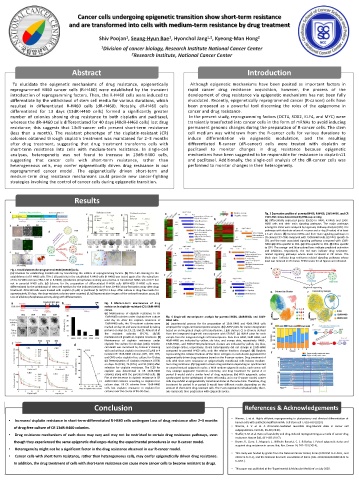
Fig. 1 Establishment of reprogrammed H460 (R-H460) cells.
(a) Schedule for establishing R-H460 cells by transfecting the mRNAs of reprogramming factors. (b) TRA-1-60 staining for the
establishment of R-H460 cells. TRA-1-60 positivity in the established R-H460 cells (R-H460) was tested again after the subculture
of the R-H460 colonies (TRA-1-60 in R-H460). (c) Alkaline phosphatase staining was positive in transfected H460 cells at D22 but
not in parental H460 cells. (d) Scheme for the preparation of differentiated R-H460 cells (dR-H460). R-H460 cells were
differentiated by the withdrawal of stem cell medium for the indicated periods of time. (e–h) Colony-formation assay after drug
treatment. dR-H460 cells were treated with cisplatin (5 μM) or paclitaxel (5 nM) for 3 days. After culture in drug-free media for
approximately 30 days, the drug-resistant colonies were counted. (f, h) Representative images of the colony-formation assay. (i)
Loss of alkaline phosphatase activity along with differentiation.
Fig. 2 Medium-term maintenance of drug
resistance in cisplatin-resistant (CR) 13dR-H460
clones.
(a) Maintenance of cisplatin resistance in CR
13dR-H460 colonies under cisplatin-free culture Fig. 4 Single-cell transcriptome analysis for parental H460, 13dR-H460, and 40dR-
until day 16. After the cisplatin treatment of H460 cells.
13dR-H460 cells, the 19 resistant colonies were (a) Experimental process for the preparation of 13dR-H460 and 40dR-H460 cells
marked on day 16 and were monitored by taking employed for single-cell transcriptome analysis. (b) UMAP plots for cluster designation
pictures on days 16, 19, 22, and 25. Almost all of based on an integrated single-cell transcriptome. Eight clusters (1 to 8) were derived
the resistant colonies (94.7%, 18/19) from the integrated single-cell transcriptome with SEURAT. (c) UMAP plots for each
maintained cell growth or cisplatin resistance. (b) sample from the integrated single-cell transcriptome. Data from H460, 13dR-H460, and
Maintenance of cisplatin resistance under 40dR-H460 are indicated by yellow, sky blue, and orange dots, respectively. H460-,
cisplatin-free culture for 40 days (D40). Relative 13dR-H460-, and 40dR-H460-predominant clusters are indicated by yellow, sky blue,
cell death was monitored by Annexin V staining and orange circles, respectively. Clonal heterogeneity did not change in 13dR-H460
with and without cisplatin treatment (5 μM) in 4 compared to parental H460 cells; only the relative fractions changed. (d) Barplots
isolated CR 13dR-H460 colonies (CR1, CR2, CR3, representing the relative fractions of the three cell types in each cluster. (e) Model for
and CR4) under cisplatin-free culture for 40 days. epigenetically driven drug resistance based on the R-cancer system. Drug treatment of
(c) Determination of cisplatin resistance (IC50) cells with short-term resistance or epigenetically transitional cells induces medium-
on days 46 (D46), 76 (D76), and 91 (D91) after term drug resistance. (f) Epigenetics-driven drug resistance depending on synchronized
selection for cisplatin resistance. The IC50 for or unsynchronized epigenetic cycles. a With random epigenetic cycles, each cancer cell
cisplatin was determined in CR 13dR-H460 may undergo epigenetic transitions randomly, and drug treatment for period A or
colonies along with the parental H460 cells. (d) period B would yield a similar level of drug resistance. (b) With epigenetic cycles
Plot of the decrease in cisplatin resistance in CR synchronized by the withdrawal of stem cell media, as in our R-cancer model, cancer
13dR-H460 colonies according to cisplatin-free cells may exhibit an epigenetically transitional status at the same time. Therefore, drug
culture days. All CR colonies from 13dR-H460 treatment for period A or period B would have different results depending on the
cells lost cisplatin resistance in cisplatin-free amount of short-term drug-resistant cells. The Y-axis represents individual cells; the X-
cultures over the course of 80–90 days. axis represents time progression with epigenetic cycles.
Conclusion References & Acknowledgements
• Increased cisplatin resistance in short-term-differentiated R-H460 cells undergoes Loss of drug resistance after 2–3 months • Warren, L. et al. Highly efficient reprogramming to pluripotency and directed differentiation of
human cells with synthetic modified mRNA. Cell Stem cell 7, 618–630 (2010).
of drug-free culture of CR 13dR-H460 colonies. • Sharma, S. V. et al. A chromatin-mediated reversible drug-tolerant state in cancer cell
subpopulations. Cell 141, 69–80 (2010).
• Drug resistance mechanisms of each clone may vary and may not be restricted to certain drug resistance pathways, even • Shaffer, S. M. et al. Rare cell variability and drug-induced reprogramming as a mode of cancer drug
resistance. Nature 546, 431–435 (2017).
though they experienced the same epigenetic challenges during the experimental procedures in our R-cancer model. • Brown, R., Curry, E., Magnani, L., Wilhelm-Benartzi, C. S. & Borley, J. Poised epigenetic states and
acquired drug resistance in cancer. Nat. Rev. Cancer 14, 747–753 (2014).
• Heterogeneity might not be a significant factor in the drug resistance observed in our R-cancer model.
• This study was funded by grants from the National Cancer Center, Korea (1910150 to K.-M.H., and
• Cancer cells with short-term resistance, rather than heterogeneous cells, may confer epigenetically driven drug resistance. 2010272 to H.J.), and the National Research Foundation of Korea (NRF-2015R1A2A2A04007432 to
In addition, the drug treatment of cells with short-term resistance can cause more cancer cells to become resistant to drugs. K.-M.H.).
• This paper was published at the ‘Experimental & Molecular Medicine’ on July 2020.

