


Page 19 - D. Cancer biology
P. 19
Catechin sensitize 5-fluorouracil resistance in gastric cancer cells through inhibiting lactate
                                              dehydrogenase
                                         1
                   Jung Ho Han , Bo-Sung Kim , Ling Jin , Yoonju Do , Dongryeol Ryu , In-Kyu Lee , Ki-Tae Ha ,*
                             1
                                                1
                                                                                3
                                                                                         1
                                                          1
                                                                      2
         1 Department of Korean Medical Science, School of Korean Medicine and Healthy Aging Korean Medical Research Center, Pusan National University
                             2 Department of Molecular Cell Biology, Sungkyunkwan University School of Medicine
                             3 Department of Internal Medicine, School of Medicine Kyungpook National University
                   BACKGROUND                                                  AIM
   Resistance to the therapeutic drug occurs virtually every type of anti-cancer drugs and is a major difficulty in the  5-Fluorouracil (5FU) is an anticancer drug used for various cancers such as colon cancer, gastric cancer,
   cancer treatment. 5-fluorouracil (5FU) is the first-line choice of anti-cancer therapy for gastric cancer. However, its  breast cancer, and cervical cancer [1]. In gastrointestinal tract cancers such as gastric cancer and colon
   effectiveness is getting limited owing to drug resistance. The Warburg’s effect, a preference of glycolysis rather than  cancer, occurs resistance to 5FU and brings problems in cancer treatment [2]. Therefore, many researches
   OxPhos even in an oxygen-rich environment, is accepted as a pivotal mechanism regulating the resistance to  have been conducted to find alternative strategies to overcome 5FU resistance. Catechins are found in many
   chemotherapy. Thus, we investigated the detailed mechanism and the possible usefulness of anti-glycolytic agents  foods such as pome fruits, cocoa, red wine, and green tea. It has medicinal functions like anti-oxidant, anti-
   on ameliorating the 5FU resistance using established gastric cancer cell lines, SNU620 and SNU620/5FU.  inflammatory, and anti-allergic. Also, much research is being conducted on anti-cancer function [3]. However,
   SNU620/5FU, a gastric cancer cell harboring resistance to 5FU, showed a much more lactate production and higher  no studies reported the effect of catechin on 5FU resistance in gastric cancers. The Warburg effect has been
   expressions of glycolysis-related enzymes, such as lactate dehydrogenase A (LDHA), compared to that of the parent  proved as one of the causes of chemo-resistance [4]. The Warburg effect states that normal cells produce
   cell, SNU620. To limits glycolysis, we examined the catechin (CA) and its derivatives, famous anti-inflammatory and  adenosine triphosphate (ATP) as a source of cellular energy through the tricarboxylic acid (TCA) cycle.
   anti-cancer natural products which are abundant in tea and red wine. Previously, epigallocatechin gallate was  However, cancer cells prefer aerobic glycolysis instead of the TCA cycle. The Warburg effect is induced by
   reported as a suppressor of LDHA expression. Surprisingly, the CA, the simplest compound among catechins, has  activation of lactate dehydrogenase A (LDHA) or pyruvate dehydrogenase kinases (PDKs) [5]. We
   the highest inhibitory effect on lactate production and LDHA activity. The combination of 5FU and CA showed  hypothesized that catechins overcoming the 5FU resistance by blocking the Warburg effect. The conduct of
   synergistic cytotoxicity on SNU620/5FU cells. The combination of 5FU and CA induced the ROS-mediated apoptotic  this study was to measure the change shown by treatments with CA and 5FU on SNU620/5FU, a gastric
   cell death in 5FU resistant SNU620/5FU cells. From these results, we suggest CA as a candidate for developing a  cancer cell line with resistance to 5FU.
   novel adjuvant drug reducing chemo-resistance to 5FU through restricting LDHA activity.
                                                METHODS
   1. Cell culture : The human gastric cancer SNU620 and SNU620/5FU cell lines were obtained from the Korean Cell Line Bank (KCLB, Seoul, Republic of Korea). Cells were cultured in RPMI-1640 medium (Welgene, Seoul, Republic of Korea) supplemented with 10% heat-inactivated FBS
   (Gibco, New York, USA) and 1% penicillin/streptomycin (Invitrogen, Missouri, USA). The cells were cultured in a humidified CO2 incubator at 37 °C, 5 % CO2 condition.
   2. Cell viability assay : The cytotoxicity of CA and 5FU in SNU620 and SNU620/5FU cells was measured using an MTT assay. The cell was cultured in 24-well plates with the indicated concentrations of CA and 5FU for the stated day. Then MTT solution (2.0 mg/ml) was added to each well
   and 3~4 h of incubation at 37 °C and 5% CO2 in a cell culture incubator. Then culture medium was removed and formazan crystals made from live cells have measured the absorbance at 540 nm using a Spectramax M2 Microplate Reader (Molecular Devices, California, USA).
   3. qPCR : The extraction of total RNA was using the RiboEx Total RNA extraction kit (GeneAll Biotechnology, Seoul, Republic of Korea). The cDNA was synthesized by reverse transcriptase kit (Promega, Washington, USA). Each kit was according to the manufacturer’s instruction.
   Quantitative real-time PCR was performed with a StepOne™ Real-Time PCR System (Thermo Fisher Scientific, California, USA), with Real Helix qPCR Kit (NanoHelix, Daejeon, Republic of Korea) for carrying out 40 cycles consisting of 15 sec at 95 °C and 1 min at 60 °C.
   4. Western blot : Total proteins were extracted from each cell and using RIPA buffer and 1% NP-40 lysis buffer containing protease inhibitor cocktail tablets (Roche, Basel, Switzerland). Equal amounts of protein were fractionated from each sample through SDS-PAGE, and then the protein
   was transferred to a nitrocellulose membrane (GE Healthcare, Chicago, USA) using electrophoresis. The membranes were blocked at room temperature for 1 h using 5 % non-fat dry milk and incubated with primary antibodies at 4 °C overnight. The membranes were washing with
   1×TBS/T buffer for 10 min, three times. The specific band of protein was measured with the chemiluminescence imaging system (ImageQuant LAS 4000; GE Healthcare, Chicago, USA)
   5. LDHA activity assay : Changes in NADH were measured for the detection of LDHA activity. The indicated concentrations of CA were incubated for 20 min in a buffer containing 2 mM of pyruvate, 20 μM of NADH, 20 mM of HEPES-K+ (pH 7.2), and 10 ng of purified recombinant human
   LDHA protein. Fluorescence of NADH with an excitation wavelength of 340 nm and an emission wavelength of 460 nm was detected using a spectrofluorimeter (Spectramax M2; Molecular Devices, Sunnyvale, CA, USA).
   6. LDHB activity assay : For the detection of LDHB activity, the changes to NAD+ were measured. The indicated concentration of CA was incubated in buffer containing 1 M tris-HCL (pH 8.0), 25 mM NAD+, 2 M sodium L-lactate, and 10 ng of purified recombinant human LDHB protein for
   20 min. Fluorescence of NAD+ with excitation wavelength 340 nm and emission wavelength 460 nm was detected using a spectrofluorometer (Spectramax M2; Molecular Devices, Sunnyvale, CA, USA).
   7. Detection of apoptotic cells : Apoptotic cells were detected using the Annexin V-FITC Apoptosis Detection kit (BD Biosciences, California, USA). SNU620/5FU cells were treated with the indicated concentration of CA and 5FU for 48 h. The cells were washed with PBS and suspended in
   100 µL of 1 X binding buffer. Then each sample was added with 5 µL of Annexin V-FITC and 5 μL propidium iodide (Sigma-Aldrich, Steinheim, Germany) and incubated for 15 min at room temperature in the dark. 400 μL of Annexin binding buffer was added to each sample for a 500 μL
   volume. The fluorescence intensities were measured using BD FACS CANTO II (BD Biosciences, California, USA).
   8. Measurement of Mitochondrial Reactive Oxygen Species (ROS) : Mitochondrial ROS production was detected using MitoSOX Red Mitochondrial Superoxide Indicator (Thermo Fisher Scientific, California, USA). SNU620/5FU cells were seeded at 24 well plates and mitoTEMPO was pre-
   treat(20 μM) for 1 h before the indicated dose treat of CA and 5FU for 48 h. After CA and 5FU treatment for 48 h, cells removal the medium, washing with the 1X PBS, and susprended in 1 ml of 1X PBS and added 5 μM mitoSOX. Incubate cells for 10 minutes at 37˚C, protected from light.
   The cells fluorescence intensity was analyzed by a BD FACS CANTO II (BD Biosciences, California, USA).
   9. DAPI staining : DAPI staining was using to measured the morphology changes of the SNU620/5FU cells. SNU620/5FU were seeded at a 24 well plate and the treat with the indicated concentrations of CA and 5FU for 48 h. After washing with 1X PBS, cells were re-suspended in 1 ml 1X
   PBS. The cells was stained with 4 μg/ml DAPI for 30 min at room temperature and examined by fluorescence microscope (Axioimager M1 microscope, Zeiss, Aalen, Germany)
                                                RESULTS


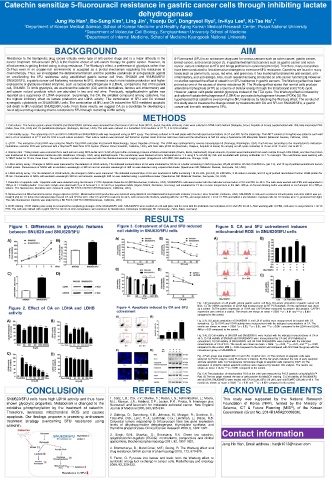
                                                                 Fig. 1 A) Comparison of cell growth among  gastric cancer cell lines. B) Lactate production  of gastric cancer cell
                                                                 lines. C) The mRNA expression of LDHA was measurement by RT-PCR analysis.  Rn18s expression was used
                                                                 as a control.  D) The protein expression of LDHA and GAPDH were measured by western blot analysis. GAPDH
                                                                 expression  was used as a control.  The results are shown as mean  ± SEM. ** p < 0.01 and *** p < 0.001
                                                                 compared to the control.
                                                                 Fig. 2 A), B) Lactate production of SNU620/5FU and LDHA activity  were measurement  by treated with CA
                                                                 derivatives. C), D) LDHA and LDHB activity were measurement with the indicated  concentrations of CA. The
                                                                 results are shown as mean ± SEM. * p < 0.05, ** p < 0.01, and *** p < 0.001 compared to the LDHA and LDHB.
                                                                 ### p < 0.05 compared to the control.
                                                                 Fig. 3 A), B) Cell viability of SNU620 and SNU620/5FU were treated  with the indicated concentrations of CA of
                                                                 48 h. C) Cell viability  of SNU620 and SNU620/5FU were  measurement by CA and 5FU Individual or
                                                                 cotreatment.  D) Cell viability of SNU620/5FU and shLDHA SNU620/5FU were  treated with the indicated
                                                                 concentrations of CA of 48 h. The results are shown as mean  ± SEM. * p < 0.05, ** p < 0.01, and *** p < 0.001
                                                                 compared to the control. ### p < 0.05 compared to the control and compared with 5FU treat the group with the
                                                                 cotreatment group at SNU620/5FU.
                                                                 Fig. 4 Each group was treated with CA and 5FU 10 μM of 48 h. A) The numbers of apoptotic cells were
                                                                 analyzed  by FACS analysis using PI-Annexin V staining.  B) The bar graph indicated the rate of early apoptotic
                                                                 and late apoptotic cells. C) Fluorescence  microscope image of apoptotic cells stained by DAPI. D) The
                                                                 expression  of proteins  related apoptotic pathway was measured by western blot analysis. The results are
                                                                 shown as mean  ± SEM. *** p < 0.001 compared to the control.
                                                                 Fig. 5 A) The production  of mitochondrial  ROS of the cells was measured by FACS analysis using MitoSOX™
                                                                 Red. B) The bar graph showed  the rate of cells positive for MitoSOX staining. C) Cell viability of SNU620/5FU
                                                                 and shLDHA SNU620/5FU were  treated with CA (10 μM,) 5FU (10 μM ), and mitoTEMPO (20 μM) of 48 h. The
                                                                 results are shown as mean ± SEM. ** p < 0.01 and *** p < 0.001 compared to the control.
          CONCLUSION                        REFERENCES                    ACKNOWLEDGEMENTS
   SNU620/5FU cells have high LDHA activity and thus have  1. Saltz, L.B.; Cox, J.V.; Blanke, C.; Rosen, L.S.; Fehrenbacher, L.; Moore,  This study was supported by the National Research
   shown glycolytic properties. Metabolism is changed to the  M.J.; Maroun, J.A.; Ackland, S.P.; Locker, P.K.; Pirotta, N. Irinotecan plus  Foundation of Korea (NRF), funded by the Ministry of
                                     fluorouracil and leucovorin for metastatic colorectal cancer. New England
   oxidative phosphorylation by the treatment of catechin.  Journal of Medicine 2000, 343, 905-914.  Science, ICT & Future Planning (MISP), of the Korean
   Therefore, increases mitochondrial ROS and causes                      Government (Grant No. 2014R1A5A20009936).
   apoptosis. Our findings propose a promising anti-cancer  2. Salonga, D.; Danenberg, K.D.; Johnson, M.; Metzger, R.; Groshen, S.;
                                     Tsao-Wei, D.D.; Lenz, H.-J.; Leichman, C.G.; Leichman, L.; Diasio, R.B.
   treatment strategy overcoming 5FU resistance using  Colorectal tumors responding to 5-fluorouracil have low gene expression
   catechin.                         levels of dihydropyrimidine dehydrogenase, thymidylate synthase, and
                                     thymidine phosphorylase. Clinical Cancer Research 2000, 6, 1322-1327.
                                     3. Singh, B.N.; Shankar, S.; Srivastava, R.K. Green tea catechin, Contact information
                                     epigallocatechin-3-gallate (EGCG): mechanisms, perspectives and clinical
                                     applications. Biochemical pharmacology 2011, 82, 1807-1821.
                                                                         Jung Ho Han, Email address : hanjh1013@naver.com
                                     4. Bhattacharya, B.; Mohd Omar, M.F.; Soong, R. The Warburg effect and
                                     drug resistance. British journal of pharmacology 2016, 173, 970-979.
                                     5. Feron, O. Pyruvate into lactate and back: from the Warburg effect to
                                     symbiotic energy fuel exchange in cancer cells. Radiotherapy and oncology
                                     2009, 92, 329-333.

