


Page 15 - A. Aging
P. 15
Effects of tenascin C on stability of connective tissue and skin aging


                                                  2
                                                             2
                                     1
                         Young Eun Choi , Dong Hun Lee , Jin Ho Chung , and Seung-Taek Lee* 1
                        1 Department of Biochemistry, College of Life Science and Biotechnology, Yonsei University, Seoul, Republic of Korea, *stlee@yonsei.ac.kr;
                        2 Department of Dermatology, Seoul National University College of Medicine, Seoul, Republic of Korea
        Introduction                                                 Aim
        Thinning of the skin, a prominent feature in aged human skin, significantly impairs skin’s  • Based on transcriptome analysis using RNA seq, we found that TNC is down-regulated in aged
       structural integrity and function [1]. Loss of type I collagen, the major structural component in  mouse and human skin tissues.
       human skin, is largely responsible for age-related thinning of the skin [2]. Collagen is the major
       structural component of skin. Thus, the regulation of collagen biosynthesis is essential for skin  • We confirmed down-regulation of TNC in aged mouse and human skin tissues by RT-PCR and
       aging research. It is already known that TGF-β, a major regulator of collagen biosynthesis,  IHC.
       contributes to prevention of collagen loss in aged human skin [3].
        Tenascin-C (TNC) is a hexameric and multi-modular extracellular matrix protein with several  • The major forms of recombinant human TNC were expressed and the effect of the TNC forms
       molecular forms that are created through alternative splicing and protein modifications.  on the secretion of type I collagen and MMP-1 in foreskin fibroblasts was analyzed.
       According to a recent study, TNC up-regulates expression of TGF-β in foreskin fibroblasts and
       hepatic stellate cells [4-5]. In addition, TNC exhibits a number of remarkable features that are  • We then analyzed the molecular mechanism for the TNC-induced type I collagen up-regulation.
       related to its structure including epidermal growth factor (EGF)-like domains, a string of
       fibronectin-type III (FNIII) repeats, and a fibrinogen-like globe. This multi-modular structure  • In addition, the effect of TNC on the synthesis of type I collagen in fibroblasts, which were
       enables the TNC to interact with a number of highly diverse ligands [6].  cultured in the 3D collagen matrix, was analyzed.
       TNC is elevated in inflammation, autoimmune attack and vascular damage, often leading to
       fibrosis. Thus, TNC has an implication of collagen biosynthesis and a relevance to TGF-β  • Based on our findings, we suggest that TNC is an important molecule to maintain the integrity
       signaling in fibroblasts. However, the role of TNC in normal skin, particularly during aging, has  of the collagen matrix and to prevent and attenuate skin aging.
       not been studied.


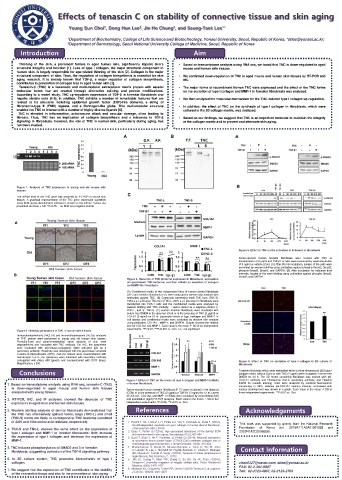
       Figure 1. Analysis of TNC expression in young and old mouse skin
       tissues.
       The mRNA level of the TNC gene was analyzed by RT-PCR in mouse skin
       tissues. A graphical representation of the TnC gene expression quantified
       using Multi-gauge densitometry software is shown on the bottom. Values are
       presented as mean ± SD. *P<0.05. -: no DNA as a negative control.


                                                                                    Figure 5. Effect of TNC on the activation of R-Smads in fibroblasts
                                                                                    Serum-starved  human foreskin  fibroblasts  were  treated  with  TNC  at
                                                                                    concentration of 2 µg/ml and TGFβ1 at cells were examined by weconcentration
                                                                                    of 3 ng/ml or vehicle (Con). (A) After 90 min incubation, lysates of the cells were
                                                                                    examined by western blotting using antibodies against phospho-Smad2, Smad2,
                                                                                    phospho-Smad3, Smad3, and GAPDH. (B) After incubation for indicated time
                                                                                    intervals, lysates of the stern blotting using antibodies against phospho-Smad2,
                                                                                    Smad2, and GAPDH.
                                             Figure 3. Detection of TNC isoforms expressed in fibroblasts, expression
                                             of recombinant TNC isoforms, and their effects on secretion of collagen
                                             and MMP-1 in fibroblasts.
                                             (A) Conditioned media of two independent lines of human dermal fibroblasts
                                             (D.F.) and foreskin fibroblasts (F.F.) were analyzed by western blot analysis with
                                             antibodies against TNC. (B) Constructs expressing small TNC form (TNC-S;
                                             1564 a.a.) and large TNC form (TNC-L; 2201 a.a.) abundant in fibroblasts were
                                             transfected into COS-1 cells and the conditioned media were analyzed by
                                             western blotting with TNC antibody. -: vector control as a negative control, L:
                                             TNC-L, and S: TNC-S. (C) Human foreskin fibroblasts were incubated with
                                             serum-free DMEM in the absence (Con) or in the presence of TNC (2 µg/ml) or
                                             TGF-β1 (3 ng/ml) for 24 hr. Expression levels of type I collagen and MMP-1 in
                                             cell lysates and conditioned media were evaluated by western blot analysis
                                             using antibodies COL1A1 , MMP-1, and GAPDH. Graphs showed the relative
                                             level of COL1A1 and MMP-1. Each value is the mean ± SD of six independent
                                             experiments. **P<0.01, ***P<0.001 vs. Con. n.s.: not significant.
       Figure 2. Histological analysis of TNC in human skin tissues.
       Immunohistochemistry (IHC) (A) and immunofluorescence (IF) (B) analyses
       of TNC protein were performed in young and old human skin tissues.
       Formalin-fixed  and  paraffin-embedded  serial  sections  of  skin  were
       deparaffinized and incubated with TNC antibody. For IHC, the specimens
       were incubated with peroxidase-conjugated rabbit anti-goat IgG as a
       secondary antibody. Reactivity was developed with the peroxidase substrate
       3-amino-9-ethylcarbazole (AEC). And the tissues were counterstained with
       hematoxylin. For IF, the specimens were incubated with secondary antibody
       conjugated with Alexa 488 (green) and counterstained with DAPI (blue).       Figure 6. Effect of TNC on secretion of type I collagen in 3D culture of
       Magnification, x 200.                                                        fibroblasts
        Conclusions                                                                 Foreskin fibroblasts which were embedded within a three-dimensional (3D) type I
                                                                                    collagen matrix without (Con) or with TNC (2 ug/ml) were incubated in serum-free
                                                                                    DMEM for 24 h. The 3D matrix containing fibroblasts was stained with pN-
                                             Figure 4. Effect of TNC on the levels of type I collagen and MMP-1 mRNAs  COL1A1 antibody and Rhodamine Red-X secondary antibody, and Hoechst
    1. Based on transcriptome analysis using RNA seq, tenascin-C (TNC)  in human fibroblasts.  33258 for nuclear staining. Cells were analyzed by confocal fluorescence
     is down-regulated in aged mouse and human skin tissues  Serum-starved human foreskin fibroblasts (F. F.) were incubated in the absence  microscopy (x 200). Relative pN-COL1A1 staining intensity normalized with
                                                                                    nuclear staining level was shown in a graph. Each value is the mean ± SD of
     compared with young tissues.            (CON) or in the presence of TNC (2 ug/ml) or TGF-β1 (3 ng/ml) for 12 hr. Levels  three independent experiments. **P<0.01 vs. Con.
                                             of COL1A1, COL1A2, and MMP-1 mRNAs were evaluated by conventional (left)
    2. RT-PCR, IHC, and IF analyses showed the decrease of TNC  and quantitative (right) RT-PCR analyses. Each value is the mean ± SD of five
     expression in aged mice and human skin tissues.  independent experiments. *P<0.05, **P<0.01 vs. Con.
    3. Western blotting analysis of dermal fibroblasts demonstrated that  References   Acknowledgements
     the TNC has alternatively spliced forms; large (TNC-L) and small
     (TNC-S) forms are likely to correspond to TNC isoforms consisted
     of 2201 and 1564 amino acid residues, respectively.  1. Purohit T, He T, Qin Z, Li T, Fisher GJ, Yan Y, Voorhees JJ, Quan T (2016),  This work was supported by grants from the National Research
                                               Smad3-dependent regulation of type I collagen in human dermal fibroblasts,
    4. TNC-S and TNC-L showed the same effect on the expression of  J Dermatol Sci, 83(1), 80-83  Foundation  of  Korea  (no.  2019R111A2A01061685  and
     type I collagen and MMP-1 in foreskin fibroblasts; Both increase  2. Quan T, Fisher GJ (2015), Age-associated alterations of the dermal ECM  2020R1A2C2006556)
                                               microenvironment in skin aging, Gerontology, 61(5), 427-434
     the expression of type I collagen and decrease the expression of  3. Quan T, Shao Y, He T, Voorhees JJ, Fisher GJ (2010), Reduced expression
     MMP-1.                                    of connective tissue growth factor (CTGF/CCN2) mediates collagen loss in
                                               chronologically aged human skin, J Invest Dermatol, 130(2), 415-424
    5. TNC induces phosphorylation of SMAD2 and 3 in foreskin   4. Bhattacharyya S, Wang W, Morales-Nebreda L, Feng G, Wu M, Zhou  Contact Information
     fibroblasts, suggesting activation of the TGF-ß signaling pathway.  X, Lafyatis R, Lee J, Hinchcliff M, Feghali-Bostwick C, Lakota K, Budinger
                                               GR, Raparia K, Tamaki Z, Varga J (2016), Tenascin-C drives persistence of
                                               organ fibrosis, Nat Commun., 7, 11703
    6. In 3D culture system, TNC promotes biosynthesis of type I  5.  Ma JC, Huang X, Shen YW, Zheng C, Su QH, Xu JK, Zhao J (2016),
     collagen.                                 Tenascin-C promotes migration of hepatic stellate cells, Biosci Biotechnol  choii0327@naver.com, stlee@yonsei.ac.kr
                                               Biochem, 80(8), 1470-1477            FAX: 82-2-362-9897
    7. We suggest that the expression of TNC contributes to the stability  6. Midwood KS, Chiquet M, Tucker RP, Orend G (2016) Tenascin-C at a glance,  Tell:  02-2123-4967, 02-2123-2703
                                               J Cell Sci, 129(23), 4321-4327
     of the connective tissue and also to the prevention of skin aging.

