


Page 61 - Q. Neuroscience
P. 61
REV-ERBα and its impact on
hippocampal synaptic plasticity.
1
1
1
1
YEON JUN KIM , JA EUN CHOI , MIN-JEONG KIM , ILGANG HONG ,
SOMI KIM , JISU LEE , KYUNGJIN KIM , BONG-KIUN KAANG* 1
1
2
1
1 Seoul National University, Seoul, Korea, Republic of,
2 Department of Brain and Cognitive Sciences, DGIST, Daegu, Korea, Republic of
Abstract
The phenomenon of 24h oscillations is a result of the circadian rhythms which is driven
by circadian oscillators. It has been previously reported, that the circadian rhythms have
a role in learning and memory. One of the primary genes regulating the circadian
rhythm is the Rev-ERBα; the nuclear receptor. Rev-ERBα is a transcriptional repressor,
and a core clock protein of biological rhythm. Although the main role of Rev-ERBα has
been previously studied, its role in synaptic plasticity remains elusive. To further assess
the relationship between circadian rhythms and synaptic plasticity in the hippocampus,
we used REV-ERBα knock-out (KO) mice in this study. Unparalleled to wild-type
littermates, the REV-ERBα repressed mice showed abnormality in NMDAR-dependent
synaptic potentiation (E-LTP) at CT12-CT14 (subjective night). Despite these
abnormalities, during CT0-CT2(subjective day) the KO mice also showed normal E-
LTP, and normal late LTP (L-LTP) at CT12-CT14 and CT0-CT2. These results suggest
that Rev-ERBα has a vital effect in the hippocampal E-LTP during the dark period.
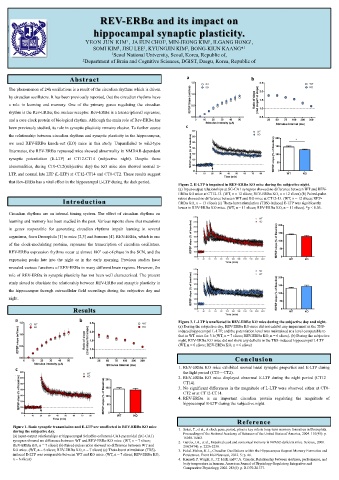
Figure 2. E-LTP is impaired in REV-ERBα KO mice during the subjective night.
(a) Input-output relationships at SC-CA1 synapses showed no difference between WT and REV-
ERBα KO mice at CT12-13. (WT, n = 12 slices; REV-ERBα KO, n = 12 slices) (b) Paired-pulse
ratios showed no difference between WT and KO mice at CT12-13. (WT, n = 12 slices; REV-
Introduction ERBα KO, n = 13 slices) (c) Theta-burst stimulation (TBS)-induced E-LTP was significantly
lower in REV-ERBα KO mice. (WT, n = 11 slices; REV-ERBα KO, n = 11 slices). *p < 0.05.
Circadian rhythms are an internal timing system. The effect of circadian rhythms on
learning and memory has been studied in the past. Various reports show that mutations
in genes responsible for generating circadian rhythms impair learning in several
organisms, from Drosophila [1] to mice [2,3] and humans [4]. REV-ERBα, which is one
of the clock-modulating proteins, represses the transcription of circadian oscillators.
REV-ERBα expression rhythms occur at almost 180° out-of-phase in the SCN, and the
expression peaks late into the night or in the early morning. Previous studies have
revealed various functions of REV-ERBα in many different brain regions. However, the
role of REV-ERBα in synaptic plasticity has not been well characterized. The present
study aimed to elucidate the relationship between REV-ERBα and synaptic plasticity in
the hippocampus through extracellular field recordings during the subjective day and
night.
Results
Figure 3. L-LTP is unaffected in REV-ERBα KO mice during the subjective day and night.
(a) During the subjective day, REV-ERBα KO mice did not exhibit any impairment in the TBS-
induced hippocampal L-LTP, and the potentiation level was maintained at a level comparable to
that in WT mice for 3 h (WT, n = 7 slices; REV-ERBα KO, n = 6 slices). (b) During the subjective
night, REV-ERBα KO mice did not show any deficits in the TBS-induced hippocampal L-LTP
(WT, n = 6 slices; REV-ERBα KO, n = 6 slices)
Conclusion
1. REV-ERBα KO mice exhibited normal basal synaptic properties and E-LTP during
the light period (CT0 – CT2).
2. REV-ERBα KO mice displayed abnormal E-LTP during the night period (CT12 –
CT14).
3. No significant differences in the magnitude of L-LTP were observed either at CT0-
CT2 or at CT12-CT14.
4. REV-ERBα is an important circadian protein regulating the magnitude of
hippocampal E-LTP during the subjective night.
Reference
Figure 1. Basic synaptic transmission and E-LTP are unaffected in REV-ERBα KO mice
during the subjective day. 1. Sakai, T., et al., A clock gene, period, plays a key role in long-term memory formation in Drosophila.
Proceedings of the National Academy of Sciences of the United States of America, 2004. 101(45): p.
(a) Input-output relationships at hippocampal Schaffer-collateral-CA1-pyramidal (SC-CA1) 16058-16063.
synapses showed no difference between WT and REV-ERBα KO mice. (WT, n = 7 slices; 2. Garcia, J.A., et al., Impaired cued and contextual memory in NPAS2-deficient mice. Science, 2000.
REV-ERBα KO, n = 7 slices) (b) Paired-pulse ratios showed no difference between WT and 288(5474): p. 2226-2230.
KO mice. (WT, n = 6 slices; REV-ERBα KO, n = 7 slices) (c) Theta-burst stimulation (TBS)- 3. Eckel-Mahan, K.L., Circadian Oscillations within the Hippocampus Support Memory Formation and
induced E-LTP was comparable between WT and KO mice. (WT, n = 7 slices; REV-ERBα KO, Persistence. Front Mol Neurosci, 2012. 5: p. 46.
n = 6 slices) 4. Kenneth P. Wright, J., J.T. Hull, and C.A. Czeisler, Relationship between alertness, performance, and
body temperature in humans. American Journal of Physiology-Regulatory, Integrative and
Comparative Physiology, 2002. 283(6): p. R1370-R1377.

