


Page 63 - Q. Neuroscience
P. 63
Role of Snf7-3 in neurodevelopment and object location memory
1
1
1
1
1
2
1
2
Yongmin Sung , Hyopil Kim , Su-Eon Sim , Myung Won Kim , Jisu Lee , June hyun Jeong , Yu-Kyung Lee , Jin-A Lee , Bong-Kiun Kaang 1
1School of Biological Sciences, College of Natural Sciences, Seoul National University, Seoul, Republic of Korea. 2Department of Biotechnology, College of Life Science and Nano Technology, Hannam University, Daejeon 305-811, Korea.
ABSTRACT
A B
Formation of dendritic architecture is actively regulated during Conditional KO
developmental stage, and the disruption of this control has been related to Floxed-Snf7-3 Floxed-Snf7-3 1.5 **
several neurodevelopmental disorders. Snf7-3, a subunit of endosomal (Snf7-3 fl/fl) (Snf7-3 fl/fl) WT (n=4)
sorting complexes required for transport III (ESCRTⅢ), is known to be KO (n=4)
required for regulating dendrite pruning. In this study, we show that Snf7-3 CaMKIIa;Cre CaMKIIa;Cre 1.0
is mostly expressed during dendritic development stage, and Snf7-3 (+/+) (Cre/+)
knockdown leads to increased dendritic branching in vitro. We then Normalized Snf7-3
generated KO mouse line in which Snf7-3 is selectively knocked out in 0.5
CaMKIIα-expressing excitatory neurons. Snf7-3 KO mice show impaired
object location memory. Moreover, higher miniature excitatory postsynaptic
current(mEPSC) frequency, not amplitude, was observed in the 0.0
hippocampus. These results suggest Snf7-3, a key component of dendritic
development modulation, has a potential role in learning and memory. Control KO
Control KO
Methods
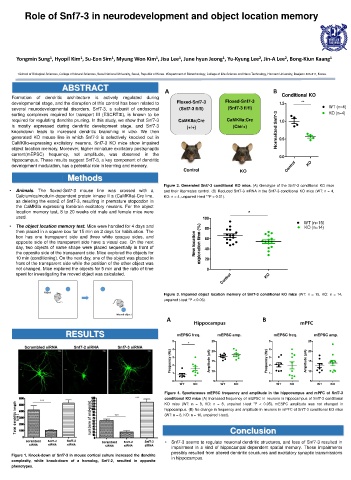
Figure 2. Generated Snf7-3 conditional KO mice. (A) Genotype of the Snf7-3 conditional KO mice
• Animals. The floxed-Snf7-3 mouse line was crossed with a and their littermates control. (B) Reduced Snf7-3 mRNA in the Snf7-3 conditional KO mice (WT: n = 4,
Calcium/calmodulin-dependent protein kinase II a (CaMKIIa)-Cre line, KO: n = 4, unpaired t-test **P < 0.01).
as deleting the exon2 of Snf7-3, resulting in premature stopcodon in
the CaMKIIa expressing forebrain excitatory neurons. For the object
location memory test, 8 to 20 weeks old male and female mice were *
used. 100
WT (n=15)
• The object location memory test. Mice were handled for 4 days and 80 KO (n=14)
then placed in a square box for 15 min on 2 days for habituation. The
box has one transparent side and three white opaque sides, and 60
opposite side of the transparent side have a visual cue. On the next New location exploration time (%)
day, two objects of same shape were placed sequentially in front of 40
the opposite side of the transparent side. Mice explored the objects for
10 min (conditioning). On the next day, one of the object was placed in 20
front of the transparent side while the position of the other object was
not changed. Mice explored the objects for 5 min and the ratio of time 0
spent for investigating the moved object was calculated. KO
Control
Figure 3. Impaired object location memory of Snf7-3 conditional KO mice (WT: n = 15, KO: n = 14,
unpaired t-test *P < 0.05).
A B
RESULTS
Scram
bled siRNA
Figure 4. Spontaneous mEPSC frequency and amplitude in the hippocampus and mPFC of Snf7-3
conditional KO mice (A) Increased frequency of mEPSC in neurons in hippocampus of Snf7-3 conditional
KO mice (WT: n = 8, KO: n = 8, unpaired t-test *P < 0.05). mESPC amplitude was not changed in
hippocampus. (B) No change in frequency and amplitude in neurons in mPFC of Snf7-3 conditional KO mice
(WT: n = 8, KO: n = 10, unpaired t-test).
Conclusion
• Snf7-3 seems to regulate neuronal dendritic structures, and loss of Snf7-3 resulted in
impairment in a kind of hippocampal dependent spatial memory. These impairments
possibly resulted from altered dendritic structures and excitatory synaptic transmissions
Figure 1. Knock-down of Snf7-3 in mouse cortical culture increased the dendrite in hippocampus.
complexity, while knock-down of a homolog, Snf7-2, resulted in opposite
phenotypes.

