


Page 3 - Q. Neuroscience
P. 3
Characterization of dysregulated subcellular localization of disease-
  related proteins of neurodegenerative diseases in Drosophila

  Yeonjin Jeong, Jeong Hyang Park, Chang Geon Chung, Sung Bae Lee
  Brain and Cognitive Sciences, DGIST (Daegu Gyeongbuk Institute of Science & Technology), Daegu 42988, South Korea
                                        BACKGROUND & AIM

     Proteins serve as a biological functional unit within the cell, which carefully regulates both the function and translocation of
   various proteins to maintain protein homeostasis. The translocation of cytoplasmic proteins to the nucleus has key functional
   importance within the neuron as the translocation plays a fundamental role in gene regulation and other biological functions.
   Accordingly, control of protein nucleocytoplasmic transport (NCT) is required for gene regulation. In addition, proteins and
   interacting partners have different functions and efficiencies depending on protein localization. Therefore, the protein subcellular
   localization provides a physiological context for their function. According to these reasons, fine regulation of protein subcellular
   localization regulated by NCT is important.
     More importantly, the subcellular mislocalization of protein is easily found in human diseases. It has been reported that several
   aberrations caused mutation, altered expression of cargo proteins and transport receptors or by deregulation of components of
   the trafficking machinery contribute to the mislocalization of important proteins. Of note, recent evidence indicates that the
   aberrant translocation of proteins is seen in most neurodegenerative diseases. The representative examples are follows: TAR
   DNA-binding protein 43 (TDP-43) and fused in sarcoma (FUS) in amyotrophic lateral sclerosis (ALS), tau in Alzheimer’s diseases
   (AD), α-synuclein (α-Syn) in Parkinson’s disease (PD), huntingtin (Htt) protein in Huntington’s disease (HD), ataxin (ATXN)
   protein in Spinocerebellar ataxia(SCA). Among these, TDP-43 is one of the most studied neurodegenerative disease. Because
   TDP-43 show cytoplasmic mislocalization in more than 97% of ALS patients, the mislocalization of TDP-43 is commonly referred
   to as an ALS disease hallmark. This observation has garnered great attention and research to understand the NCT machinery
   involved with TDP-43 transportations.
     To figure out additional disease-related proteins, other than TDP-43, of which the translocation is regulated by calcium in
   neurons, candidate proteins were listed.
                                                RESULTS
   Table 1. Disease-related protein candidates for identification of  Figure1. Overall scheme for selection of potential disease-
   which translocation is regulated by Ca 2+  in neurons  related proteins that has mislocalization in disease condition


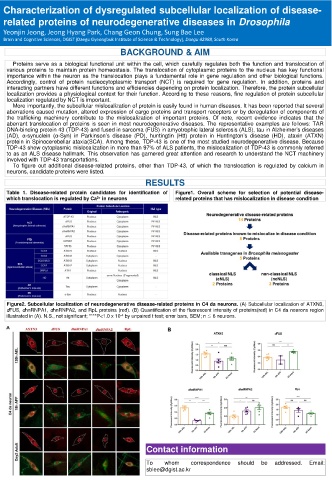
   Figure2. Subcellular localization of neurodegenerative disease-related proteins in C4 da neurons. (A) Subcellular localization of ATXN3,
   dFUS, dhnRNPA1, dhnRNPA2, and RpL proteins (red). (B) Quantification of the fluorescent intensity of proteins(red) in C4 da neurons region
   illustrated in (A). N.S., not significant; ****P<1.0 x 10 by unpaired t test; error bars, SEM; n ≤ 6 neurons.
                                        -4


                                                 Contact information

                                                 To    whom    correspondence  should  be  addressed.  Email:
                                                 sblee@dgist.ac.kr

