


Page 21 - Q. Neuroscience
P. 21
The Signature of Circular RNA Expression after Intracerebral
Hemorrhage
Jeong-Min Kim, MD, PhD 1,2 , Jang Sup Moon, MD 1,3 , Keun-Hwa Jung, MD, PhD 1,3 , Soon-Tae Lee, MD, PhD 1,3 , Kon Chu, MD, PhD 1,3 , Jung-Suk Yu,
BS , Dong-Kyu Park, BS 1
1
1 Laboratory for Neurotherapeutics, Biomedical Research Institute, Seoul National University Hospital, Seoul, South Korea.
2 Department of Neurology, Chung-Ang University Medical Center, Seoul, South Korea.
3 Department of Neurology, Seoul National University Hospital, College of Medicine, Seoul National University, Seoul, South Korea.
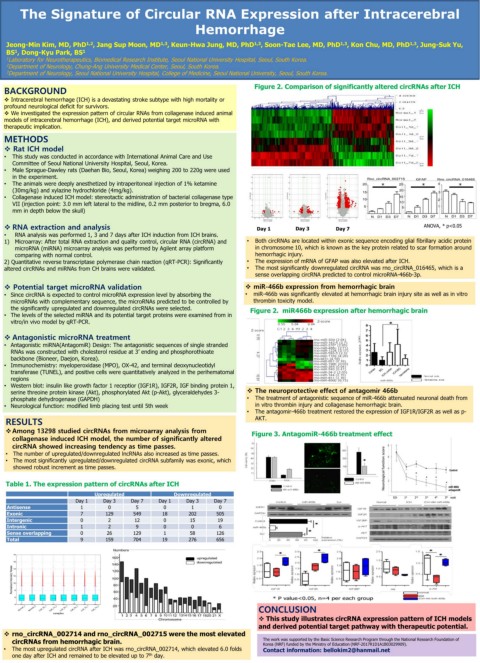
Figure 2. Comparison of significantly altered circRNAs after ICH
BACKGROUND
Intracerebral hemorrhage (ICH) is a devastating stroke subtype with high mortality or
profound neurological deficit for survivors.
We investigated the expression pattern of circular RNAs from collagenase induced animal
models of intracerebral hemorrhage (ICH), and derived potential target microRNA with
therapeutic implication.
METHODS
Rat ICH model
• This study was conducted in accordance with International Animal Care and Use
Committee of Seoul National University Hospital, Seoul, Korea.
• Male Sprague-Dawley rats (Daehan Bio, Seoul, Korea) weighing 200 to 220g were used
in the experiment.
• The animals were deeply anesthetized by intraperitoneal injection of 1% ketamine * * *
(30mg/kg) and xylazine hydrochloride (4mg/kg).
• Collagenase induced ICH model: stereotactic administration of bacterial collagenase type
VII (injection point: 3.0 mm left lateral to the midline, 0.2 mm posterior to bregma, 6.0
mm in depth below the skull)
RNA extraction and analysis Day 1 Day 3 Day 7 ANOVA, * p<0.05
• RNA analysis was performed 1, 3 and 7 days after ICH induction from ICH brains.
1) Microarray: After total RNA extraction and quality control, circular RNA (circRNA) and • Both circRNAs are located within exonic sequence encoding glial fibrillary acidic protein
microRNA (miRNA) microarray analysis was performed by Agilent array platform in chromosome 10, which is known as the key protein related to scar formation around
comparing with normal control. hemorrhagic injury.
2) Quantitative reverse transcriptase polymerase chain reaction (qRT-PCR): Significantly • The expression of mRNA of GFAP was also elevated after ICH.
altered circRNAs and miRNAs from CH brains were validated. • The most significantly downregulated circRNA was rno_circRNA_016465, which is a
sense overlapping circRNA predicted to control microRNA-466b-3p.
Potential target microRNA validation miR-466b expression from hemorrhagic brain
• Since circRNA is expected to control microRNA expression level by absorbing the • miR-466b was significantly elevated at hemorrhagic brain injury site as well as in vitro
microRNAs with complementary sequence, the microRNAs predicted to be controlled by thrombin toxicity model.
the significantly upregulated and downregulated circRNAs were selected. Figure 2. miR466b expression after hemorrhagic brain
• The levels of the selected miRNA and its potential target proteins were examined from in
vitro/in vivo model by qRT-PCR.
Antagonistic microRNA treatment
• Antagonistic miRNA(AntagomiR) Design: The antagonistic sequences of single stranded
RNAs was constructed with cholesterol residue at 3’ ending and phosphorothioate
backbone (Bioneer, Daejon, Korea).
• Immunochemistry: myeloperoxidase (MPO), OX-42, and terminal deoxynucleotidyl
transferase (TUNEL), and positive cells were quantitatively analyzed in the perihematomal
regions
• Western blot: insulin like growth factor 1 receptior (IGF1R), IGF2R, IGF binding protein 1,
serine threoine protein kinase (Akt), phosphorylated Akt (p-Akt), glyceraldehydes 3- The neuroprotective effect of antagomir 466b
phosphate dehydrogenase (GAPDH) • The treatment of antagonistic sequence of miR-466b attenuated neuronal death from
• Neurological function: modified limb placing test until 5th week in vitro thrombin injury and collagenase hemorrhagic brain.
• The antagomir-466b treatment restored the expression of IGF1R/IGF2R as well as p-
RESULTS AKT.
Among 13298 studied circRNAs from microarray analysis from Figure 3. AntagomiR-466b treatment effect
collagenase induced ICH model, the number of significantly altered
circRNA showed increasing tendency as time passes.
• The number of upregulated/downregulated lncRNAs also increased as time passes.
• The most significantly upregulated/downregulated circRNA subfamily was exonic, which
showed robust increment as time passes.
Table 1. The expression pattern of circRNAs after ICH
Upregulated Downregulated
Day 1 Day 3 Day 7 Day 1 Day 3 Day 7
Antisense 1 0 5 0 1 0
Exonic 7 129 549 18 202 505
Intergenic 0 2 12 0 15 19
Intronic 1 2 9 0 0 6
Sense overlapping 0 26 129 1 58 126
Total 9 159 704 19 276 656
CONCLUSION
This study illustrates circRNA expression pattern of ICH models
and derived potential target pathway with therapeutic potential.
rno_circRNA_002714 and rno_circRNA_002715 were the most elevated
circRNAs from hemorrhagic brain. The work was supported by the Basic Science Research Program through the National Research Foundation of
Korea (NRF) funded by the Ministry of Education (NRF-2017R1D1A1B03029909).
• The most upregulated circRNA after ICH was rno_circRNA_002714, which elevated 6.0 folds Contact information: bellokim2@hanmail.net
th
one day after ICH and remained to be elevated up to 7 day.

