


Page 43 - N. Metabolism and metabolic diseases
P. 43
A plant flavonoid glycoside QXG reduces blood glucose level through enhancement of insulin sensitivity in high-fat diet-induced insulin
                                                  resistant mice
              Gi Eun Park1), Ramakanta Lamichhane1), Seong Cheol Kim1), Hee Jin Kim1), Ree Jin1), Jae Kyung Sohng2), Yong Il Park1)*
                              1) Department of Biotechnology, The Catholic University of Korea, Bucheon, Gyeonggi-do 14662, Republic of Korea
                     2) Department of Pharmaceutical Engineering, Institute of Biomolecule Reconstruction, Sun Moon University, Asansi, Chungnam 31460, Republic of Korea
                                      * E-mail:yongil382@catholic.ac.kr, Tel:82-2-2164-4512, Fax:82-2-2164-4846
                   BACKGROUND                                                  AIM

   Insulin resistance and glucose absorption disorders in skeletal muscle are major  This study aimed to assess the potential in vivo anti-diabetic
   pathological symptoms of type 2 diabetes. In this study, the antidiabetic activity  effects of QXG using high-fat diet (HFD)-induced type 2 diabetic
   of the natural flavonoid glycoside QXG was evaluated using high-fat diet  model mice.
   (HFD)-induced type 2 diabetic model mice.

                                                METHODS

   The mouse model was established by feeding C57BL/6 mice with HFD for 10 weeks. These mice were orally administered with QXG (10 mg/kg body weight)
   for 4 weeks. For comparison, metformin (250 mg/kg body weight), which is well known anti-diabetic drug, was used. The QXG diminished blood glucose level
   and glucose tolerance level compared to HFD group. The serum biochemical factors including AST, ALT, insulin, serum glucose and total cholesterol were
   compared. The expression of IRS2 and GLUT4 level in HFD-induced hyperglycemic mouse muscle tissues was then confirmed by RT-PCR.

                                                RESULTS


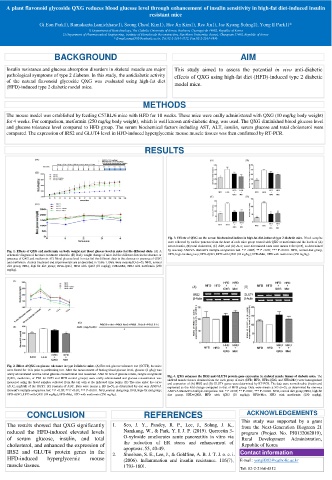
                                                        Fig. 3. Effects of QXG on the serum biochemical indices in high-fat diet-induced type 2 diabetic mice. Blood samples
                                                        were collected by cardiac puncture from the heart of each mice group treated with QXG or metformin and the levels of (A)
                                                        serum insulin, (B) total cholesterol, (C) AST, and (D) ALT, were determined. Data were means ± SD (n=5), as determined
   Fig. 1. Effects of QXG and metformin on body weight and blood glucose level in mice fed the different diets. (A) A  by one-way ANOVA Dunnett’s multiple comparison test. * P <0.05; ** P <0.01; *** P <0.001. NFD, normal diet group;
   schematic diagram of the mice treatment schedule. (B) Body weight change of mice fed the different diets in the absence or  HFD, high-fat diet group; HFD+QXG, HFD with QXG (10 mg/kg); HFD+Met, HFD with metformin (250 mg/kg).
   presence of QXG and metformin. (C) Blood glucose level in mice fed the different diets in the absence or presence of QXG
   and metformin. Animal treatment and experimentals are as described in Table 1. Data were means±SD (n=5). NFD, normal
   diet group; HFD, high-fat diet group; HFD+QXG, HFD with QXG (10 mg/kg); HFD+Met, HFD with metformin (250
   mg/kg).


   Fig. 2. Effect of QXG on glucose tolerance in type 2 diabetic mice. (A) For oral glucose tolerance test (OGTT), the mice
   were fasted for 16 h prior to performing test. After the measurement of fasting blood glucose level, glucose (2 g/kg) was
   orally administered and the blood glucose concentration was measured. After 30 min of glucose intake, sample compounds
   (QXG, metformin, or PBS for NFD and HFD control groups) were orally administered and glucose concentration was  Fig. 4. QXG enhances the IRS2 and GLUT4 protein gene expression in skeletal muscle tissues of diabetic mice. The
                                                        skeletal muscle tissues obtained from the each group of mice (NFD, HFD, HFD+QXG, and HFD+Met) were homogenized
   measured using the blood samples collected from the tail vein at the indicated time points. (B) The area under the curve  and expression of (A) IRS2 and (B) GLUT4 genes were determined by RT-PCR. The data were normalized to β-actin and
   (AUC, mg/h/dl) of the OGTT. (C) Formula of AUC. Data were means ± SD (n=5), as determined by one-way ANOVA  expressed as the fold change compared to that of HFD group. Data were means ± SD (n=5), as determined by one-way
   Dunnett’s multiple comparison test. * P <0.05; ** P <0.01; *** P <0.001. NFD, normal diet group; HFD, high-fat diet group;  ANOVA Dunnett’s multiple comparison test. * P <0.05; ** P <0.01; *** P <0.001. NFD, normal diet group; HFD, high-fat
   HFD+QXG, HFD with QXG (10 mg/kg); HFD+Met, HFD with metformin (250 mg/kg).  diet  group;  HFD+QXG,  HFD  with  QXG  (10  mg/kg);  HFD+Met,  HFD  with  metformin  (250  mg/kg).
          CONCLUSION                            REFERENCES                       ACKNOWLEDGEMENTS
                                                                                This study was supported by a grant
   The results showed that QXG significantly  1.  Seo, J. Y., Pandey, R. P., Lee, J., Sohng, J. K.,  from the Next-Generation Biogreen 21
   reduced the HFD-induced elevated levels  Namkung, W., & Park, Y. I. J. P. (2019). Quercetin 3-  program (Project No. PJ0132062019),
   of serum glucose, insulin, and total  O-xyloside ameliorates acute pancreatitis in vitro via  Rural  Development  Administration,
   cholesterol, and enhanced the expression of  the reduction of ER stress and enhancement of  Republic of Korea
   IRS2 and GLUT4 protein genes in the  2.  apoptosis. 55, 40-49.              Contact information
                                         Shoelson, S. E., Lee, J., & Goldfine, A. B. J. T. J. o. c. i.
   HFD-induced  hyperglycemic  mouse     (2006). Inflammation and insulin resistance. 116(7),  E-mail: yongil382@catholic.ac.kr
   muscle tissues.                       1793-1801.                            Tel: 82-2-2164-4512

