


Page 17 - M. Immunology
P. 17
Nuclear Trafficking Inhibition Of SRTFs Protects Lung
                      In Pneumonitis Animals By Suppressing Cytokine Storm

           Gyunam Kim, Dongho Kim, Danbi Lee, Sanghyeon Yu, Misuk Baek, Jieun Kim, Mingu Kang, Hakyoung Park, Jaewook Lee,
                    Seokwon Lee, Hyemin Yu, Hyewon Lee, Dasom Shin, Bo-ram Kim, Youngsil Choi, and Daewoong Jo
               Anti-Cancer Drug Development Team, Cellivery R&D Institute, Cellivery Therapeutics, Inc., Seoul 03929, Korea.
                         BACKGROUND                                                  AIM
         Acute respiratory distress syndrome (ARDS) is fatal disease caused  Intracellulary delivery of NLS is supposed to suppress expression of
         by severe inflammation in lung after infection. Excessive secretion of  pro-inflammatory cytokines/chemokines by inhibiting transport of
         pro-inflammatory cytokine recruits immune cells and it results  SRTFs from cytoplasm into nucleus. iCP-NI regulated expression of
         disruption of lung bronchi and alveoli. Excessive secretion of pro-  cytokines and chemokine. iCP-NI has potential as a novel medicine
         inflammatory cytokines and chemokines accompanied by the  to treat the bacterial and viral pneumonitis caused by various
         disruption of the bronchi and alveoli which could ultimately develop  infections which accompany severe respiratory disorder and death.
         into permanent lung impairments such as pulmonary fibrosis.
                                                      METHODS

         To prevent the unregulated cytokine secretion, called cytokine storm, improved cell-permeable nuclear import inhibitor (iCP-NI) has been
         developed by fusing hydrophobic cell-penetrating peptide (CPP) with nuclear localization signal (NLS) and demonstrated its improved
         therapeutic applicability.
                                                       RESULTS


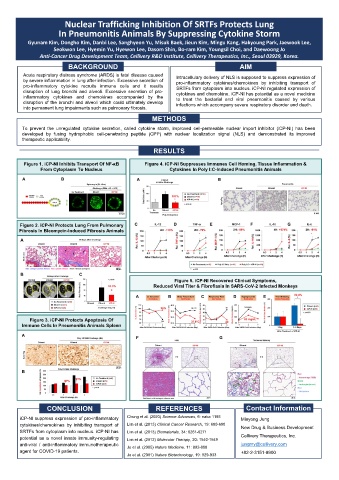
         Figure 1. iCP-NI Inhibits Transport Of NF-κB   Figure 4. iCP-NI Suppresses Immunes Cell Homing, Tissue Inflammation &
               From Cytoplasm To Nucleus                     Cytokines In Poly I:C-Induced Pneumonitis Animals


        Figure 2. iCP-NI Protects Lung From Pulmonary
        Fibrosis In Bleomycin-Induced Fibrosis Animals


                                                              Figure 5. iCP-NI Recovered Clinical Symptoms,
                                                       Reduced Viral Titer & Fibroflasia In SARS-CoV-2 Infected Monkeys


           Figure 3. iCP-NI Protects Apoptosis Of
         Immune Cells In Pneumonitis Animals Spleen


                 CONCLUSION                             REFERENCES                     Contact Information
                                              Chung et al. (2020) Science Advances, 6: eaba 1193
        iCP-NI suppress expression of pro-inflammatory                                Minyong Jung
        cytokines/chemokines by inhibiting transport of  Lim et al. (2013) Clinical Cancer Research, 19: 680-690
                                                                                      New Drug & Business Development
        SRTFs from cytoplasm into nucleus. iCP-NI has  Lim et al. (2013) Biomaterials, 34: 6261-6271
                                                                                      Cellivery Therapeutics, Inc.
        potential as a novel innate immunity-regulating
                                              Lim et al. (2012) Molecular Therapy, 20: 1540-1549
        anti-viral / anti-inflammatory immunotherapeutic                              jungmy@cellivery.com
                                              Jo et al. (2005) Nature Medicine, 11: 892-898
        agent for COVID-19 patients.                                                  +82-2-3151-8900
                                              Jo et al. (2001) Nature Biotechnology, 19: 929-933

