


Page 27 - L. Genetics and genomics
P. 27
Genetic characteristics and polymorphisms in the chicken interferon-induced
transmembrane protein (IFITM3) gene
1,2
Min-Ju Jeong , Byung-Hoon Jeong 1,2
1 Korea Zoonosis Research Institute, Chonbuk National University, Iksan, Jeollabuk-do 570-390
2 BK PLUS Program in department of Bioactive Material Sciences, Chonbuk National University, Jeonju, 561-756
ABSTRACT INTRODUCTION
The interferon-induced transmembrane protein 3 (IFITM3) gene is
classified as a small interferon-stimulated gene and is associated ◆ The interferon-induced transmembrane protein 3 (IFITM3) gene is an endogenous
immune-related gene classified as a small interferon-stimulated gene (ISG). The
with a broad spectrum of antiviral functions against several fatal IFITM3 protein prevents viral infection by restricting viral membrane hemifusion
enveloped viruses, including influenza A viruses (IAVs). The between the host and viral membrane and exhibits a broad spectrum of potent
rs12252 single nucleotide polymorphism (SNP) of the IFITM3 gene antiviral capacity against enveloped viruses, including influenza A viruses (IAVs),
Ebola virus (EBOV), Marburg virus (MARV), severe acute respiratory syndrome
in humans was associated with susceptibility to H1N1 influenza in coronavirus (SARS-CoV), dengue virus (DEV), West Nile virus (WNV) and Zika virus
a 2009 pandemic. In addition, overexpression of the IFITM3 protein (ZIKV).
potently inhibits the highly pathogenic avian influenza H5N1 virus ◆ The IFITM3 protein is localized in the late endosome to prevent viral invasion. For
this reason, the IFITM3 protein has a conserved sorting signal that is needed to enter
in ducks and chickens. Although chickens are a major host of the endosomal pathway. This signal peptide domain, referred to as Yxxϕ, a tyrosine-
influenza viruses, studies on chicken IFITM3 gene are very rare. To based lysosomal targeting motif, is located in the N-terminal domain (NTD) of the
investigate the genetic characteristics of the chicken IFITM3 gene, IFITM3 protein. This signal peptide is conserved in species including mammals and
birds and is used as classification criteria between IFITM1 and IFITM3 proteins,
we performed direct sequencing in 108 Dekalb White and 32 Ross because these two proteins share a highly similar protein sequence. Mutagenesis of
breeds. We also investigated the genotype and haplotype the Yxxϕ domain augmented mislocalization of the IFITM3 protein and reduced its
antiviral capacity in mammals. However, in a recent study performed in ducks, the
frequencies and linkage disequilibrium of the IFITM3 gene
Yxxϕ domain was not essential for correct localization of the IFITM3 protein and did
polymorphisms and evaluated whether the non-synonymous SNPs not affect antiviral capacity (Blyth et al., 2015). Although mammals and birds share a
are deleterious. We found significantly different genotype, allele very similar protein structure called CD225, which is significantly associated with
and haplotypes frequencies between two chicken breeds. We antiviral ability, birds do not likely depend on the Yxxϕ domain for correct IFITM3
protein localization. Thus, structural analysis of the IFITM3 protein between
found that birds have a long C-terminal domain and inverted mammals and birds is highly desirable to identify genetic differences that can reveal
topology of the IFITM3 protein compared to mammals. We also other crucial differences between these two classes.
identified fourteen genetic polymorphisms in the chicken IFITM3 ◆ Previous studies have shown that single nucleotide polymorphisms (SNPs) in the
human IFITM3 gene are associated with antiviral ability. The rs12252 SNP, which is
gene. L100M and N125H were predicted as ‘probably damaging’ located in a splicing acceptor site, results in an N-terminal truncated form of human
and L100M can alter the length of its conserved intracellular loop IFITM3 protein, and has been related to the severity of H1N1 influenza infection in a
(CIL). Furthermore, chickens, but not mammals, contain CpG 2009 pandemic. Two studies in British and Han Chinese populations reported that
the rs12252 SNP is related to disease severity, and one meta-analysis reaffirmed that
islands (CGIs) in this promoter region. individuals with the CC genotype have a high risk of influenza infection Furthermore,
susceptibility to ulcerative colitis (UC) and hemorrhagic fever with renal syndrome is
associated with polymorphisms in the IFITM3 gene
RESULTS CONCLUSIONS
◆Collectively, we investigated the structure of the IFITM3
protein and genetic characteristics of the IFITM3 gene.
◆ We noted structural difference in the IFITM3 protein
between mammals and birds and visualized topological
differences.
◆We also first reported genetic distribution of
polymorphisms in the chicken IFITM3 gene and
performed novel methods to evaluate non-synonymous
SNP using transmembrane topology prediction.
◆ Lastly, we identified differences in the promoter
architecture between mammals and chickens.
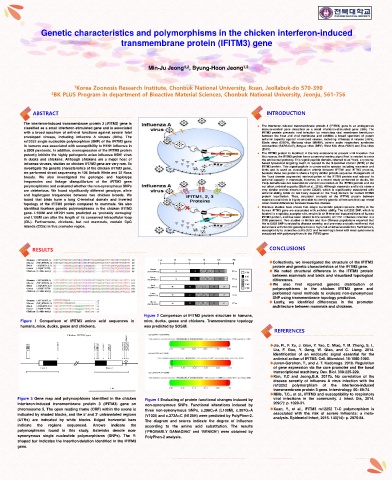
Figure 2 Comparison of IFITM3 protein structure in humans,
Figure 1 Comparison of IFITM3 amino acid sequences in mice, ducks, geese and chickens. Transmembrane topology
humans, mice, ducks, geese and chickens. was predicted by SOSUI.
REFERENCES
◆Jia, R., F. Xu, J. Qian, Y. Yao, C. Miao, Y. M. Zheng, S. L.
Liu, F. Guo, Y. Geng, W. Qiao, and C. Liang. 2014.
Identification of an endocytic signal essential for the
antiviral action of IFITM3. Cell. Microbiol. 16:1080-1093.
◆Juven-Gershon, T., and J. T. Kadonaga. 2010. Regulation
of gene expression via the core promoter and the basal
transcriptional machinery. Dev. Biol. 339:225-229.
◆Kim, Y.C and Jeong,B.H. 2017b. No correlation of the
disease severity of influenza A virus infection with the
rs12252 polymorphism of the interferon-induced
transmembrane protein 3 gene. Intervirology. 60: 69-74.
◆Mills, T.C., et al., IFITM3 and susceptibility to respiratory
Figure 3 Gene map and polymorphisms identified in the chicken Figure 4 Evaluating of protein functional changes induced by viral infections in the community. J Infect Dis, 2014.
interferon-induced transmembrane protein 3 (IFITM3) gene on non-synonymous SNPs. Functional alterations induced by 209(7): p. 1028-31.
chromosome 5. The open reading frame (ORF) within the exons is three non-synonymous SNPs, c.298C>A (L100M), c.307G>A ◆Xuan, Y., et al., IFITM3 rs12252 T>C polymorphism is
indicated by shaded blocks, and the 5’ and 3’ untranslated regions (V103I) and c.373A>C (N125H) were predicted by PolyPhen-2. associated with the risk of severe influenza: a meta-
(UTRs) are indicated by white blocks. Edged horizontal bars The diagram and scores indicate the degree of influence analysis. Epidemiol Infect, 2015. 143(14): p. 2975-84.
indicate the regions sequenced. Arrows indicate the according to the amino acid substitution. The results
polymorphisms found in this study. Asterisks denote non- (‘PROBABLY DAMAGING’ and ‘BENIGN’) were obtained by
synonymous single nucleotide polymorphisms (SNPs). The Y- PolyPhen-2 analysis.
shaped bar indicates the insertion/deletion identified in the IFITM3
gene.

