


Page 29 - L. Genetics and genomics
P. 29
An Integrative Systems Genetic Analysis of
                                    Atherosclerosis and Gut Microbiota

                                                                            2
                                                     2
                                                               2
                         Myungsuk Kim 1,2 , M. Nazmul Huda , Excel Que , Erik R. Gertz , Brian J. Bennett 1,2
                                    1 Department of Nutrition, University of California, Davis 95616,
                                    2 Western Human Nutrition Research Center, Davis, CA 95616
   BACKGROUNDS & AIMS                                 STUDY DESIGN & METHODS
   BACKGROUNDS                                       We collected offspring (238 female and 234
   Atherosclerosis is a precipitating event in the development of  male  mice)  from  a  cross  between
   cardiovascular disease. Recent studies report that gut  transgenic male C57BL/6J mice, which
   microbiota contributes to the pathogenesis of cardiovascular  were made susceptible to atherosclerosis
                                                     by microinjection of human apolipoprotein
   disease, including metabolic syndrome. While host genetic  E-Leiden and cholesterol ester transfer
   variants are known factors that affect atherosclerosis  protein genes, and ~200 female DO mice,
   development  and  gut  microbiota  composition,  the  a population derived from 8 inbred strains.
   mechanisms underlying genetic variations are not yet clear.  We fed the offspring a high fat/cholesterol
                                                     diet for 12 weeks. We then examined over
   AIMS                                              30 cardio-metabolic traits, fecal microbiota
   Here, we interrogated atherosclerosis regulatory networks in  compositions  using  16S  rRNA  gene
    .
   hyperlipidemic Diversity Outbred mice to reveal key insights  sequencing,  and  global  liver  gene
   into  control  of  atherosclerosis  using  system  genetic  expression  using  RNA-sequencing.  To
   approaches of cardio-metabolic traits, microbiome and liver  elucidate the association of genetic factors
                                                     and phenotype, we performed quantitative
   transcriptome.                                    trait locus (QTL) analysis.
    RESULTS

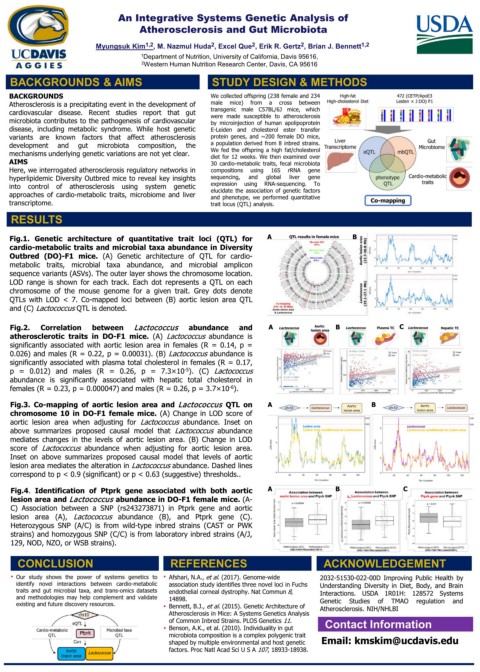
   Fig.1. Genetic architecture of quantitative trait loci (QTL) for  A                  B
   cardio-metabolic traits and microbial taxa abundance in Diversity
   Outbred (DO)-F1 mice. (A) Genetic architecture of QTL for cardio-
   metabolic traits, microbial taxa abundance, and microbial amplicon
   sequence variants (ASVs). The outer layer shows the chromosome location.
   LOD range is shown for each track. Each dot represents a QTL on each
   chromosome of the mouse genome for a given trait. Grey dots denote
   QTLs with LOD < 7. Co-mapped loci between (B) aortic lesion area QTL
   and (C) Lactococcus QTL is denoted.

   Fig.2.  Correlation  between   Lactococcus   abundance   and     A               B               C
   atherosclerotic traits in DO-F1 mice. (A) Lactococcus abundance is
   significantly associated with aortic lesion area in females (R = 0.14, p =
   0.026) and males (R = 0.22, p = 0.00031). (B) Lactococcus abundance is
   significantly associated with plasma total cholesterol in females (R = 0.17,
                                               -5
   p = 0.012) and males (R = 0.26, p = 7.3×10 ). (C) Lactococcus
   abundance is significantly associated with hepatic total cholesterol in
                                                          -6
   females (R = 0.23, p = 0.000047) and males (R = 0.26, p = 3.7×10 ).
   Fig.3. Co-mapping of aortic lesion area and Lactococcus QTL on  A                         B
   chromosome 10 in DO-F1 female mice. (A) Change in LOD score of
   aortic lesion area when adjusting for Lactococcus abundance. Inset on
   above summarizes proposed causal model that Lactococcus abundance
   mediates changes in the levels of aortic lesion area. (B) Change in LOD
   score of Lactococcus abundance when adjusting for aortic lesion area.
   Inset on above summarizes proposed causal model that levels of aortic
   lesion area mediates the alteration in Lactococcus abundance. Dashed lines
   correspond to p < 0.9 (significant) or p < 0.63 (suggestive) thresholds..
    Fig.4. Identification of Ptprk gene associated with both aortic  A              B                C
    lesion area and Lactococcus abundance in DO-F1 female mice. (A-
    C) Association between a SNP (rs243273871) in Ptprk gene and aortic
    lesion area (A), Lactococcus abundance (B), and Ptprk gene (C).
    Heterozygous SNP (A/C) is from wild-type inbred strains (CAST or PWK
    strains) and homozygous SNP (C/C) is from laboratory inbred strains (A/J,
    129, NOD, NZO, or WSB strains).

     CONCLUSION                            REFERENCES                            ACKNOWLEDGEMENT

     Our study shows the power of systems genetics to  Afshari, N.A., et al. (2017). Genome-wide   2032-51530-022-00D Improving Public Health by
     identify novel interactions between cardio-metabolic  association study identifies three novel loci in Fuchs   Understanding Diversity in Diet, Body, and Brain
     traits and gut microbial taxa, and trans-omics datasets  endothelial corneal dystrophy. Nat Commun 8,   Interactions. USDA 1R01H: 128572 Systems
     and methodologies may help complement and validate  14898.                 Genetic  Studies  of  TMAO  regulation  and
     existing and future discovery resources.  Bennett, B.J., et al. (2015). Genetic Architecture of   Atherosclerosis. NIH/NHLBI
                                           Atherosclerosis in Mice: A Systems Genetics Analysis
                                           of Common Inbred Strains. PLOS Genetics 11.  Contact Information
                                           Benson, A.K., et al. (2010). Individuality in gut
                                           microbiota composition is a complex polygenic trait
                                           shaped by multiple environmental and host genetic   Email: kmskim@ucdavis.edu
                                           factors. Proc Natl Acad Sci U S A 107, 18933-18938.

