


Page 17 - F. Cell biology
P. 17
CM inhibits osteoclastogenesis through regulating NF-κB and integrin pathways
Nam Young Kim, Narae Kim, Jiae Lee, Hye In Lee, Gong-Rak Lee, Min jeong Kwon, Hyun Jin Kim, Jin Ha Park, Ye Hee Kang, and Woojin Jeong
Department of Life Science and the Research Center for Cellular Homeostasis, EwhaWomansUniversity, Seoul 03760, Korea
A B S T R A C T
Excessive osteoclasts cause various bone diseases such as osteoporosis and rheumatoid arthritis. Thus, the regulation of osteoclast differentiation has clinical implications. CM
was identified as an inhibitor of osteoclastogenesis through drug repositioning approach We investigated the role of CM in regulating osteoclast differentiation and explained
the fundamental mechanisms. CM inhibited osteoclast differentiation from bone-marrow derived macrophages, and it decreased NFATc1 expression along with attenuating NF-
κB and activator protein-1 activation, and c-Fos expression. CM was revealed to inhibit nuclear translocation of NF-κB. Addition of CM to differentiated osteoclasts also
inhibited osteoclast formation and bone resorption, and reduced integrin β3 and p130cas expression as well as Rac1 activity. Collectively, these data suggest that CM inhibits
osteoclast differentiation by regulating NF-κB and attenuates osteoclast maturation by modulating integrin signaling. Furthermore, CM protected bone destruction in
lipopolysaccharide- and ovariectomy-induced osteolytic mouse models, which strongly supports its usefulness as a potential drug to treat inflammation-induced bone diseases
and postmenopausal osteoporosis.
R E S U L T S
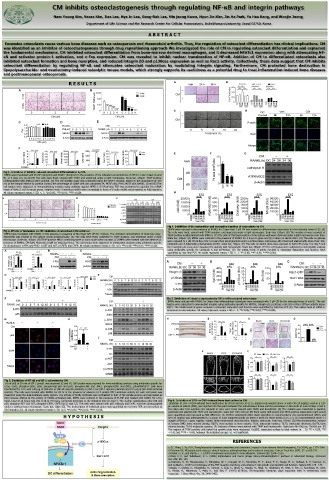
Fig 1. Inhibition of RANKL-induced osteoclast differentiation by CM.
BMMs were incubated with M-CSF (40ng/ml) and RANKL (50ng/ml) in the presence of the indicated concentrations of CM for 3 and 4 days (A and
B), or 4 days (C). (A and B) The cells were fixed, stained with TRAP, and examined under a light microscope. Scale bar, 100μm. TRAP-positive
multinucleated cells (MNCs) were counted. (C) The cell viability assay was conducted using the WST-1 reagent. Based on the absorbance at 450
nm of the sample relative to positive control, the percentage of viable cells was calculated. M, MCSF only; M+R, MCSF plus RANKL. (D and E) The
cell lysates were subjected to immunoblotting analysis using antibody against NFATc1. (F) Real-time PCR was performed to quantify the mRNA
levels of NFATc1 and its target genes. Relative levels of individual mRNA were normalized to those of β-actin mRNA and presented as fold induction.
All values represent means ± SD. n=3. *p<0.05; **P<0.01; ***P<0.001.
Fig 4. Inhibition of the maturation and resorption function of osteoclasts by CM
BMMs were cultured in the presence of RANKL for 3 days then 3 μM CM was treated to differentiated osteoclasts for the indicated times (A-D). (A)
Fig 2. Effects of histamine on CM inhibition of osteoclast differentiation. The cells were fixed, stained with TRAP solution, and inspected under a light microscope. Scale bar, 100μm. (B) The number of were counted of
BMMs have incubated with RANKL in the absence or presence of the fixed 3uM CM for 4-5days. The indicated concentration of histamine dose- TRAP-positive multinucleated cells (MNCs). (C) The cells at the fixed position of the culture well were observed under a light microscope over time.
dependent was treated to the culture media simultaneously. (A) The cells were fixed, subjected to TRAP staining, and examined under a light Scale bar, 100μm. (D) BMMs were cultured in the presence of RANKL for 3 days on glass and (E) 11days on dentin discs. (D) The cells on glasses
microscope. Scale bar, 100μm. (B) TRAP-positive MNCs containing three or more nuclei were counted. (C) BMMs were treated with the absence or were exposed to 3 μM CM at day 3 for 12 hours then photographed under a confocal laser microscope after fixed and stained with Alexa Flour 488-
presence of RANKL, CM-3μM, Histamine 10μM for indicated times. The cell lysates were subjected to immunoblot analysis using antibodies specific phalloidin and 4',6diamidino-phenylindole (DAPI). Scale bar, 100μm. (E) The cells on dentin discs were exposed to 3μM CM at day 0 or day 5 and
for phosphor(p)- p-ERK and ERK2, p-AKT and AKT, p-CREB, and CREB. All values represent means ± SD. n=3. *P<0.05; **P<0.01; ***P<0.001. the resorption pit areas were visualized by staining with hematoxylin. Scale bar, 200μm. (F) The cell lysates were subjected to immunoblot analysis
using antibodies specific for Cathepsin K and ATP6V0D2. (G) The mRNA levels of genes involved in osteoclast maturation and function were
quantified by real-time PCR. All values represent means ± SD. n=3. *P<0.05; **P<0.01; ***P<0.001.
Fig 5. Inhibition of integrin expression by CM in differentiated osteoclasts
BMMs were cultured with RANKL for 3days then differentiated osteoclasts were incubated with 3 μM CM for the indicated times (A and B). The cell
lysates were subjected to immunoblot analysis using antibodies specific for NFATc1, Integrin β3, p130Cas, c-Src (A) or Rac1 GTPase activity assay
kit(C). The mRNA levels of genes involved in osteoclast maturation and function were quantified by real-time PCR (B). The relative level of mRNA is
presented as fold induction. All values represent means ± SD. n=3. *P<0.05; **P<0.01; ***P<0.001.
Fig 3. Inhibition of NF-κB and AP-1 activation by CM
(A) of p65 at 30 min of CM 3 μmol/L was observed (G and H). Cell lysates were prepared for immunoblotting analysis using antibodies specific for
c-fos, Sod2, phosphor-IκBα, IκBα, phosphor(p)-p65 and p65, phosphor-JNK and JNK1, phosphor-ERK and ERK2, phosRAW264.7 cells were
transfected for 24 h with 0.45 μg of pNF-κB-Luc (NF-κB reporter plasmid) or pAP-1-Luc (AP-1 reporter plasmid) and 0.15 μg of pRL-SV40 (internal
control). The cells were treated with RANKL for 24 hr in the presence or absence of 3 μmol/L CM. Luciferase activity for each cell lysate was
measured using the dual-luciferase assay system. The activity of firefly luciferase was normalized to that of the Renilla enzyme and expressed as
fold increase relative to the activity of RANKL-untreated cells. BMMs were cultured in the presence of M-CSF and treated with RANKL for c-fos,
Sod2, Cox2 at 12 hours and Il-6, Il-1β at 24 hours, confirmed according to the indicated time (E and F). The nuclear translocation phor-p38 and Fig 6. Inhibition of LPS- or OVX-induced bone destruction by CM.
p38, phosphor-AKT and AKT, phosphor-CREB, CREB (B,C,D and I,J). The cells were stained with p65 antibody and DAPI, and then photographed Inhibition of LPS- or OVX-induced bone destruction by CM (A and B) LPS (12.5 mg/kg body weight) alone or with CM (10 mg/kg), each in a 120-
under a confocal laser microscope. Scale bar, 10μm (G). The transcription of individual genes was quantified by real-time PCR and presented as μL volume of vehicle (PBS), was injected into the space between the subcutaneous tissue and the periosteum in the skulls of mice at days 0 and 2.
fold induction (D). All values represent means ± SD. n=3. *P<0.05; **P<0.01; ***P<0.001. Five days after first injection, the calvarial of mice were fixed, stained with TRAP, and decalcified. (A) The calvaria was embedded in paraffin,
sectioned and stained with TRAP and hematoxylin. Scale bar: 100× 100 μm (B) Bone cavity (left panel) and TRAP-positive osteoclasts (right panel)
H Y P O T H E S I S were quantified and expressed as fold difference. (C, D) Mice underwent either sham operation or experimental in vivo ovariectomized (OVX), and
CM (10 mg/kg) was administrated to a group of mice intraperitoneally six times a week for three weeks (n=5,7,7). (C) Representative micro-CT
images of femurs: upper, sagittal; middle, three-dimensional reconstruction; bottom, transaxial; Scale bar, 0.5mm. (D) Histomorphometric analysis
of femurs: BMD, bone mineral density; BS/TV, bone surface to bone volume; Tb.N, trabecular number; Tb.Th, trabecular thickness; BV/TV, bone
volume density; Tb.Pf, trabecular spacing. (E) Sections of femur were stained with TRAP and hematoxylin. Scale bar: 40× 100 μm; 100× 50 μm. (F)
The regions of TRAP-positive cells below the growth plate were measured. OcS/BS, osteoclast surface to total volume (n = 5). *P < 0.05, **P
< 0.01 and ***P < 0.001 between the indicated groups. ns, not significant.
REFERENCES
⊙T.C. Phan, J. Xu, M.H. ZhengInteraction between osteoblast and osteoclast: impact in bone disease Histol Histopathol, 19 (2004), pp. 1325-1344.
⊙Coleman RE, Metastatic bone disease: clinical features, pathophysiology and treatment strategies. Cancer Treat Rev. 2001. 27: p.165-176.
⊙Rodan, G. A., and Martin, T. J. (2000) Therapeutic approaches to bone diseases. Science 289, 1508– 1514
⊙Ross, F. P., and Teitelbaum, S. L. (2005) alphavbeta3 and macro phage colony-stimulatingfactor: partners in osteoclast biology. Immunol.
Rev. 208, 88– 105.
⊙Anderson, D. M., Maraskovsky, E., Billingsley, W. L., Dougall, W. C., Tometsko, M. E., Roux, E. R., Teepe, M. C., DuBose, R. F., Cosman, D.,
and Galibert, L. (1997) A homologue of the TNF receptor and its lig and enhance T-cell growth and dendritic-cell function. Nature 390, 175– 179.
⊙Nagai, Y., Osawa, K., Fukushima, H., Tamura, Y., Aoki, K., Ohya, K., Yasuda, H., Hikiji, H., Takahashi, M., Seta, Y., Seo, S., Kurokawa, M., Kato,
S., Honda, H., Nakamura, I., Maki, K., and Jimi, E. (2013) p130Cas, Crk-associated substrate, plays important roles in osteoclastic bone
resorption. J. Bone Miner. Res. 28, 2449–2462.

