


Page 245 - ebook
P. 245
A SOCS3 Competitor Protein Overcomes Leptin Resistance By
                   Activating The JAK/STAT3 Signaling In Hypothalamic Neurons


                    Yerim Kang, Sukyeong Jeong, Sujung Lee, Dabin Guk, Moonyoung Choi,  Eunna Chung and Daewoong Jo
                                  Cellivery R&D Institute, Cellivery Therapeutics, Inc., Seoul 03929, Korea

                   BACKGROUND                                                   AIM
    The main obstacle to treat patients with obesity is inappropriate appetite  The aim of this study is to develop a cell-permeable recombinant protein
    regulation induced by leptin resistance. Suppressor of cytokine signaling 3  which competes with SOCS3 and recovers the leptin signaling in obese
    (SOCS3) binds to leptin receptor (ObRb) and blocks the leptin signaling,  patients. The recombinant protein should be homogenous, soluble and
    and it implies that development of a SOCS3 competitor would be a way to  thermostable at 37℃, and overcomes leptin resistance in hypothalamic
    treat obesity by overcoming leptin resistance.       neurons.
                                                 METHODS
    To develop a SOCS3 competitor, the SH2 domain of human SOCS3 was truncated, and to the truncate the advanced macromolecule
    transduction domain (aMTD) and solubilization domain B (SDB) were conjugated to improve cell permeability and solubility, respectively. The
    recombinant protein, designated as cell-permeable (CP)-truncated SOCS3 SH2 domain (SD), was purified from E. coli and characterized about
    homogeneity, solubility, thermal stability and anti-obesity efficacy in diet-induced obesity (DIO) mouse model.

                                                 RESULTS

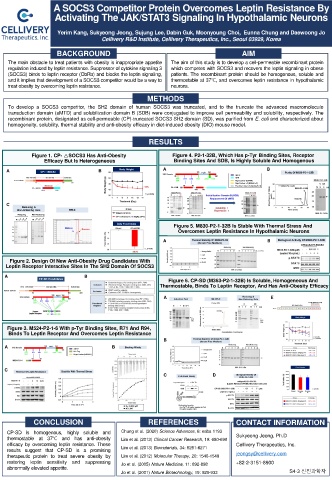
           Figure 1. CP- △SOCS3 Has Anti-Obesity         Figure 4. P2-1-32B, Which Has p-Tyr Binding Sites, Receptor
               Efficacy But Is Heterogeneous              Binding Sites And SDB, Is Highly Soluble And Homogenous
   A                             B                    A                                 B


   C
        Reducing  &
       Non-Reducing  Gels  HPLC
       Reducing  Non-Reducing
      M     M
                                                          Figure 5. M830-P2-1-32B Is Stable With Thermal Stress And
                                                           Overcomes Leptin Resistance In Hypothalamic Neurons
                                                      A                                 B
    Figure 2. Design Of New Anti-Obesity Drug Candidates With
   Leptin Receptor Interactive Sites In The SH2 Domain Of SOCS3

   A                        B
                                                        Figure 6. CP-SD (M363-P2-1-32B) Is Soluble, Homogeneous And
                                                     Thermostable, Binds To Leptin Receptor, And Has Anti-Obesity Efficacy
                                                      A                                  E


   Figure 3. M524-P2-1-6 With p-Tyr Binding Sites, R71 And R94,
    Binds To Leptin Receptor And Overcomes Leptin Resistance
                                                      B
   A                                 B


   C
                                                      C               D


            CONCLUSION                           REFERENCES                   CONTACT INFORMATION
   CP-SD is homogenous, highly soluble and  Chung et al. (2020) Science Advances, 6: eaba 1193  Sukyeong Jeong, Ph.D
   thermostable at 37℃ and has anti-obesity  Lim et al. (2013) Clinical Cancer Research, 19: 680-690
   efficacy by overcoming leptin resistance. These                            Cellivery Therapeutics, Inc.
   results suggest that CP-SD is a promising  Lim et al. (2013) Biomaterials, 34: 6261-6271  jeongsy@cellivery.com
   therapeutic protein to treat severe obesity by  Lim et al. (2012) Molecular Therapy, 20: 1540-1549
   restoring  leptin  sensitivity  and  suppressing  Jo et al. (2005) Nature Medicine, 11: 892-898  +82-2-3151-8900
   abnormally elevated appetite.
                                        Jo et al. (2001) Nature Biotechnology, 19: 929-933     S4-3 신진과학자

