


Page 29 - ebook
P. 29
CRISPR-CasRx based Lamin A pre-mRNA knock-
                            down in Hutchinson-Gilford Progeria Syndrome


             Juyoung Hong, Junho K Hur*
             Graduate School of Biomedical Science & Enginerring, Hanyang University, Seoul 04763, Korea  E-mail : juhur@hanyang.ac.kr


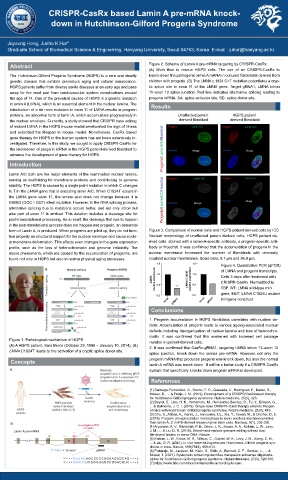
                                                              Figure 2. Scheme of Lamin A pre-mRNA targeting by CRISPR-CasRx.
              Abstract
                                                              (A) Work flow to rescue HGPS cells. The use of an CRISPR-CasRx to
             The Hutchinson-Gilford Progeria Syndrome (HGPS) is a rare and deadly   knock-down the pathogenic lamin A mRNA in cultured fibroblasts derived from
             genetic disease that exhibits premature aging and cellular senescence.  children with progeria. (B) The LMNA c.1824 C>T mutation potentiates a cryp-
             HGPS patients suffer from diverse senile diseases at an early age and pass   tic splice site in exon 11 of the LMNA  gene. Target gRNA1, LMNA  intron
             away for the most part from cardiovascular system complications around   11–exon 12 splice junction. Red line indicates alternative splicing leading to
             the age of 14. One of the prevalent causes of HGPS is a genetic mutation   progerin mRNA. SA: splice activator site; SD: splice donor site.
             in lamin A (LMNA), which is an essential element in the nuclear lamina. The
                                                               Results
             introduction of a de novo mutation in exon 11 of LMNA results in progerin
             proteins, an abnormal form of lamin A, which accumulates progressively in   Unaffected parent   HGPS patient
             the nuclear envelope. Currently, a study showed that CRISPR base editing   derived fibroblast  derived fibroblast
             of mutant LMNA in the HGPS mouse model ameliorated the sign of illness
             and extended the lifespan in mouse model. Nonetheless, CasRx based
             gene therapy for HGPS in the human system has not been extensively in-
             vestigated. Therefore, in this study, we sought to apply CRISPR-CasRx for
             the knockdown of progerin mRNA in the HGPS patient-derived fibroblast to   Progeria/LaminA/C/Hoechst
             advance the development of gene therapy for HGPS.
             Introduction
             Lamin A/C both are the major elements of the mammalian nuclear lamina,
             serving as scaffolding for membrane proteins and contributing to genome
             stability. The HGPS is caused by a single point mutation in which C changes
             to T in the LMNA gene that is encoding lamin A/C. When C1824T occurs in
             the  LMNA  gene exon 11, the amino acid does not change because it is
             G608G (GGC GGT) silent mutation. However, in the RNA splicing process,   Progeria/LaminA/C/Hoechst
             alternative splicing due to mutations occurs better, and not only intron but
             also part of exon 11 is omitted. This deletion includes a cleavage site for
             post-transcriptional processing. As a result, the cleavage that has to happen
             in the post-translational process does not happen and progerin, an abnormal
             form of Lamin A, is produced. When progerins are piled up, they do not func-  Figure 3. Comparison of normal cells and HGPS patient derived cells by ICC
             tion properly as structural support for the nuclear envelope and cause nucle-  Nuclear morphology of unaffected parent derived cells, HGPS patient de-
             ar membrane deformation. This affects even changes in the gene expression   rived cells  stained with a lamin-A-specific antibody, a progerin-specific anti-
             profile, such as the loss of heterochromatin and genome instability. The  body or Hoechst. It was confirmed that the accumulation of progerin in the
             above phenomena, which are caused by the accumulation of progerins, are   nuclear membrane increased the number of fibroblasts with unevenly

             found not only in HGPS but also in normal physical aging processes.
                                                                 1.5          1.5
                                                                                       Figure 4. Quantitative PCR (qPCR)
             A.           B.                                     1.0          1.0      of LMNA and progerin transcripts.
                                                               LMNA   relative expression  0.5  LMNA C1824T  relative expression  0.5  Cells 3 days after treatment with
                                                                                       CRISPR-CasRx. Normalized to
                                                                                       TBP. WT: LMNA wild-type mini
                                                                                       gene, MUT: LMNA C1824U mutant
                                                                 0.0          0.0
                                                                    mock  gRNA1  mock  gRNA1  minigene construct.
                                                               Conclusions
                                                              1. Progerin accumulation in HGPS fibroblasts correlates with nuclear de-
                                                              fects. Accumulation of progerin leads to various ageing-associated nuclear
                                                              defects including disorganization of nuclear lamina and loss of heterochro-
                                                              matin. It was confirmed that this worsened with incresed cell passage
             Figure 1. Pathological mechanism of HGPS
                                                              number in patient-derived cells.
             (A) A HGPS patient, Sam Berns (October 23, 1996 – January 10, 2014). (B)
                                                              2. It was confirmed that CasRx-gRNA1, targeting LMNA intron 11–exon 12
             LMNA C1824T  leads to the activation of a cryptic splice donor site.
                                                              splice junction, knock down the lamina pre-mRNA. However, not only the
                                                              progerin mRNA that produces progeria was knock down, but also the normal
              Concepts
                                                              lamin A mRNA was knock down.  It will be a better study if a CRISPR-CasRx
              A.                                              system that specifically knocks down progerin mRNA is developed.
                                                               References
                                                               [1] Santiago-Fernández, O., Osorio, F. G., Quesada, V., Rodríguez, F., Basso, S.,
                                                               Maeso, D., ... & Freije, J. M. (2019). Development of a CRISPR/Cas9-based therapy
                                                               for Hutchinson–Gilford progeria syndrome. Nature medicine, 25(3), 423.
                                                               [2] Beyret, E., Liao, H. K., Yamamoto, M., Hernandez-Benitez, R., Fu, Y., Erikson, G.,
                                                               ... & Belmonte, J. C. I. (2019). Single-dose CRISPR–Cas9 therapy extends lifespan
                                                               of mice with Hutchinson–Gilford progeria syndrome. Nature medicine, 25(3), 419.
                                                               [3] Cho, S., Abbas, A., Irianto, J., Ivanovska, I. L., Xia, Y., Tewari, M., & Discher, D. E.
                                                               (2018). Progerin phosphorylation in interphase is lower and less mechanosensitive
              B.                                               than lamin-A, C in iPS-derived mesenchymal stem cells. Nucleus, 9(1), 235-250.
                                     Pre-progerin mRNA         [4] Anzalone, A. V., Randolph, P. B., Davis, J. R., Sousa, A. A., Koblan, L. W., Levy,
                                       formation
               Lamin A pre-mRNA                                J. M., ... & Liu, D. R. (2019). Search-and-replace genome editing without dou-
                                    *                          ble-strand breaks or donor DNA. Nature.
                           SD   SA  SD  SD   SA
                                                               [5] Koblan, L. W., Erdos, M. R., Wilson, C., Cabral, W. A., Levy, J. M., Xiong, Z. M.,
                1      9  10      11            12
                                                               ... & Liu, D. R. (2021). In vivo base editing rescues Hutchinson–Gilford progeria syn-
                                                               drome in mice. Nature, 589(7843), 608-614.
                            11 intron + 12 exon  gRNA1         [6] Puttaraju, M., Jackson, M., Klein, S., Shilo, A., Bennett, C. F., Gordon, L., ... &
                                                               Misteli, T. (2021). Systematic screening identifies therapeutic antisense oligonucle-
                                5’   CUUAGAGCCCCCAGAACUGCAG  3’   otides for Hutchinson–Gilford progeria syndrome. Nature Medicine, 27(3), 526-535.
                                3’   GAAUCUCGGGGGUCUUGACGUC  5’   [7] https://www.hbo.com/documentaries/life-according-to-sam

