


Page 15 - Y. Vascular biology
P. 15
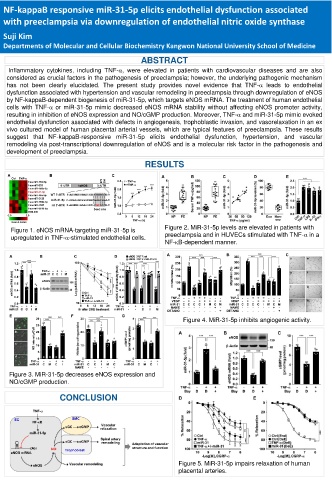
NF-kappaB responsive miR-31-5p elicits endothelial dysfunction associated
  with preeclampsia via downregulation of endothelial nitric oxide synthase

  Suji Kim
  Departments of Molecular and Cellular Biochemistry Kangwon National University School of Medicine

                                               ABSTRACT
    Inflammatory cytokines, including TNF-α, were elevated in patients with cardiovascular diseases and are also
   considered as crucial factors in the pathogenesis of preeclampsia; however, the underlying pathogenic mechanism
   has not been clearly elucidated. The present study provides novel evidence that TNF-α leads to endothelial
   dysfunction associated with hypertension and vascular remodeling in preeclampsia through downregulation of eNOS
   by NF-kappaB-dependent biogenesis of miR-31-5p, which targets eNOS mRNA. The treatment of human endothelial
   cells with TNF-α or miR-31-5p mimic decreased eNOS mRNA stability without affecting eNOS promoter activity,
   resulting in inhibition of eNOS expression and NO/cGMP production. Moreover, TNF-α and miR-31-5p mimic evoked
   endothelial dysfunction associated with defects in angiogenesis, trophoblastic invasion, and vasorelaxation in an ex
   vivo cultured model of human placental arterial vessels, which are typical features of preeclampsia. These results
   suggest that NF-kappaB-responsive miR-31-5p elicits endothelial dysfunction, hypertension, and vascular
   remodeling via post-transcriptional downregulation of eNOS and is a molecular risk factor in the pathogenesis and
   development of preeclampsia.
                                                RESULTS


     Figure 1. eNOS mRNA-targeting miR-31-5p is        Figure 2. MiR-31-5p levels are elevated in patients with
     upregulated in TNF-α-stimulated endothelial cells.  preeclampsia and in HUVECs stimulated with TNF-α in a
                                                       NF-κB-dependent manner.


                                                             Figure 4. MiR-31-5p inhibits angiogenic activity.


    Figure 3. MiR-31-5p decreases eNOS expression and
    NO/cGMP production.

                    CONCLUSION


                                                           Figure 5. MiR-31-5p impairs relaxation of human
                                                           placental arteries.

