


Page 13 - Y. Vascular biology
P. 13
N-Terminal modification of the tetrapeptide RLYE, a VEGFR-2 antagonist, improves
           anti-tumor activity by increasing its stability against serum peptidases.
  Department ofMolecular andCellular Biochemistry, School ofMedicine, KangwonNational University, Chuncheon,Gangwon-do,200-702,
  South Korea

                                               ABSTRACT

   The tetrapeptide Arg-Leu-Tyr-Glu (RLYE), a vascular endothelial growth factor (VEGF) receptor-2 antagonist, has
   been used previously either alone or in combination with chemotherapeutic drugs for treating colorectal cancer in
   a mouse model. We analyzed    the  half-life  of  the  peptide  and  found  that  due  to  degradation  by
   aminopeptidases B and N, it had a short half-life of 1.2 h in the serum. Therefore, to increase the stability and
   potency of the peptide, we designed the modified peptide, N-terminally acetylated RLYE (Ac-RLYE), which had
   a strongly stabilized half-life of 8.8 h in serum compared with the original parent peptide. The IC 50  value of  Ac-
   RLYE    for  VEGF-A-induced   endothelial  cell  migration  decreased  to approximately 37.1 pM from 89.1
   pM   for  the  parent  peptide. These  findings provide evidence that the N-terminal acetylation augments the
   therapeutic effect of RLYE in solid tumors via inhibition of tumor angiogenesis, improvement of tumor vessel integrity
   and normalization, and enhancement of delivery and efficacy of the co-administered chemotherapeutic drugs.
                                                RESULTS


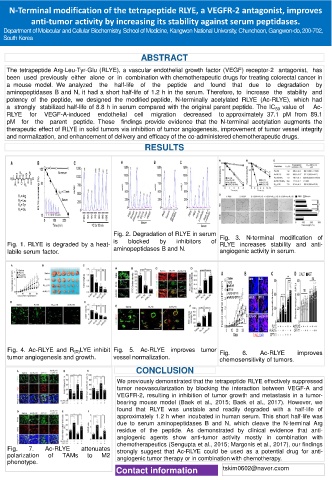
                                      Fig. 2. Degradation of RLYE in serum  Fig. 3. N-terminal modification of
   Fig. 1. RLYE is degraded by a heat-  is  blocked  by   inhibitors  of  RLYE increases stability and anti-
   labile serum factor.               aminopeptidases B and N.          angiogenic activity in serum.


   Fig. 4. Ac-RLYE and R (D) LYE inhibit Fig. 5. Ac-RLYE improves tumor  Fig.   6.    Ac-RLYE     improves
   tumor angiogenesis and growth.     vessel normalization.             chemosensitivity of tumors.
                                             CONCLUSION

                                       We previously demonstrated that the tetrapeptide RLYE effectively suppressed
                                       tumor neovascularization by blocking the interaction between VEGF-A and
                                       VEGFR-2, resulting in inhibition of tumor growth and metastasis in a tumor-
                                       bearing mouse model (Baek et al., 2015; Baek et al., 2017). However, we
                                       found that RLYE was unstable and readily degraded with a half-life of
                                       approximately 1.2 h when incubated in human serum. This short half-life was
                                       due to serum aminopeptidases B and N, which cleave the N-terminal Arg
                                       residue of the peptide. As demonstrated by clinical evidence that anti-
                                       angiogenic agents show anti-tumor activity mostly in combination with
                                       chemotherapeutics (Sengupta et al., 2015; Margonis et al., 2017), our findings
   Fig.   7.    Ac-RLYE    attenuates  strongly suggest that Ac-RLYE could be used as a potential drug for anti-
   polarization  of  TAMs    to   M2   angiogenic tumor therapy or in combination with chemotherapy.
   phenotype.
                                       Contact information                tskim0602@naver.cxom

