


Page 17 - U. Protein structure and function
P. 17
Apical sodium-dependent bile acid transporter of Clonorchis sinensis acts as steroid
                                           hormone transporter
                                        Haneul Jung and Seok Ho Cha
                  Dept. of Parasitology and Tropical Medicine, Inha University, Incheon, Korea

                                               Abstract

   The main habitat of Clonorchis sinensis (Cs) is bile duct. Because of bile acid toxicity, their living environment may be extreme condition. Thus, to maintain their life they have to
   control the bile acid with influx and efflux system. We, therefore, try to isolate and characterize the apical sodium-dependent bile acid transporter of Cs.
   From NCBI database, apical sodium-dependent bile acid transporter (ARO50445.1, CsASBAT) was selected. The selected gene was isolated using from cDNA library screening. The
   CsASBAT cDNA consists of 2031 base pairs which encoded a 546-amino acid residue protein. Hydropathy analysis showed 10 putative transmembrane-spanning domains with 4 N-
   glycosylation and 3 protein kinase C motifs. When expressed in Xenopus oocytes, radiolabeled estrone sulfate in a time- and sodium-dependent manner. The CsASBAT showed no
   exchange mode of estrone sulfate by efflux experiments. Concentration-dependency results showed saturable kinetics following  Michaelis-Menten equation. Nonlinear regression
                                3
   analyses yielded a Km value of 0.3 ± 0.03 µM for [ H]estrone sulfate. These results suggest that this transporter may acts as eliminatory system of freely entered estrogen by
   forming sulfate conjugate with estrogen sulfotransferase.
                         AIM                                                  METHODS

                                                       ★ cDNA was prepared from adult Clonorchis sinensis cDNA library screening.
   To clarify the molecular properties of bile acid transporter of Clonorchis
   sinensis.                                           ★ The probe cDNA was prepared from adult Clonorchis sinensis total RNA using
                                                         reverse transcription-polymerase chain reaction.
                                                       ★ cRNA was synthesized using mMESSAGE mMACHINE T7 kit (Invitrogen).
                                                       ★ Substrate uptake was determined by Xenopus laevis oocyte expression system.
                                                       ★ Synthesized cRNA (50 ng/oocyte) was injected by manually using  micromanupilator.


                                                RESULTS

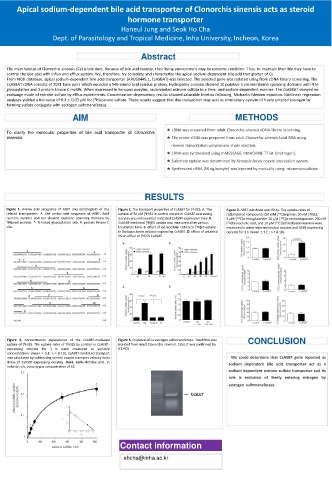
   Figure 1. Amino acid sequjence of ASBT and dendrogram of the  Figure 2. The transport properties of CsASBT for [ 3 H]ES. A. The   Figure 3. ASBT substrate specificity. The uptake rates of
   related transporters. A. the amino acid sequence of ASBT. Bold  uptake of 50 nM [ 3 H]ES in control oocyte or CsASBT expressing   radiolabeled compounds (50 mM [ 14 C]arginine, 50 nM [ 3 H]ES,
   numeric number and bar showed mabrane spanning domains by  oocytes was measured at indicated CsASBT expression time. B.   5 µM [ 14 C]α-ketoglutarate, 10 µM [ 14 C]p-aminohippurate, 200 nM
   TMpred analysis. *: N-linked glycosylation site, #: protein kinase C  CsASBT-mediated [ 3 H]ES uptake was measured after various   [ 3 H]taurocholic acid, and 10 µM [ 14 C]tetraethylammonium were
   site.                                incubation time. C. effect of extracellular cation on [ 3 H]ES uptake   measured in water injected control oocytes and ASBT expressing
                                        in Xenopus laevis oocytes expressing CsASBT. D. effect of unlabled  oocytes for 1 h (mean ± S.E.; n = 8-10).
                                        ES on efflux of [ 3 H]ES CsASBT.


   Figure 4. Concentration dependence of the CsASBT-mediated  Figure 5. Evidence of Cs estrogen sulfotransferase. Total RNA was   CONCLUSION
   uptake of [ 3 H]ES. The uptake rates of [ 3 H]ES by control or CsASBT-  isolated from adult Clonorchis sinensis. CsSLUT was confirmed by
   expressing oocytes  for 1 h were  measured at  variable  RT-PCR.
   concentrations (mean ± S.E; n = 8-10). CsASBT-mediated transport
   was calculated by subtracting control oocyte transport velocity from     We could determine that CsASBT gene reported as
   those of CsASBT-expressing oocytes. Inset, Eadie-Hofstee plot. V,
   velocity; v/s, velocity per concentration of ES.                        sodium dependent bile acid transporter act as a
                                                                           sodium dependent estrone sulfate transporter and its
                                                                           role is exclusion of freely entering estrogen by
                                                                           estrogen sulfotransferase.his work may contribute
                                                                           to understand the relationship between liver
                                                                           estrogen metabolism and effect of estrogen
                                                                           metabolites to liver fluke.


                                        Contact information

                                         shcha@inha.ac.kr

