


Page 7 - J. Chromatin remodeling and epigenetics
P. 7
Immune regulation of mammalian polycomb repressor
                 and the relationship between its structural heterogeneity

                                            Seok-jin Kang, Taehoon Chun
                           Department of Biotechnology, College of Life Sciences and Biotechnology,
                                    Korea University, Seoul, 02841, Republic of Korea

                           BACKGROUND                                                 AIM
   Alteration of chromatin structure is one of the main methods for modifying cell phenotypes by regulating DNA replication  This study is to let people know that there are many
   and transcription of mRNA. Methylation of DNA change the structure of chromatin, but addition of chemical moieties such  combinatorial number of cases of polycomb groups and show
   as methylation, acetylation, ubiquitination, sumoylation to histone tails also alter the 3D structure of chromatin. The  them in 3D structure to better understand the nature of
   enzymes that acetylate, methylate, ubiquitinate and phosphorylate certain amino acid residues of histone tails have been  polycombs. Polycomb proteins play critical roles in cell
   identified to define the biological function of each epigenetic enzymes. Recent studies have provided proofs that histone  differentiation, proliferation, senescence and so on.
   modification plays a important role in cell fates such as differentiation, proliferation, senescence and carcinogenesis.
                                                                       Different combination of polycomb group engage in different
   Polycomb group proteins (PcG) were first identified in fruit flies. Their sequences are well conserved from invertebrates to  stages of cell differentiation. In this study, we gathered the
   mammals. The proteins can act as repressor of transcription by suppressing the transcription of specific mRNA through  information about different polycomb group protein associated
   trimethylation or monoubiquitination of histone H3 and H2A. To begin and maintain chromatin modification, two distinct  with hematopoiesis differentiation.
   protein complexes, PRC1 and PRC2, work in coordination with each other. PRC2 exhibits methyltransferase activity to
   add methyl groups to specific amino acid residues of histone H3, while PRC1 exhibits E3 ubiquitin ligase activity to  As function of polycomb proteins are revealed, studies to treat
   modify the structure of histone H2A. PcG complexes show structural plasticity because PcG subunit proteins exist in  human disease by regulating polycomb group protein are in the
   several paralogs. In particular, more than 100 different types of PRC1 complexes may exist based on a simple  pipeline. We summarized clinical trials targeting polycomb group
                                                                       proteins to treat human cancer.
   combinatorial algorithm.
                                                 RESULTS
   Figure 1
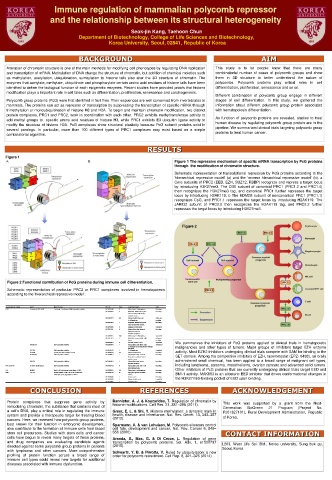
                                                          Figure 1 The repressive mechanism of specific mRNA transcription by PcG proteins
                                                          through the modification of chromatin structure.
                                                          Schematic representation of transcriptional repression by PcG proteins according to the
                                                          ‘hierarchical repressive model’ (a) and the ‘reverse hierarchical repressive model’ (b). a
                                                          Core subunits of PRC2 (EED, EZH, SUZ12, RBBP) recognize and repress a target locus
                                                          by introducing H3K27me3. The CBX subunit of canonical PRC1 (PRC1.2 and PRC1.4)
                                                          then recognizes the H3K27me3 tag, and canonical PRC1 further represses the target
                                                          locus by introducing H2AK119. b The KDM2B subunit of noncanonical PRC1 (PRC1.1)
                                                          recognizes CpG, and PRC1.1 represses the target locus by introducing H2AK119. The
                                                          JARID2 subunit of PRC2.2 then recognizes the H2AK119 tag, and PRC2.2 further
                                                          represses the target locus by introducing H3K27me3.

                                                            Figure 2


   Figure 2 Functional contribution of PcG proteins during immune cell differentiation.
   Schematic representation of particular PRC2 or PRC1 complexes involved in hematopoiesis
   according to the ‘hierarchical repressive model’.

   Target polycomb  subunit  Agent  Mode of action  NCT ID  Phase  Target tumor types  status
   EZH2    Tazemetostat (EPZ-6438)  S-adenosyl- L-methionine (SAM) competitive  inhibitor  NCT02875548  II  Diffuse large B cell lymphoma  Recruiting
                                   NCT02601950  II  INI (hSNF5; SMARCB1)-negative  Recruiting
                                           tumor and relapsed/refractory
                                           synovial sarcoma
                                   NCT01897571  I/II  Advanced solid tumor and   Active, not
                                           B cell lymphoma  recruiting
                                   NCT02601937  I  INI (hSNF5; SMARCB1)-negative  Recruiting
                                           tumor and synovial sarcoma
                                   NCT02860286  II  Malignant mesothelioma  Completed
                                   NCT03213665  II  Relapsed/refractory  advanced  Recruiting
                                           solid tumor and non-
                                           Hodgkin’s lymphoma
                                   NCT02889523  Ib/II  Diffuse large B cell lymphoma  Suspended
                                   NCT03217253  I  Metastatic or unresectable solid   Active,not
                                           tumor    recruiting
                                   NCT03348631  II  Recurrent ovarian cancer  Suspended  We summarizes the inhibitors of PcG proteins applied to clinical trials in hematopoietic
           GSK2816126  SAM competitive  inhibitor  NCT02082977  I  Relapsed/refractory  diffuse large  Terminated
                                           B cell lymphoma and transformed follicular   malignancies and other types of tumors. Major groups of inhibitors target EZH enzyme
                                           lymphoma
           CPI-1205  SAM competitive  inhibitor  NCT02395601  I  B cell lymphoma  Completed
           CPI-0209  Second generation inhibitor of EZH2  NCT04104776  I/II  Advanced solid tumor  Recruiting  activity. Most EZH2 inhibitors undergoing clinical trials compete with SAM for binding to the
           PF-06821497  SAM competitive  inhibitor  NCT03460977  I  Relapsed/refractory  small cell   Recruiting  SET domain. Among the competitive inhibitors of EZH, tazemetostat (EPZ- 6438), an orally
                                           lung cancer,castrationresistant
                                           prostate cancer
           SHR2554  SAM competitive  inhibitor  NCT03603951  I  Relapsed/refractory  mature   Recruiting  administered small chemical, has been applied to a broad range of malignant cell types,
                                           lymphoid neoplasm  including lymphoma, sarcoma, mesothelioma, ovarian cancers and advanced solid tumors.
   EZH1 and EZH2  DS-3201b (Valemetostat  SAM competitive  inhibitor  NCT04102150  II  Relapsed/refractory  adult T cell   Recruiting
                                           leukemia/lymphoma  Other inhibitors of PcG proteins that are currently undergoing clinical trials target EED and
   EED     MAK683  Binds to EED and change overall shape of PRC2  NCT02900651  I/II  Diffuse large B cell lymphoma  Recruiting
   BMI1    PTC-596  Phosphorylation of BMI-1 at two N-terminal sites  NCT03605550  Ib  High grade glioma and diffuse  Recruiting  BMI-1 activity. MAK683 is an allosteric EED inhibitor that drives conformational changes in
                   which leads to the degradation of BMI-1  intrinsic
                                   NCT03206645  I  Ovarian cancer  Recruiting  the H3K27me3-binding pocket of EED upon binding.
                                   NCT02404480  I  Advanced solid cancer  Completed
                                   NCT03761095  I  Leiomyosarcoma  Recruiting
           CONCLUSION                          REFERENCES                    ACKNOWLEDGEMENT
   Protein  complexes  that  suppress  gene  activity  by  Bannister, A. J. & Kouzarides, T. Regulation of chromatin by  This work was supported by a grant from the Next-
   remodeling chromatin, the substance that contains most of  histone modifications. Cell Res. 21, 381–395 (2011).  Generation  BioGreen  21  Program  (Project  No.
   a cell’s DNA, play a critical role in regulating the immune  Greer, E. L. & Shi, Y. Histone methylation: a dynamic mark in  PJ01327101), Rural Development Administration, Republic
   system and provide a therapeutic target for treating blood  health, disease and inheritance. Nat. Rev. Genet. 13, 343–357  of Korea.
   cancers. Here, we reviewed how polycomb group proteins,  (2012).
   best known for their function in embryonic development,  Sparmann, A. & van Lohuizen, M. Polycomb silencers control
   also contribute to the formation of immune cells from blood  cell fate, development and cancer. Nat. Rev. Cancer 6, 846–
   stem cell precursors. Studies with stem cells and cancer  856 (2006).  CONTACT INFORMATION
   cells have begun to reveal many targets of these proteins,  Aranda, S., Mas, G. & Di Croce, L. Regulation of gene
   and drug companies are evaluating candidate agents  transcription by polycomb proteins. Sci. Adv. 1, e1500737
   directed against some polycomb group proteins in patients  (2015).    L203, West Life Sci. Bld., Korea university, Sung buk gu,
   with lymphoma and other cancers. More comprehensive  Schwartz, Y. B. & Pirrotta, V. Ruled by ubiquitylation: a new  Seoul, Korea
   profiling of protein function across a broad range of  order for polycomb recruitment. Cell Rep. 8, 321–325 (2014).
   immune cell types could reveal new targets for additional
   diseases associated with immune dysfunction.

