


Page 3 - J. Chromatin remodeling and epigenetics
P. 3
RORa is crucial for attenuated inflammatory response
to maintain intestinal homeostasis
Dongha Kim , Se Kyu Oh and Daechan Park *, Sungsoon Fang *,Sung Hee Baek *
3
4
2
2
1
1 Department of Anatomy, College of Medicine, The Catholic University of Korea, Seoul 06591, Korea
2 Creative Research Initiatives Center for Epigenetic Code and Diseases, School of Biological Sciences, Seoul National University, Seoul 08826, Korea
3 Severance Biomedical Science Institute, Yonsei University College of Medicine, Seoul 06273, Korea
4 Biological Sciences, Ajou University, Suwon 16499, Korea, *Corresponding author.
ABSTRACT
Retinoic acid receptor-related receptor alpha (RORa) functions as a transcription factor for various biological processes including circadian rhythm, cancer, and
metabolism. Here, we generate intestinal epithelial cell (IEC)-specific RORα-deficient mice (RORa ΔIEC ) and find that RORa is crucial for maintaining intestinal homeostasis
by attenuating NF-kB transcriptional activity. RORa ΔIEC mice exhibit excessive intestinal inflammation and highly activated inflammatory responses in the dextran sulfate
sodium (DSS) mouse colitis model. Transcriptome analysis reveals that deletion of RORa leads to upregulation of NF-kB target genes in IECs. Chromatin
immunoprecipitation analysis reveals co-recruitment of RORa and histone deacetylase 3 (HDAC3) on NF-kB target promoters and subsequent dismissal of CREB binding
protein (CBP) and bromodomain-containing protein 4 (BRD4) for transcriptional repression. Together, we demonstrate that RORa/HDAC3-mediated attenuation of NF-kB
signaling controls balance of inflammatory responses, and therapeutic strategies targeting this epigenetic regulation could be beneficial to the treatment of chronic
inflammatory diseases including inflammatory bowel disease (IBD).
1-A 1-B 3-A 3-C
3-D 3-E
1-C 1-D 3-B
3-F
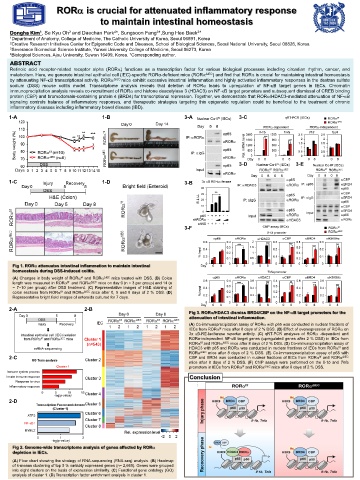
Fig 1. RORa attenuates intestinal inflammation to maintain intestinal
homeostasis during DSS-induced colitis.
(A) Changes in body weight of RORa and RORa ΔIEC mice treated with DSS. (B) Colon
f/f
length was measured in RORa f/f and RORa ΔIEC mice on day 0 (n = 3 per group) and 14 (n
= 7~10 per group) after DSS treatment. (C) Representative images of H&E staining of
colon sections from RORa and RORa ΔIEC mice after 0, 5 and 8 days of 2 % DSS. (D)
f/f
Representative bright field images of enteroids cultured for 7 days.
2-A 2-B
Fig 3. RORa/HDAC3 dismiss BRD4/CBP on the NF-kB target promoters for the
attenuation of intestinal inflammation.
(A) Co-immunoprecipitation assay of RORa with p65 was conducted in nuclear fractions of
f/f
IECs from RORa mice after 8 days of 2 % DSS. (B) Effect of overexpression of RORa on
3x kB-RE-luciferase reporter activity. (C) qRT-PCR analyses of RORa -dependent and
RORa-independent NF-kB target genes (upregulated genes after 2 % DSS) in IECs from
RORa and RORa ΔIEC mice after 8 days of 2 % DSS. (D) Co-immunoprecipitation assay of
f/f
HDAC3 with p65 and RORa was conducted in nuclear fractions of IECs from RORa and
f/f
RORa ΔIEC mice after 8 days of 2 % DSS. (E) Co-immunoprecipitation assay of p65 with
2-C CBP and BRD4 was conducted in nuclear fractions of IECs from RORa and RORa ΔIEC
f/f
mice after 8 days of 2 % DSS. (F) ChIP assays were performed on the Il-1b and Tnfa
promoters in IECs from RORa and RORa ΔIEC mice after 8 days of 2 % DSS.
f/f
Conclusion
2-D
Fig 2. Genome-wide transcriptome analysis of genes affected by RORa
depletion in IECs.
(A) Flow chart showing the strategy of RNA-sequencing (RNA-seq) analysis. (B) Heatmap
of k-means clustering of top 5 % variably expressed genes (n= 2,668). Genes were grouped
into eight clusters on the basis of expression similarity. (C) Functional gene ontology (GO)
analysis of cluster 1. (D) Transcription factor enrichment analysis in cluster 1.

