


Page 67 - I. Chemical biology and drug discovery
P. 67
Reversing the recurrent loss of STING via negative feedback blockade for
  efficient cancer immunotherapy

                                                                                        1)
                                                                             1)
                                                                 Wansang Cho , Yoona Choi , Seung Bum Park* 1)2)
                                              1) Center for Chemical Proteomics, Department of Chemistry, Seoul National University, Seoul 08826, Korea
                                                    2) Department of Biophysics and Chemical Biology, Seoul National University, Seoul 08826, Korea
                   BACKGROUND                                                  AIM

   As cancer immunotherapy has been emerged as a new pillar of cancer therapy, diverse strategies are  In this study, we demonstrated new strategy that could reverse
   suggested based on modulating host immunity for cancer treatment. STING, which is at the center of
   anti-DNA virus immunity, is one of well-studied target for cancer immunotherapy. STING is activated by  the recurrent loss STING for efficient cancer immunotherapy. Aim
   small molecule-like innate ligand, cyclic dinucleotide (CDN). CDN analogs are suggested as new cancer  of this study is to discover novel small molecule that inhibits the
   immunotherapy agents that activates host immune system. Recent phase I trial of CDN analogs, MK-1454
   by Merck, against solid tumors and lymphoma patients co-treated with Pembrolizumab showed robust  interaction between STING and ubiquitin E3 ligase, thereby
   antitumor efficacy. However, patients treated with MK-1454 alone showed limited antitumor response.  blocking the degradation of STING.
   Moreover, recent findings indicate that there are complex negative feedback mechanisms that restrict
   the activity, or reduce the expression of STING.
                                                METHODS

   To discover the desired small molecule, we designed high-throughput screening system based on luciferase complementation assay to monitor the protein-
   protein interaction between STING and ubiquitin E3 ligase. From the screening, we successfully discovered SB24001 that inhibits STING-E3 ligase interaction.
   We conducted surface plasmon resonance (SPR) experiment to find the binding partner of SB24001. We then validated if SB24001 induces cellular
   accumulation of STING. Moreover, we checked if SB24001 augments CDN-mediated immunity. Intratumoral injection of CDN augments local immune
   response inside tumor microenvironment, which consists of various immune cells including antigen presenting cells (APC). Activated APCs recruit and present
   tumor antigen to adaptive immune cells, which will selectively eliminate the cancer cell. Therefore, we examined if blocking STING and ubiquitin E3 ligase
   interaction with our discovered small molecule would enhance the immune response.
                                                RESULTS


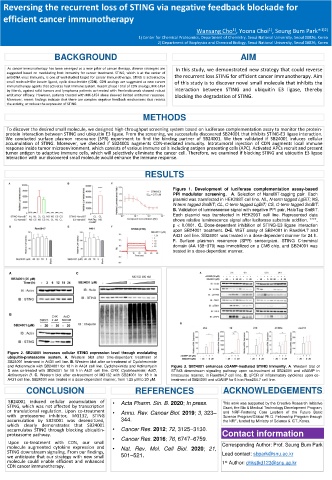
                                                         Figure 1. Development of luciferase complementation assay-based
                                                         PPI modulator screening.  A. Selection of NanoBiT-tagging pair. Each
                                                         plasmid was transfected in HEK293T cell line. NL, N-term tagged LgBiT; NS,
                                                         N-term tagged SmBiT; CL, C-term tagged LgBiT; CS, C-term tagged SmBiT.
                                                         B. Validation of luminescence signal with negative PPI pair, HaloTag-SmBiT.
                                                         Each plasmid was transfected in HEK293T cell line. Represented data
                                                         shows relative luminescence signal after luciferase substrate addition. ****,
                                                         p < 0.0001. C. Dose-dependent inhibition of STING-E3 ligase interaction
                                                         upon SB24001 treatment. D-E. WST assay of SB24001 in Raw264.7 and
                                                         A431 cell line. SB24001 was treated in a dose-dependent manner for 24 h.
                                                         F. Surface plasmon resonance (SPR) sensorgram. STING C-terminal
                                                         domain (AA 138~379) was immobilized on a CM5 chip, and SB24001 was
                                                         treated in a dose-dependent manner.


    Figure 2. SB24001 increases cellular STING expression level through modulating
    ubiquitin-proteasome system. A. Western blot after time-dependent treatment of
    SB24001 treatment in A431 cell line. B. Western blot after co-treatment of Cycloheximide
    and Actionmycin with SB24001 for 18 h in A431 cell line. Cycloheximide and Actinomycin  Figure 3. SB24001 enhances cGAMP-mediated STING immunity. A. Western blot of
    D was co-treated with SB24001 for 18 h in A431 cell line. CHX, Cycloheximide; ActD,  STING downstream signaling pathway upon co-treatment of SB24001 and cGAMP in
    Actinomycin D. C. Western blot after co-treatment of MG132 with SB24001 for 18 h in  timecourse manner, in Raw264.7 cell line. B. qPCR of inflammatory cytokines upon co-
    A431 cell line. SB24001 was treated in a dose-dependent manner, from 1.25 μM to 20 μM.  treatment of SB24001 and cGAMP for 6 h in Raw264.7 cell line.
          CONCLUSION                         REFERENCES                   ACKNOWLEDGEMENTS

    SB24001 induced cellular accumulation of  •  Acta Pharm. Sin. B. 2020; In press.  This work was supported by the Creative Research Initiative
   STING, which was not affected by transcription                         Grant, the Bio & Medical Technology Development Program,
   or translational regulation. Upon co-treatment  •  Annu. Rev. Cancer Biol. 2019; 3, 323–  and NRF-Fostering Core Leaders of the Future Basic
   with proteasome inhibitor, MG132, STING                                Science Program/Global Ph.D. Fellowship Program through
   accumulation by SB24001 was desensitized,  344.                        the NRF, funded by Ministry of Science & ICT, Korea.
   which clearly demonstrates that SB24001
   accumulates STING through blocking ubiquitin-  •  Cancer Res. 2012; 72, 3125–3130.
   proteasome pathway.                                                   Contact information
                                      •  Cancer Res. 2016; 76, 6747–6759.
    Upon co-treatment with CDN, our small                                Corresponding Author: Prof. Seung Bum Park
   molecule augmented cytokine expression and  •  Nat. Rev. Mol. Cell Biol. 2020; 21,
   STING downstream signaling. From our findings,                        Lead contact: sbpark@snu.ac.kr
   we anticipate that our strategy with new small  501–521.
   molecule could enable efficient and enhanced                          1 Author: dhkstkd123@snu.ac.kr
                                                                          st
   CDN cancer immunotherapy.

