


Page 7 - G. Cell differentiation. division. and death
P. 7
In vitro differentiation of Endothelial Cells from

  porcine Epiblast Stem Cells

  Bo-Gyeong Seo,  Cheol Hwangbo , Division of Applied Life Science, College of Natural Sciences, Gyeongsang National University
                            †
                   BACKGROUND                                                  AIM

   Epiblast stem cells
   Pluripotent stem cells including embryonic stem cells (ESCs), epiblast stem cells (EpiSCs) and  We aimed to differentiate porcine epiblast stem cells (pEpiSCs) as one of
   induced iPSCs have the potential of self-renewal, and differentiate into any cell type (endoderm,  pluripotent stem cells into functional vascular endothelial cells (ECs) for
   mesoderm and ectoderm) in the adult body. ESCs were derived from the inner cell mass of a  treatment of vascular disease. So, we have examined that differentiation
   pre-implantation embryo. Since then, ESCs were able to induce successfully from primate  medium induces the differentiation of pEpiSCs into vascular ECs. Also,
   species. EpiSCs were derived from the late epiblast presented in a post-implantation embryo.  whether the addition of VEGF to differentiation medium improves the
   Vascular Endothelial Growth Factor (VEGF)              efficiency of differentiation of the pEpiSCs into ECs was examined. These
   VEGF in developing adult tissues is a well-established mitogen, as differentiation and survival  studies have established an efficient protocol that differentiates ECs from
   factors of endothelium. Additionally, VEGF has the ability to promote the proliferation of ECs. So,  pEpiSCs with 2-dimensional culture.
   VEGF play important roles specifically in angiogenesis and vasculogenesis process.
                                                METHODS

                       Manual
                       Picking                                                 - Incubation at
                                                           Differentiation Medium  39℃, 5%
                                                                                 CO₂
                                                           ‣ EBM-2
                                                           ‣ EBM-2 + VEGF      - Medium
                                                           ‣ APEL-2              change on
                 Porcine Epiblast Stem Cells  0.5% gelatin coated well  ‣ APEL-2 + VEGF
                  8 line on inactivated MEF                                      day 2 and 5
                                                RESULTS


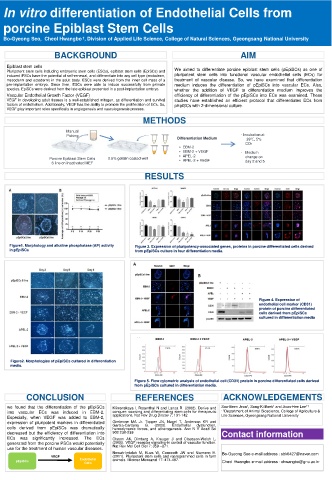
    Figure1. Morphology and alkaline phosphatase (AP) activity   Figure 3. Expression of pluripotency-associated genes, proteins in porcine differentiated cells derived
    in pEpiSCs                               from pEpiSCs culture in four differentiation media.


                                                                                     Figure 4. Expression of
                                                                                     endothelial cell marker (CD31)
                                                                                     protein of porcine differentiated
                                                                                     cells derived from pEpiSCs
                                                                                     cultured in differentiation media


    Figure2. Morphologies of pEpiSCs cultured in differentiation
    media.

                                             Figure 5. Flow cytometric analysis of endothelial cell (CD31) protein in porcine differentiated cells derived
                                             from pEpiSCs cultured in differentiation media.
          CONCLUSION                         REFERENCES                   ACKNOWLEDGEMENTS
   we found that the differentiation of the pEpiSCs  Klimanskaya I, Rosenthal N and Lanza R. (2008). Derive and  Soo-Been Jeon 1 , Sang-Ki Baek 1 and Joon-Hee Lee 1†
   into  vascular  ECs  was  induced  in EBM-2.  conquer: sourcing and differentiating stem cells for therapeutic  - 1 Department of Animal Bioscience, College of Agriculture &
   Especially, when VEGF was added to EBM-2,  applications. Nat Rev Drug Discov 7: 131-142  Life Sciences, Gyeongsang National University
   expression of pluripotent markers in differentiated  Gimbrone MA Jr. Topper JN, Nagel T, Anderson KR and
                                                         Endothelial
                                                                 dysfunction,
                                      Garcia-Cardena
                                                G.
                                                   (2000).
   cells derived from pEpiSCs was dramatically  hemodynamic forces, and atherogenesis. Ann N Y Acad Sci
   decreased but the efficiency of differentiation into  902:230-239.    Contact information
   ECs  was  significantly  increased.  The  ECs  Olsson AK, Dimberg A, Kreuger J and Claesson-Welsh L.
   generated from the porcine PSCs would potentially  (2006). VEGF receptor signaling-in control of vascular function.
   use for the treatment of human vascular diseases.  Nat Rev Mol Cell Biol 7: 359 –371.
                                      Nowak-Imialek M, Kues W, Carnwath JW and Niemann H.  Bo-Gyeong Seo e-mail address : sbk6427@naver.com
                  VEGF                (2011). Pluripotent stem cells and reprogrammed cells in farm
      pEpiSCs              Endothelial   animals. Microsc Microanal 17: 474-497.  Cheol Hwangbo e-mail address : chwangbo@gnu.ac.kr
                            Cells

