


Page 5 - G. Cell differentiation. division. and death
P. 5
Diesel particulate matter 2.5 induces inflammation and mitochondrial impairment
            via up-regulation of reactive oxygen species in corneal epithelial cells

                                         4
            Da Hye Kim , Hyesook Lee , Jeong-Hwan Kim , Seh-Kwang Park , Ji-Won Jeong , Mi-Young Kim , Soo-Wan Nam , Yung Hyun Choi 2,3,6 ,*
                    1
                                                     4
                             2,3
                                                                                  1,6
                                                                        4
                                                              5
                             1 Department of Smart Bio-Health, Graduate School, Dong-eui University, Busan 47340,
                                    2 Anti-Aging Research Center, Dong-eui University, Busan 47340,
                            3 Department of Biochemistry, Dong-eui University College of Korean Medicine, Busan 47227,
                                4 Research and Development Department, BGN CARE Co., Ltd., Busan 47195,
                                              5 BGN Eye Clinic, Busan 47195,
      6 Biomedical Engineering and Biotechnology Major, Division of Applied Bioengineering, College of Engineering, Dong-Eui University, Busan 47340, Republic of Korea
                    BACKGROUND                                                 AIM
    Environmental pollution, particularly air pollution, has become a serious  At present, the biggest cause and problem of air pollution is particulate matter. Particulate
    issue for human health during the development of modern society. Fine PM is  matter(suspended particulate matter, SPM, atmospheric aerosol particles, atmospheric
    referred to as PM 2.5 (particulate matter with a diameter less than 2.5 μm), and  particulate matter) is caused by various factors such as desertification, factory, exhaust
    several studies have linked PM 2.5 to ocular surface diseases. Nevertheless,  gas and various combustion. Particulate matter is composed of various materials such as
                                                          nitrate, ammonium, carbon compounds, sulfates, etc., which is a mixed material. We
    the few studies on the biological effect and underlying mechanism of PM 2.5 on  experimented with Particulate matter with diameters of less than 2.5 µm. PM 2.5 is smaller
    the eye have been limited. Therefore, the aim of this study was to evaluate the  than hair. PM 2.5 can already adsorb to the alveoli and reach the retina by passing through
    biological effect of PM 2.5 on primary rat corneal epithelial cells (RCECs) and to  the cornea.
    identify the mechanism. Exposure to PM 2.5 induced cytotoxicity and DNA  Rat corneal epithelial cells (RCECs) is a primary cultured cell extracted from rat. The
    damage in a dose-dependent manner. The result of gene expression  cornea is an organ that refracts light and helps to form an image on the retina.
    microarray showed that PM 2.5 enhanced the expression of pro-inflammatory  Transparency and a smooth surface are required. So the cornea is devoid of blood
    mediators, such as cytokines and chemokines. We also found that up-  vessels and consists of nerve cells. Recently, as air pollution caused by PM 2.5 has
    regulation of the secretion of inflammatory cytokines was accompanied by  increased, patients visiting conjunctivitis and dryness have been rapidly increasing. Our
    activation of NF-κB and phosphorylation of p38 MAPK. It is worth noting that  cornea is the most dangerous because it is the primary exposure organ to direct exposure
    PM2.5 markedly increased intracellular reactive oxygen species (ROS) and  to PM 2.5 . However, studies on cornea and PM 2.5 have not been actively conducted. So we
    suppressed the protein expression of mitophagy regulator, such as PINK,  studied how the PM 2.5 affects the cornea.
    Parkin and Wee1. However, the inhibition of ROS by N-acetylcysteine    METHODS
    significantly suppressed the PM 2.5 -mediated cellular dysfunction including
    expression  and  secretion  of  inflammatory  mediators,  mitochondrial  Cell viability : CCK-8 assay
    membrane potential loss, DNA damage and NF-κB activation. In conclusion,  DNA damage : DAPI and p-γH2AX fluorescence staining
    our data suggested that PM 2.5 -induced inflammation and mitochondrial
    dysfunction are dependent on the ROS/NF-κB signaling pathway in RCECs.  Cytokine level : mouse enzyme-linked immunosorbent assay kit
    The present study provides the important evidence for understanding of  Mitochondria activity: Staining with Mitotracker fluorescence
    PM2.5-mediated underlying mechanism in cornea.
    Keywords: Particulate matter 2.5; corneal epithelial cells; mitochondrial  ROS amount : Staining with DCF-DA fluorescence
    dysfunction; inflammation; reactive oxygen species    Protein level : Western blotting
                                                 RESULTS
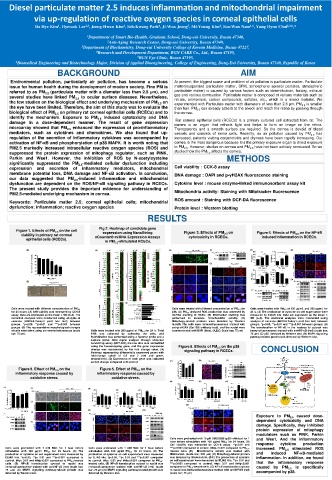
      Figure 1. Effects of PM 2.5 on the cell   Fig 2. Heatmap of candidate gene   Figure 3. Effects of PM 2.5 on   Figure 4. Effects of PM 2.5 on the NF-kB
                                  expression using NanoString
        viability in primary rat corneal   nCounter® miRNA Expression Assays  cytotoxicity in RCECs.  induced inflammation in RCECs.
          epithelial cells (RCECs).  in PM 2.5 -stimulated RCECs.


                                                         Cells were treated with different concentration of PM 2.5 for  Cells were treated with PM 2.5 of 100 µg/mL and 200 µg/mL for
     Cells were treated with different concentration of PM 2.5
     for 24 hours. (A) Cell viability was measured by CCK-8  24h. (A) PM 2.5 -induced ROS production was assessed by  24 h. (A) The production of cytokine on cell supernatant were
     assay. Data are expressed as the mean ± SD (n=3). The  DCFDA staining in RCEC. (B) Mitotracker staining was  measured by ELIAS kits. Data are expressed as the mean ±
     statistical analyses were conducted using analysis of  performed  to  measure  mitochondrial  activity.  (C)  SD (n=3). The statistical analyses were conducted using
     variance (ANOVA-Tukey’s post hoc test) between      Mitophagy-related proteins were detected by Western  analysis of variance (ANOVA-Tukey’s post hoc test) between
     groups. *p<0.05, **p<0.01 and ***p<0.001 between    blot.(D) The cells were immunofluorescence stained with  groups. *p<0.05, **p<0.01 and ***p<0.001 between groups. (B)
     groups. (B) The representative morphological changes  anti-p-γH2AX (Ser139) antibody (red), and the nuclei were  The translocation of NF-κB in the nucleus to cytosol was
     of cells were taken using an inverted microscope (scale  Cells were treated with 200 μg/ml of PM 2.5 for 24 h. Total  counterstained with DAPI (blue). (A,B,C, Scale bar; 75 μm)  immunofluorescence stained with anti-NF-κB (red) (scale bar;
     bar: 75 μm).              RNA  was  collected  by  collecting  the  cells,  and  75 μm) (C) p65 detected by Western blot. (D) MAPK signaling
                               hybridization was performed using a reporter probe and a  pathway-related protein was detected by Western blot.
                               capture probe. After digital analysis through nCounter
                               nanostring assay (NCT-120), the raw data was normalized
                               using the housekeeping gene, and the gene expression  Figure 6. Effects of PM 2.5 on the p38
                               change was represented by the fold change value. (A)  signaling pathway in RCECs.  CONCLUSION
                               Heatmap representing differentially expressed genes with
                               fold-change  cutoff  of  0.5  and  2  (red  and  green,
                               respectively). (B) Expression of each gene was indicated
                               as fold change compared with control.
       Figure 5. Effect of PM 2.5 on the   Figure 5. Effect of PM 2.5 on the
      inflammatory response caused by   inflammatory response caused by
           oxidative stress.         oxidative stress.
                                                                                    Exposure to PM 2.5 caused dose-
                                                                                    dependent cytotoxicity and DNA
                                                                                    damage. Specifically, they inhibited
                                                                                    protein expression of mitophagy
                                                                                    modulators such as PINK, Parkin
                                                        Cells were pretreated with 10 µM SB203580 (p38 inhibitor) for 1  and Wee1. And the inflammatory
                                                        hour before stimulation with 100 µg/ml PM 2.5 for 24 hours. (A)
                                                        Cell viability was measured by CCK-8 assay. **p<0.01 and  response  cytokine  production
   Cells were pretreated with 1 mM NAC for 1 hour before  Cells were pretreated with 1 mM NAC for 1 hour before  ***p<0.001 compared to control. ###p< 0.001 compared to PM 2.5 -  increased. PM 2.5 stimulated ROS
   stimulation with 100 µg/ml PM 2.5 for 24 hours. (A) The  stimulation with 100 µg/ml PM 2.5 for 24 hours. (A) The  treated cells. (B)  Mitochondria activity was stained with
   production of cytokine on cell supernatant were measured by  production of cytokine on cell supernatant were measured  Mitotracker. (scale bar; 200 μm) (C) Mitophagy-related protein  and  induced  NF-κB-mediated
   ELIAS kits. *p<0.05, **p< 0.01 and ***p<0.001 compared to  by ELIAS kits. *p<0.05, **p< 0.01 and ***p<0.001 compared  was detected by Western blot. (D-F) The production of cytokine  inflammation. In addition, we found
   control. ##p< 0.01 and ###p<0.001 compared to PM 2.5 -treated  to control. ##p< 0.01 and ###p<0.001 compared to PM 2.5 -  on cell supernatant were measured by ELIAS kits. **p< 0.01 and
   cells.  (B)  NF-κB  translocation  cytosol  to  nuclei  was  treated cells. (B) NF-κB translocation cytosol to nuclei was  ***p<0.001 compared to control. ##p< 0.01 and ###p<0.001  that  the  inflammatory  response
   immunofluorescence stained with anti-NF-κB (red) (scale bar;  immunofluorescence stained with anti-NF-κB (red) (scale  compared to PM 2.5 -treated cells. (G) NF-κB translocation cytosol  caused  by  PM 2.5  is specifically
   75 μm) (C) MAPK signaling pathway-related protein was  bar; 75 μm) (C) MAPK signaling pathway-related protein was  to nuclei was immunofluorescence stained with anti-NF-kB (red)
   detected by Western blot.  detected by Western blot.  (scale bar; 75 μm)         accompanied by p38.

