


Page 1 - F. Cell biology
P. 1
TMBIM6 (transmembrane BAX inhibitor motif containing 6) enhances autophagy
                                   through regulation of lysosomal calcium
                                                                       3
                            1
  Hyun-Kyoung Kim , Geum-Hwa Lee , Kashi Raj Bhattarai , Myung-Shik Lee , Sung Hoon Back , Hyung-Ryong Kim , Han-Jung Chae 1
                                            1
               1
                                                         2
                                                                                      4
  1 Department of Pharmacology and New Drug Development Research Institute, Chonbuk National University Medical School, Jeonju,
  2 Severance Biomedical Science Institute and Department of Internal Medicine, Yonsei University College of Medicine, Seoul,  School of
                                                                                               3
                                     4
  Biological Sciences, University of Ulsan, Ulsan,  College of Dentistry, Dankook University, Cheonan, Republic of Korea
                   BACKGROUND                                                  AIM
   TMBIM6 (transmembrane BAX inhibitor motif containing 6), a highly  Recent findings indicated that TMBIM6 interacts with ITPR, which
   conserved multi-transmembrane protein, has been identified as a  may regulate steady-state [Ca ]ER, leading to the relatively low
                                                                                2+
                                                                             2+
   suppressor of BAX-mediated cell death. TMBIM6 has been suggested  mitochondrial calcium ([Ca ]mito) levels and reduced mitochondrial
   to be a Ca 2+  channel-like protein that is integral to the intracellular  bioenergetics, and ultimately autophagy. Independently, TMBIM6-
   membranes of ER. The calcium-binding activity has been found to be  specific regulation of a specific arm of ER stress involving
   responsive to protons and other cations. The conserved aspartyl dyad  ERN1/IRE-1α has also been reported in the context of secretory
   (Asp171-Asp195) in an uncharacterized protein YetJ from Bacillus  protein IgG and autophagy studies. Although there have been a
   subtilis (BsYetJ) among TMBIM members regulates pH-dependent  few studies on TMBIM6-associated autophagy regulation, the effect
   calcium-binding and manages the channel pore opening and closing,  of TMBIM6 on ER and lysosomal Ca 2+  signaling-associated
   and Ca2+ translocation. The Ca permeating role of TMBIM6 lowers  autophagy has not been studied yet. In the present study, we have
                           2+-
                  2+
   the steady-state [Ca ]ER.                              investigated the role of TMBIM6 in lysosomal Ca 2+  signaling and
                                                          related autophagy.
                                               METHODS
   GCaMP3-ML-1 Ca 2+  imaging, Fura-2 Ca 2+  imaging, Oregon green 488 BAPTA-1 dextran (OG-BAPTA-dextran) or Rhod-dextran imaging,
   Immunofluorescence assays, Immunohistochemistry, Proximity ligation assay (PLA), Real-time PCR analysis, and Autophagy flux detection were
   performed.
                                                RESULTS


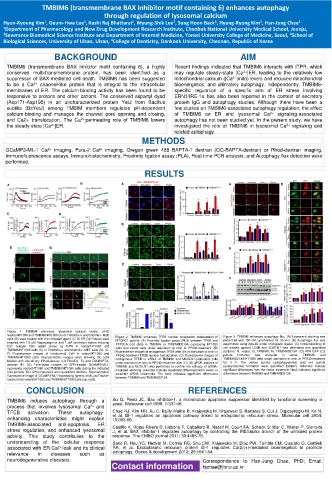
   Figure  1.  TMBIM6  enhances  lysosomal  calcium  levels.  (A-B)
   Vector/HT1080 and TMBIM6/HT1080 (A) or Tmbim6+/+ and tmbim6-/- MEF  Figure 2. TMBIM6 enhances TFEB nuclear localization independent of  Figure 3. TMBIM6 enhances autophagy flux. (A) Lysosomal staining was
   cells (B) were treated with the indicated agent. (C-D) ER Ca 2+ stores were  MTORC1 activity. (A) Proximity ligation assay (PLA) between TFEB and  performed with 100 nM LysoTracker for 30 min. (B) Autophagic flux was
   emptied with 1-5 μM thapsigargin or and 1 μM ionomycin before inducing  PPP3CA (red dots) in TMBIM6- or TMBIM6D213A expressing HT1080  determined using cyto-ID under microplate reader. (C) Immunoblotting of
   Ca 2+ release from acidic stores by GPN in vector/HT1080 and  cells and vector cells under starvation or torin or PP242-treatment. (B)  cell lysates against LC3B and SQSTM1 was performed and quantified
   TMBIM6/HT1080 cells (C) or Tmbim6+/+ and tmbim6-/- MEF cells (D). (E-  Fluorescence images of endogenous TFEB after 3 h of starvation or torin or  (bottom). N, vector; B, TMBIM6; M, TMBIM6D213A. (D) RFP-GFP-LC3
   F) Fluorescence images of intraluminal Ca 2+ in vector/HT1080 and  PP242-treatment TFEB nuclear translocation. (C) Fluorescence images of  puncta  formation  was  analyzed  in  vector,  TMBIM6,  and
   TMBIM6/HT1080 cells. Representative images were showing the cells  endogenous TFEB in siRNA of TMBIM6 and MCOLN1-pretreated cells  TMBIM6D213A/HT1080 cells under starvation or torin or PP242-treatment
   loaded with low-affinity Rhod-dextran (LA-RhodDx, E) and OG-BAPTA-  under starvation or torin or PP242-treatment after 3 h. (D) qPCR analysis of  for  3  h.  The  yellow  puncta  (autophagosome)  and  red  puncta
   dextran (F). (G) Time-lapse images of GPN-treated GCaMP3-ML1-  TMBIM6 and MCOLN1 was performed to confirm the efficacy of siRNA-  (autolysosome) formation were quantified (bottom). Asterisks indicate
   expressing vector/HT1080 and TMBIM6/HT1080 cells during the indicated  mediated silencing. Asterisks indicate significant differences from vector or  significant differences from the vector treatment. Hash indicates significant
   time periods. The GPN responses were quantified (bottom). Representative  scramble siRNA treatments. The hash indicates significant differences  differences between TMBIM6 and TMBIM6D213A.
   fluorescence image of GCaMP3-ML1-expressing (green) and LysoTracker-  between TMBIM6 and TMBIM6D213A.
   loaded (red) vector/HT1080 and TMBIM6/HT1080 cells (up, right).
          CONCLUSION                                          REFERENCES
   TMBIM6 induces autophagy through a  Xu Q, Reed JC. Bax inhibitor-1, a mammalian apoptosis suppressor identified by functional screening in
   process that involves lysosomal Ca 2+  and  yeast. Molecular cell 1998; 1:337-46.
   TFEB   activation.  These  autophagy-  Chae HJ, Kim HR, Xu C, Bailly-Maitre B, Krajewska M, Krajewski S, Banares S, Cui J, Digicaylioglu M, Ke N,
   enhancing  characteristics  might  explain  et al. BI-1 regulates an apoptosis pathway linked to endoplasmic reticulum stress. Molecular cell 2004;
                                      15:355-66.
   TMBIM6-associated  anti-apoptosis,  ER  Castillo K, Rojas-Rivera D, Lisbona F, Caballero B, Nassif M, Court FA, Schuck S, Ibar C, Walter P, Sierralta
   stress regulation, and enhanced lysosomal  J, et al. BAX inhibitor-1 regulates autophagy by controlling the IRE1alpha branch of the unfolded protein
   activity. This study contributes to the  response. The EMBO journal 2011; 30:4465-78.
   understanding of the cellular response  Sano R, Hou YC, Hedvat M, Correa RG, Shu CW, Krajewska M, Diaz PW, Tamble CM, Quarato G, Gottlieb
   associated with ER Ca leak and its clinical  RA, et al. Endoplasmic reticulum protein BI-1 regulates Ca(2)(+)-mediated bioenergetics to promote
                    2+
   relevance  in  diseases  such  as  autophagy. Genes & development 2012; 26:1041-54.
   neurodegenerative diseases.                                     Correspondence to Han-Jung Chae, PhD; Email:
                                     Contact information           hjchae@jbnu.ac.kr

